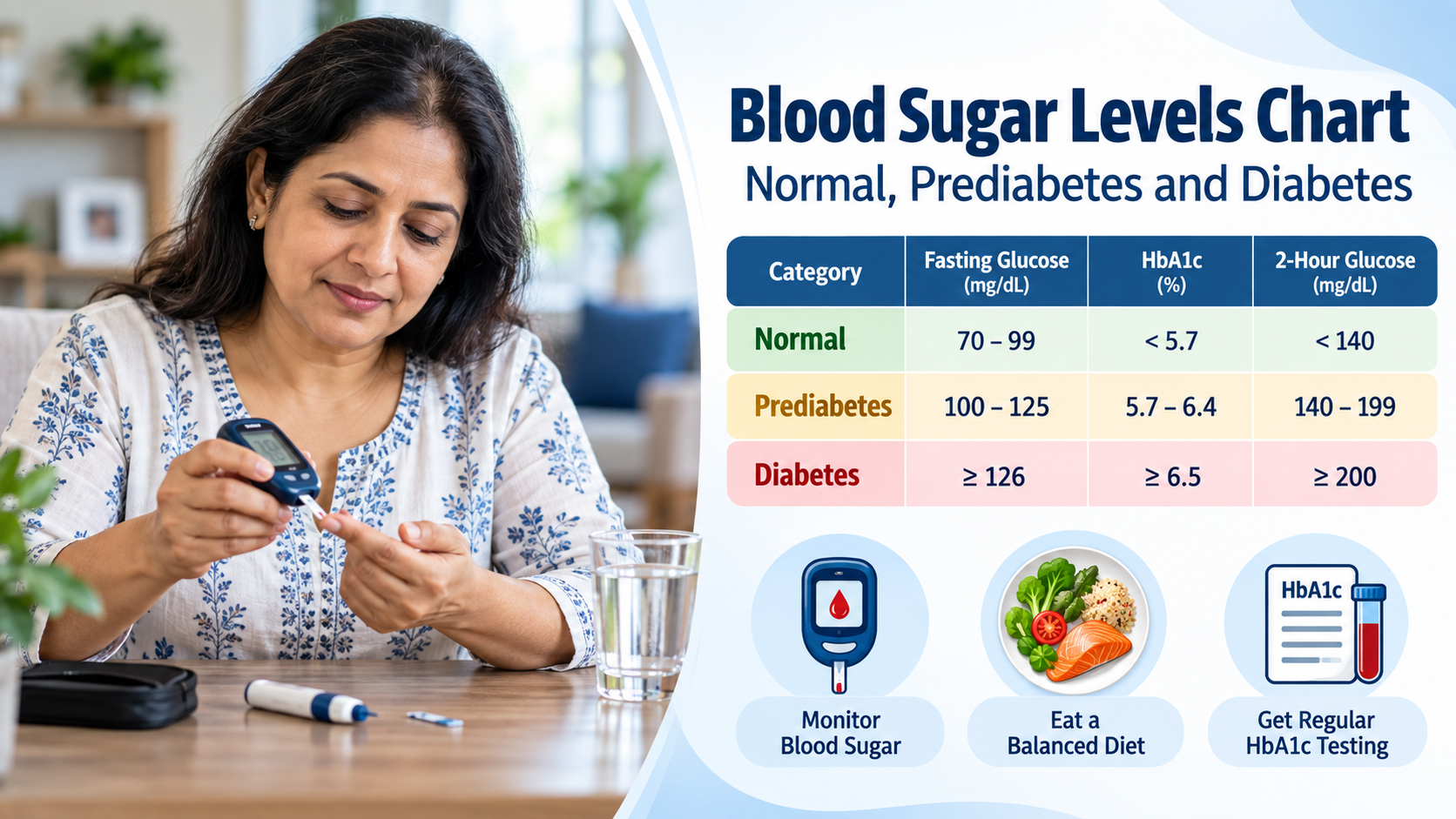
Blood Sugar Levels Chart: Normal, Prediabetes and Diabetes
Understand normal blood sugar levels, prediabetes and diabetes ranges for fasting glucose, HbA1c and 2-hour glucose with this simple India-focused chart.
Written by Dr Sanjay Kumar K A · Medically reviewed by Dr Sanjay Kumar K A, M D Anaesthesiology (Sun, 4 Oct 2026)
Published Sun, 4 Oct 2026 · 6 min read
Blood sugar, or blood glucose, changes throughout the day depending on when you last ate, what you ate, physical activity, medicines and several other factors. That is why a number such as 110 mg/dL can mean different things depending on whether it was measured fasting, after a glucose drink or randomly. India has a particularly large diabetes burden. The nationally representative ICMR-INDIAB study estimated that 101 million Indians had diabetes and another 136 million had prediabetes in 2021.
Blood sugar levels chart: normal, prediabetes and diabetes
| Test | Normal | Prediabetes | Diabetes | ||
| Fasting plasma glucose | Below 100 mg/dL | 100–125 mg/dL | ≥126 mg/dL | ||
| 2-hour glucose during a 75 g OGTT | Below 140 mg/dL | 140–199 mg/dL | ≥200 mg/dL | ||
| HbA1c | Below 5.7% | 5.7–6.4% | ≥6.5% | ||
| Random plasma glucose | — | — | ≥200 mg/dL with classic symptoms or hyperglycaemic crisis |
These ranges follow the ICMR Standard Treatment Workflow and are consistent with current ADA diagnostic criteria. In someone without obvious symptoms or a hyperglycaemic crisis, an abnormal result usually needs confirmation with repeat or additional testing before diabetes is diagnosed.
What is a normal fasting blood sugar level?
A fasting plasma glucose test is taken after at least 8 hours without calories, usually first thing in the morning. For adults who are not pregnant: - Below 100 mg/dL: normal range - 100–125 mg/dL: impaired fasting glucose or prediabetes - 126 mg/dL or higher: diabetes range A single fasting value of 128 mg/dL in someone without symptoms does not by itself necessarily establish the diagnosis; confirmation is generally required.
What should blood sugar be 2 hours after eating?
This is where blood sugar charts are commonly misunderstood. The standard diagnostic test is a 75 g oral glucose tolerance test (OGTT). Two hours after drinking the glucose solution: - Below 140 mg/dL: normal glucose tolerance - 140–199 mg/dL: impaired glucose tolerance or prediabetes - 200 mg/dL or higher: diabetes range These are not exactly the same thing as checking your glucometer two hours after an ordinary breakfast or lunch. Meal size and carbohydrate content vary, so a routine post-meal reading should not be treated as an OGTT diagnostic result.
What does HbA1c tell you?
HbA1c provides an estimate of average blood glucose exposure over approximately the previous 2–3 months and does not require fasting.
| HbA1c | Interpretation | ||
| Below 5.7% | Normal range | ||
| 5.7–6.4% | Prediabetes | ||
| 6.5% or higher | Diabetes range |
HbA1c is useful, but it is not perfect. The RSSDI 2022 recommendations caution against using HbA1c as the sole diagnostic test in all Indian settings, partly because conditions such as iron-deficiency anaemia, haemoglobin disorders and differences in testing methods can affect interpretation. Plasma glucose testing may therefore be important when HbA1c and the clinical picture do not agree.
Is random blood sugar useful for diagnosing diabetes?
Yes, but the context matters. A random plasma glucose of 200 mg/dL or higher together with classic symptoms of high blood sugar, or in a hyperglycaemic crisis, can establish a diagnosis of diabetes. Classic symptoms include excessive thirst, frequent urination and unexplained weight loss. There is no standard “prediabetes range” based solely on a random glucose reading.
Can you diagnose diabetes using a home glucometer?
A home glucometer is extremely useful for monitoring, but diagnosis should generally be based on properly measured laboratory plasma glucose and/or validated HbA1c testing. Finger-prick readings can vary with the device, technique, test strips, circulation and other factors. If a home meter repeatedly shows unusually high readings, arrange laboratory testing rather than diagnosing yourself from the meter alone.
Prediabetes does not mean “almost normal”
Prediabetes means glucose levels are above normal but have not reached the diagnostic threshold for diabetes. It is important because people with prediabetes have a higher risk of progressing to type 2 diabetes and developing cardiovascular disease. India's ICMR-INDIAB study estimated approximately 136 million people with prediabetes, highlighting the scale of this risk group. Lifestyle changes during this stage can significantly reduce the risk of progressing to type 2 diabetes.
Diagnostic levels are different from diabetes treatment targets
When should you get tested for diabetes?
- Increased thirst or frequent urination
- Unexplained weight loss
- Recurrent infections
- Blurred vision
- Slow-healing wounds
- Overweight or abdominal obesity
- High blood pressure or abnormal cholesterol
- A strong family history of type 2 diabetes
- Previous gestational diabetes
- Previous blood tests showing pre-diabetes
Frequently asked questions
Is fasting sugar of 110 mg/dL normal?
Under the ICMR 2022 and current ADA thresholds used in this article, 110 mg/dL falls within the prediabetes range of 100–125 mg/dL. Some international and Indian professional guidance has historically used 110 mg/dL as the lower threshold for impaired fasting glucose, which is one reason different charts online may appear slightly different.
Is HbA1c 6.5% diabetes?
An HbA1c of 6.5% or higher meets a diagnostic threshold for diabetes when measured appropriately. In the absence of unequivocal hyperglycaemia, the diagnosis generally requires confirmation. HbA1c can also be misleading in some conditions that alter red blood cells or haemoglobin, so clinicians may rely more heavily on plasma glucose in those situations.
Are these blood sugar ranges the same during pregnancy?
No. Pregnancy and gestational diabetes use different diagnostic thresholds and treatment targets. The ranges in this article are intended for non-pregnant adults. Pregnant women should follow pregnancy-specific testing and medical advice.
References
- ICMR Standard Treatment Workflow — Type 2 Diabetes Mellitus — Indian Council of Medical Research (2022)
- RSSDI Clinical Practice Recommendations for Management of Type 2 Diabetes — Research Society for the Study of Diabetes in India (2022)
- ICMR-INDIAB National Cross-Sectional Study — The Lancet Diabetes & Endocrinology (2023) · source
- ADA Standards of Care in Diabetes 2026-Diagnosis and Classification — Diabetes Journals (2026) · source
- ADA Standards of Care in Diabetes 2026— Glycaemic Goals — Diabetes Journals (2026) · source
This article is for general health education and does not replace advice from your doctor. Please consult a qualified professional about your specific situation.
Need care at home in Bengaluru? See MITRA services.
Related articles
Diabetes · 6 min read
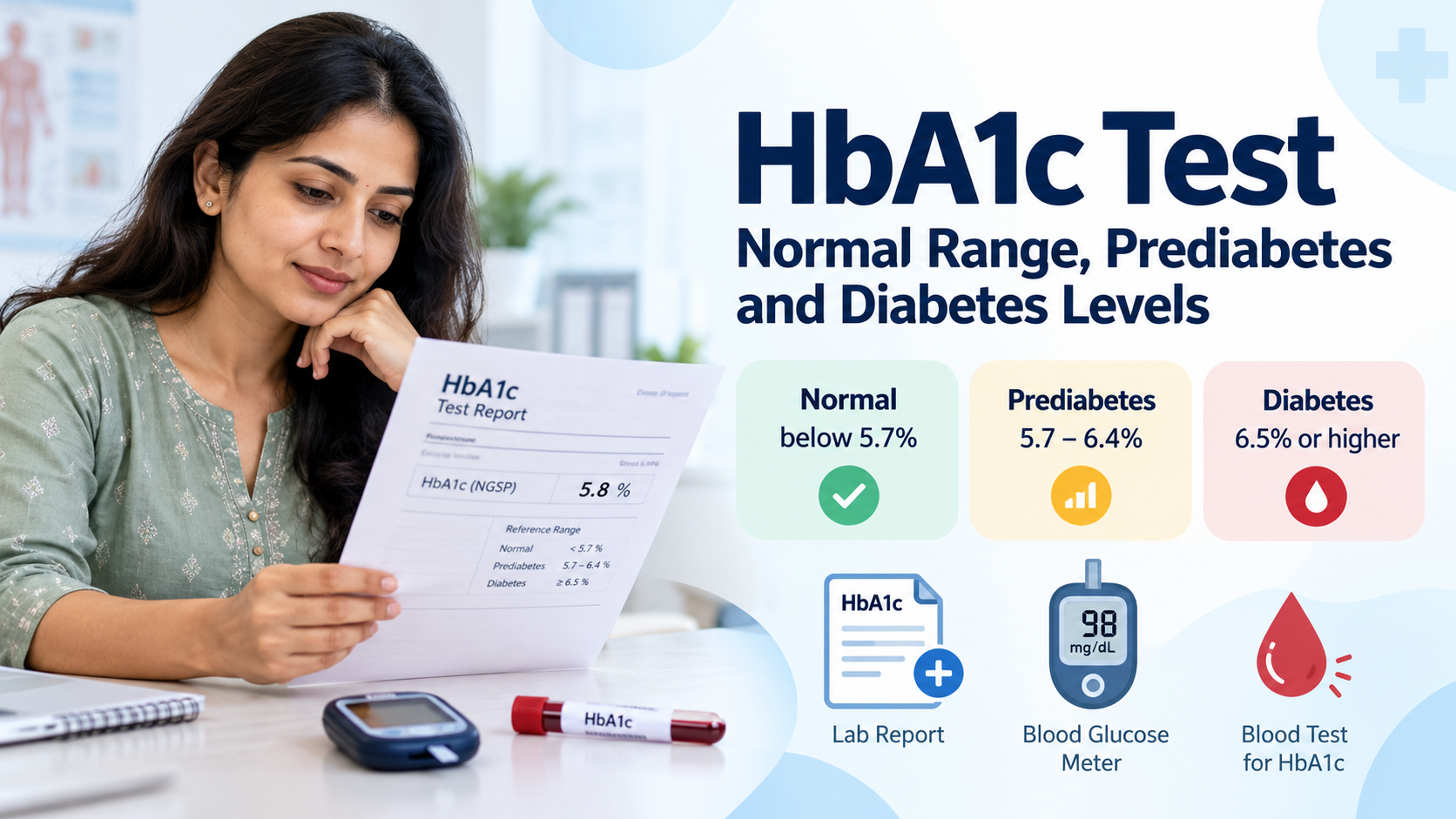
HbA1c Test: Normal Range, Prediabetes and Diabetes Levels
Understand your HbA1c result, including normal, prediabetes and diabetes ranges, treatment targets, testing frequency and factors that can affect accuracy.
Sun, 4 Oct 2026