HbA1c Test: Normal Range, Prediabetes and Diabetes Levels
Understand your HbA1c result, including normal, prediabetes and diabetes ranges, treatment targets, testing frequency and factors that can affect accuracy.
Written by Dr Sanjay Kumar K A · Medically reviewed by Dr Sanjay Kumar K A, M D Anaesthesiology (Sun, 4 Oct 2026)
Published Sun, 4 Oct 2026 · 6 min read
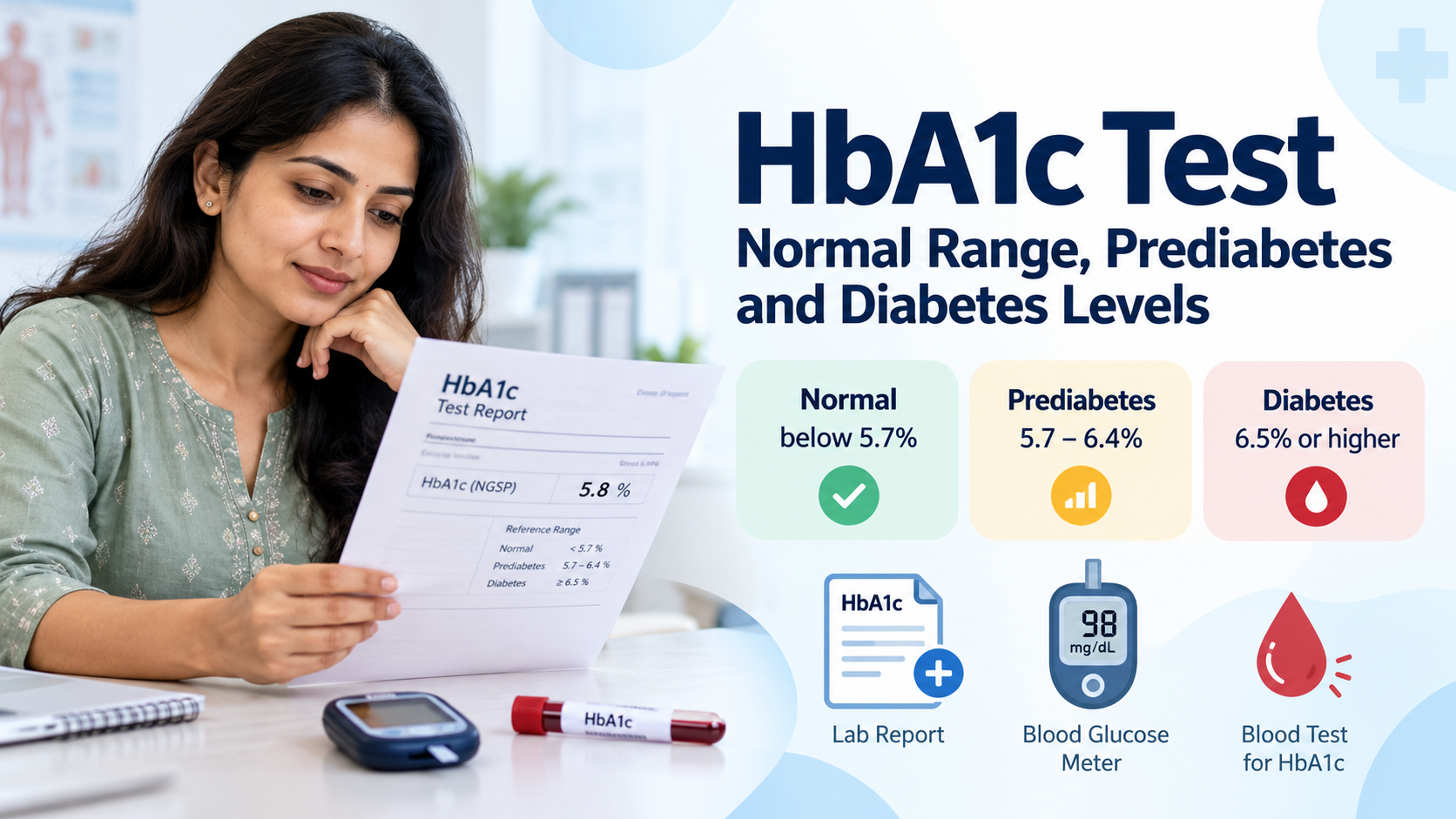
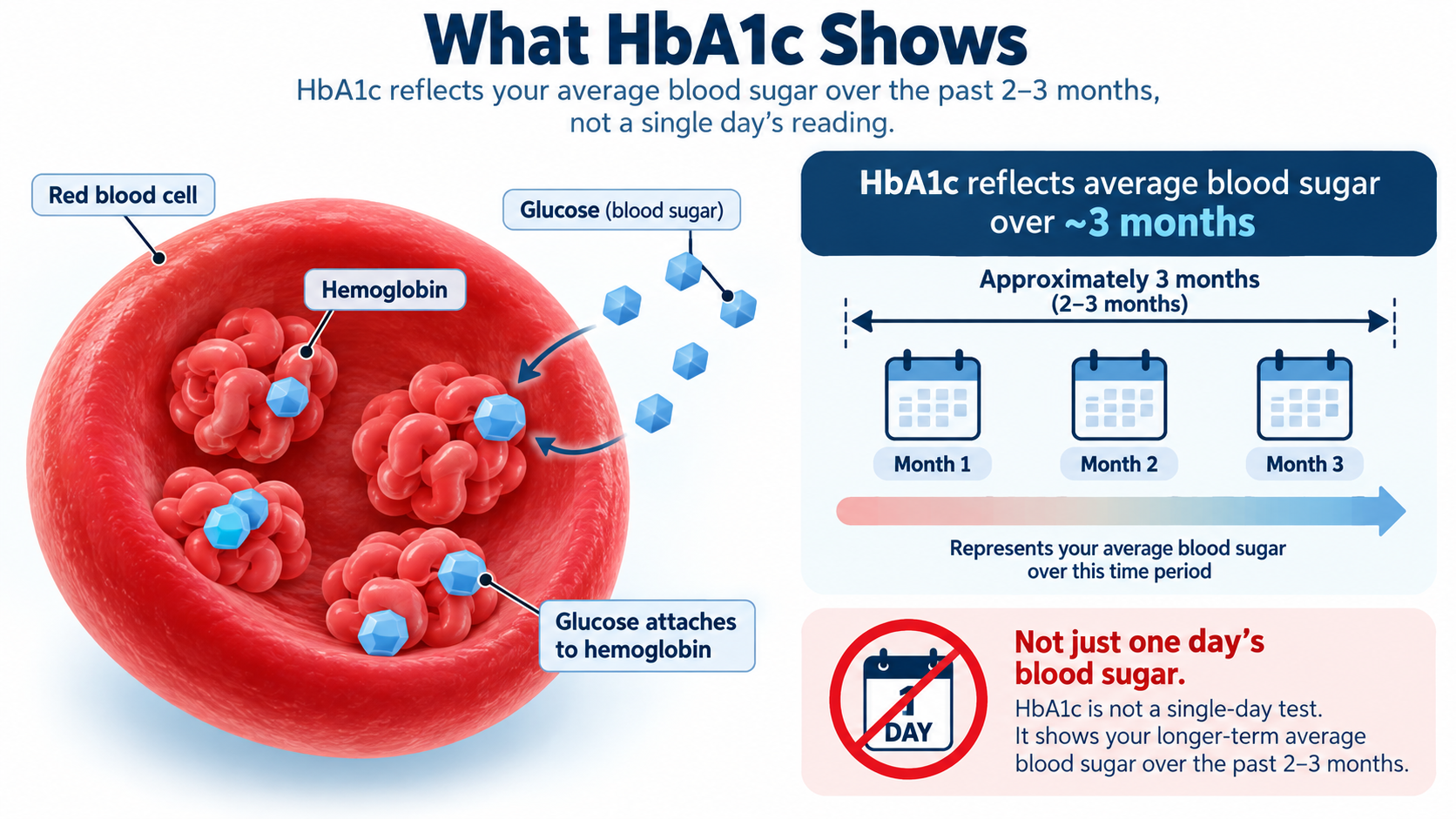
The HbA1c test, also called glycated haemoglobin or A1C, gives an estimate of your average blood sugar exposure over roughly the previous 2–3 months. Unlike a fasting glucose test, you usually do not need to fast before an HbA1c test. It is commonly used both to help diagnose diabetes and to monitor how well diabetes is being controlled over time.
HbA1c chart: what does your result mean?
| HbA1c result | Interpretation | ||
| Below 5.7% | Normal range | ||
| 5.7–6.4% | Prediabetes | ||
| 6.5% or higher | Diabetes range |
These values are diagnostic thresholds, not personalised treatment targets. A person who already has diabetes may have a different HbA1c goal depending on age, medicines, risk of low blood sugar, kidney disease, cardiovascular disease, frailty and other health conditions.
What does HbA1c actually measure?
Glucose in the bloodstream gradually attaches to haemoglobin, the oxygen-carrying protein inside red blood cells. HbA1c measures the proportion of haemoglobin that has glucose attached to it. Because red blood cells circulate for several months, HbA1c reflects longer-term glucose exposure rather than your blood sugar at one particular moment. More recent blood-glucose levels contribute more heavily to the result than levels several months earlier.
Do you need to fast for an HbA1c test?
No. Fasting is not required for HbA1c testing. You can generally have the test regardless of when you last ate. This makes HbA1c more convenient than fasting plasma glucose or an oral glucose tolerance test. However, convenience does not mean HbA1c is the best diagnostic test in every person.
HbA1c and average blood sugar: how are they related?
A higher HbA1c usually means your average blood glucose has been higher over the preceding months. HbA1c can therefore be translated approximately into an estimated average glucose (eAG).
| HbA1c | Estimated average glucose | ||
| 6% | ~126 mg/dL | ||
| 7% | ~154 mg/dL | ||
| 8% | ~183 mg/dL | ||
| 9% | ~212 mg/dL | ||
| 10% | ~240 mg/dL |
These are estimates rather than exact predictions for an individual person. Two people with the same HbA1c can still have different daily glucose patterns.
What should your HbA1c be if you already have diabetes?
A tighter target may be appropriate for some people when it can be achieved safely. A less stringent goal may be appropriate for people with significant frailty, cognitive or functional limitations, severe medical conditions or a high risk of hypoglycaemia. This is why an HbA1c of 7.2% cannot be labelled simply as “good” or “bad” without knowing the person's clinical situation.
How often should HbA1c be checked?
For people with diabetes whose blood glucose is stable and within their agreed target, HbA1c may be checked about twice a year. Testing is commonly done approximately every 3 months when treatment has recently changed, glucose levels are not meeting target, or there are significant episodes of high or low blood sugar. Your doctor may recommend a different schedule depending on your circumstances.
When can HbA1c give a misleading result?
HbA1c depends on both glucose levels and the behaviour of red blood cells. Conditions that alter haemoglobin or red-cell survival can therefore make the number less reliable. This is particularly relevant in India. RSSDI's 2022 clinical recommendations specifically state that anaemia should be excluded before making a diagnosis based on HbA1c values. Indian research has also documented that iron deficiency and haematological factors can alter HbA1c and potentially affect diabetes or prediabetes classification. Situations that may interfere with HbA1c interpretation include:
- Iron-deficiency or other anaemias
- Recent significant blood loss
- Recent blood transfusion
- Conditions that shorten or prolong red-blood-cell survival
- Some haemoglobin variants or haemoglobin disorders
- Advanced kidney failure
- Treatment with erythropoietin
- Pregnancy
Is an HbA1c of 6.5% definitely diabetes?
An HbA1c of 6.5% or higher meets a diagnostic threshold for diabetes when measured using an appropriate laboratory method. However, if you do not have clear symptoms or unequivocal hyperglycaemia, the diagnosis generally needs confirmation with a second abnormal result — either another HbA1c or another accepted diabetes test such as fasting plasma glucose.
Is HbA1c 5.7% prediabetes?
Yes. An HbA1c from 5.7% to 6.4% falls within the prediabetes range. This means glucose regulation is abnormal and the risk of developing type 2 diabetes is increased, but it does not yet meet the diagnostic threshold for diabetes. Pre diabetes is an opportunity to act early rather than simply waiting for HbA1c to reach 6.5%.
Can HbA1c improve in 3 months?
Yes. Although HbA1c reflects approximately 2–3 months of glucose exposure, it is weighted toward more recent glucose levels. Changes in diet, physical activity, weight, medications or diabetes treatment can therefore produce a meaningful change within several weeks to a few months.
HbA1c vs fasting blood sugar: which is better?
| HbA1c | Fasting blood sugar | ||
| Reflects glucose over roughly 2–3 months | Measures glucose at one point in time | ||
| Usually does not require fasting | Requires fasting | ||
| Less affected by one unusual meal or day | Can vary considerably from day to day | ||
| Can be affected by anaemia and red-cell disorders | Not affected in the same way by haemoglobin disorders | ||
| Useful for long-term monitoring | Useful for diagnosis and day-to-day assessment |
Neither test is universally “better.” They measure different aspects of glucose control, and sometimes they disagree. When the difference is substantial, the reason should be investigated rather than assuming one result is automatically correct.
Frequently asked questions about HbA1c
Is HbA1c 7% high?
For a person without diabetes, 7% is within the diabetes range. For someone already being treated for diabetes, however, below 7% is a commonly used target for many non-pregnant adults, so the meaning depends on why the test was performed.
Can HbA1c be high even if fasting sugar is normal?
Yes. HbA1c and fasting glucose measure different aspects of glucose metabolism, and the results do not always identify exactly the same people. Post-meal glucose elevations can contribute to a higher HbA1c even when fasting glucose appears less abnormal. A persistent mismatch should be discussed with a doctor, particularly if anaemia or another factor affecting HbA1c may be present.
Can I check HbA1c using a home glucometer?
No. A standard home glucometer measures your glucose level at that moment; it does not measure HbA1c. HbA1c requires a separate blood test using an appropriate laboratory or validated testing method.
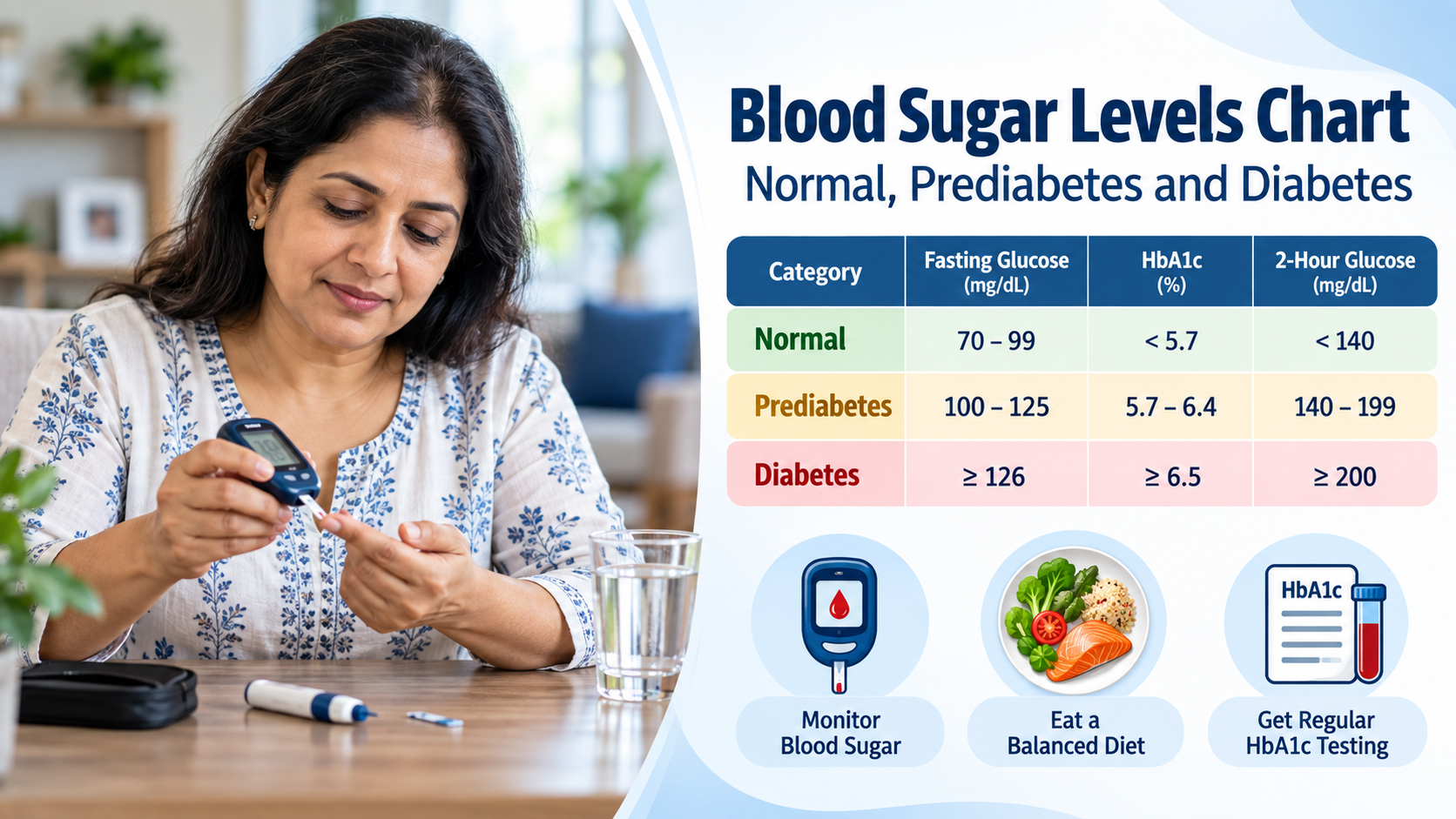
See the normal, prediabetes and diabetes blood sugar ranges
References
- RSSDI Clinical Practice Recommendations for the Management of Type 2 Diabetes Mellitus — Research Society for the Study of Diabetes in India (2022)
- ICMR Standard Treatment Workflows — Diabetes Type II — Indian Council of Medical Research, Government of India
- ADA Standards of Care in Diabetes 2026 — Diagnosis and Classification of Diabetes — Diabetes Journals (2026)
- ADA Standards of Care in Diabetes 2026 — Glycemic Goals — Diabetes Journals
- iron deficiency and prediabetes classification in young Indians — Diabetes Care (2012) · source
This article is for general health education and does not replace advice from your doctor. Please consult a qualified professional about your specific situation.
Need care at home in Bengaluru? See MITRA services.
Related articles
Diabetes · 6 min read
Blood Sugar Levels Chart: Normal, Prediabetes and Diabetes
Understand normal blood sugar levels, prediabetes and diabetes ranges for fasting glucose, HbA1c and 2-hour glucose with this simple India-focused chart.
Sun, 4 Oct 2026