Blood Pressure Chart: Normal, High and Low BP Readings
Use this blood pressure chart to understand normal, elevated, high and low BP readings, what systolic and diastolic mean, and when to seek care.
Written by Dr Sanjay Kumar K A · Medically reviewed by Dr Sanjay Kumar K A, M D Anaesthesiology (Sat, 3 Oct 2026)
Published Sat, 3 Oct 2026 · 5 min read
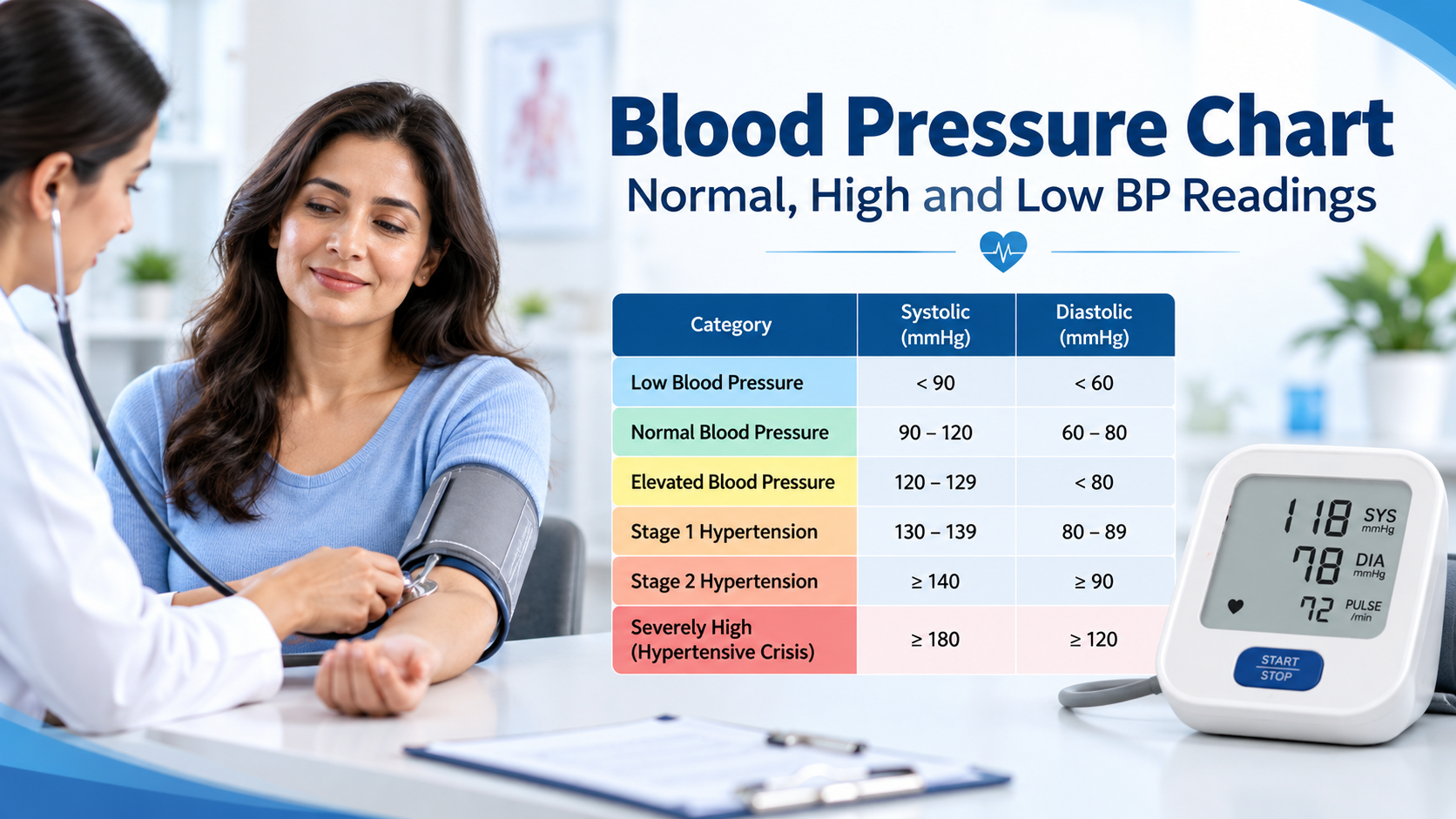
Blood pressure is written as two numbers, such as 120/80 mmHg. The top number is the systolic blood pressure, measured when the heart contracts, while the bottom number is the diastolic blood pressure, measured while the heart relaxes between beats. Regular blood pressure checks matter because high blood pressure often causes no symptoms.
Blood pressure chart: what do your numbers mean?
| Blood pressure category | Systolic | Diastolic | ||
| --- | ---: | ---: | ||
| **Low blood pressure** | Below 90 | and/or below 60 | ||
| **Normal** | Below 120 | and below 80 | ||
| **Elevated** | 120–129 | and below 80 | ||
| **Stage 1 hypertension** | 130–139 | or 80–89 | ||
| **Stage 2 hypertension** | 140 or higher | or 90 or higher | ||
| **Severely high blood pressure** | Above 180 | and/or above 120 |
The normal, elevated and hypertension categories above follow the 2025 AHA/ACC adult blood pressure classification. A reading below 90/60 mmHg is commonly considered hypotension. However, blood pressure should always be interpreted in context: one isolated measurement does not necessarily establish a diagnosis.
What do systolic and diastolic blood pressure mean?
- Systolic pressure — top number: pressure inside the arteries when the heart contracts and pumps blood.
- Diastolic pressure — bottom number: pressure inside the arteries while the heart relaxes between beats.
- mmHg: millimetres of mercury, the standard unit used to report blood pressure.
- For example, in a reading of 128/82 mmHg, 128 is the systolic pressure and 82 is the diastolic pressure.
Is 130/80 blood pressure normal?
Under the 2025 AHA/ACC classification, a reading of 130/80 mmHg falls within stage 1 hypertension because either a systolic value of 130–139 or a diastolic value of 80–89 is sufficient for that category. However, this does not mean that everyone with one reading of 130/80 needs medication. Treatment depends on repeated measurements, cardiovascular risk, existing conditions and other clinical factors. The 2025 guideline recommends medication for all adults with an average BP of at least 140/90 mmHg, and for selected people with lower readings when cardiovascular risk or conditions such as diabetes, kidney disease or previous cardiovascular disease are present.
Why does WHO use 140/90 while some charts use 130/80?
Different organisations use blood pressure thresholds for slightly different purposes. The AHA/ACC classification labels 130–139/80–89 mmHg as stage 1 hypertension to identify cardiovascular risk earlier. WHO defines hypertension as blood pressure of 140/90 mmHg or higher, confirmed on two different days. India's hypertension control programme also uses ≥140 systolic and/or ≥90 diastolic on separate visits to establish a diagnosis in most patients. The important point is not to diagnose yourself from a single number. Look at the pattern over time and discuss persistently raised readings with a healthcare professional.
What is considered low blood pressure?
Blood pressure below 90/60 mmHg is generally considered hypotension. Some healthy people naturally have readings around this level without any problems. Low blood pressure becomes more concerning when it is accompanied by symptoms such as dizziness, fainting, nausea, confusion, blurred vision or unusual fatigue.
Can one high BP reading mean you have hypertension?
Usually not. Blood pressure changes throughout the day and can temporarily rise because of physical activity, stress, pain, caffeine or anxiety during a clinic visit. WHO recommends confirming hypertension using elevated readings measured on two different days, unless the clinical situation requires more immediate assessment. Home blood pressure records can therefore be much more useful than reacting to one isolated number.
How to measure blood pressure correctly at home
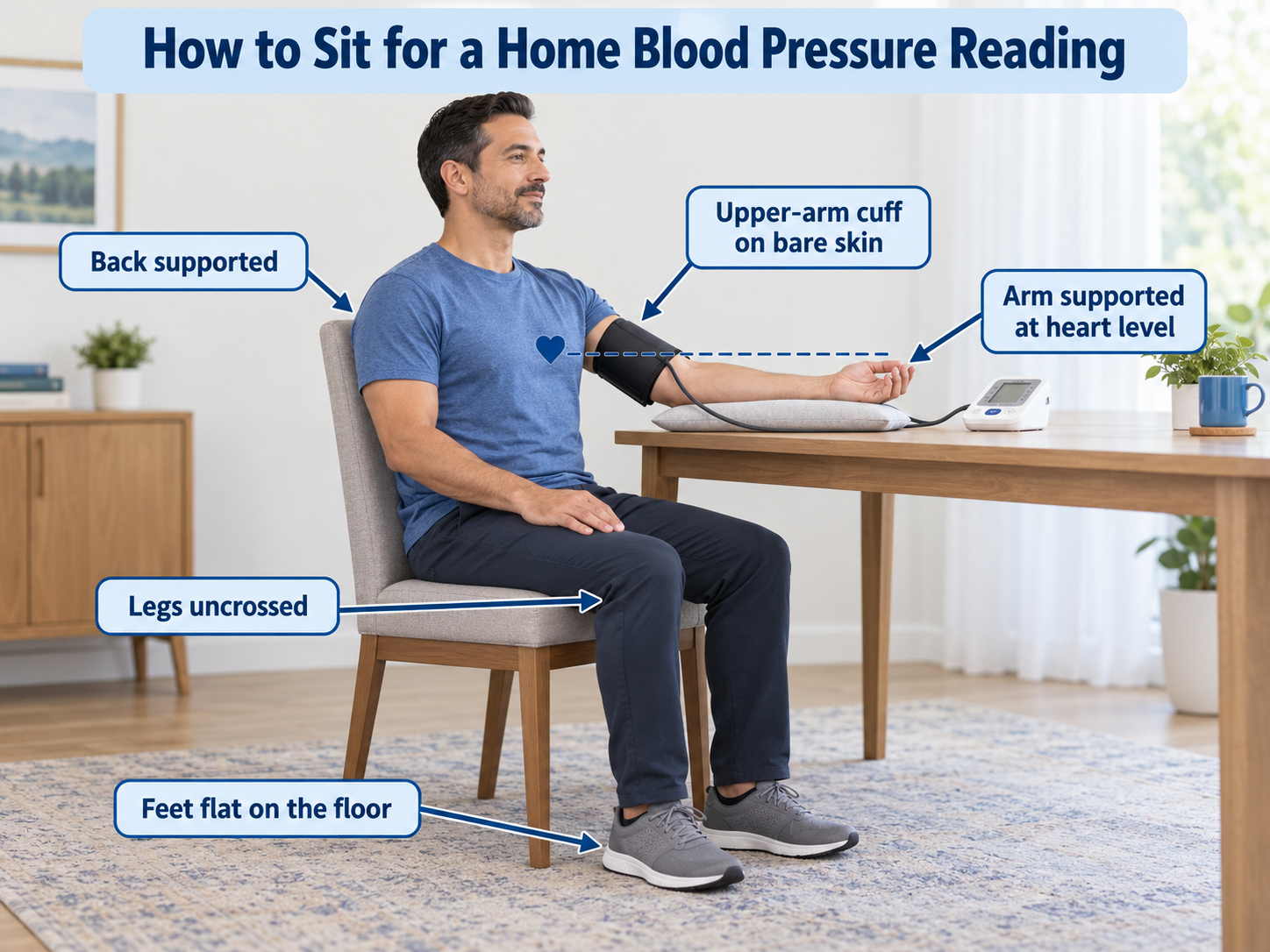
- Sit quietly before taking your measurement.
- Sit with your back supported.
- Keep both feet flat on the floor.
- Support your arm so the cuff is approximately at heart level.
- Place the cuff on the bare upper arm, not over clothing.
- Stay still and avoid talking while the machine is measuring.
- Record your readings so you and your doctor can assess the pattern over time.
When is blood pressure dangerously high?
Learn the warning signs of a heart attack
Frequently asked questions
Does normal blood pressure change with age?
Blood pressure tends to rise with age, particularly systolic pressure, but a progressively higher blood pressure should not simply be considered “normal for age.” Adult blood pressure categories do not assign a different normal range for every decade of life. Treatment decisions can, however, be individualised based on overall health, cardiovascular risk and other medical conditions.
Which blood pressure number is more important?
Both numbers matter. Either a high systolic or high diastolic reading can place someone in a higher blood pressure category. In adults over 50, systolic blood pressure often provides particularly important information about cardiovascular risk, but doctors assess the complete reading rather than ignoring either number.
What is a good blood pressure reading?
For most adults, a reading below 120/80 mmHg falls within the normal category. Individual treatment targets may be different for people who already have cardiovascular disease, diabetes, kidney disease or other medical conditions.
References
- High Blood Pressure Guideline — American Heart Association / American College of Cardiology (2025) · source
- Understanding Blood Pressure Readings — American Heart Association (2025) · source
- Hypertension — World Health Organization (2025) · source
- India Hypertension Control Initiative — Medical Officer Training Manual
- Low Blood Pressure — American Heart Association (2024) · source
This article is for general health education and does not replace advice from your doctor. Please consult a qualified professional about your specific situation.
Need care at home in Bengaluru? See MITRA services.
Related articles
Heart Health · 8 min read
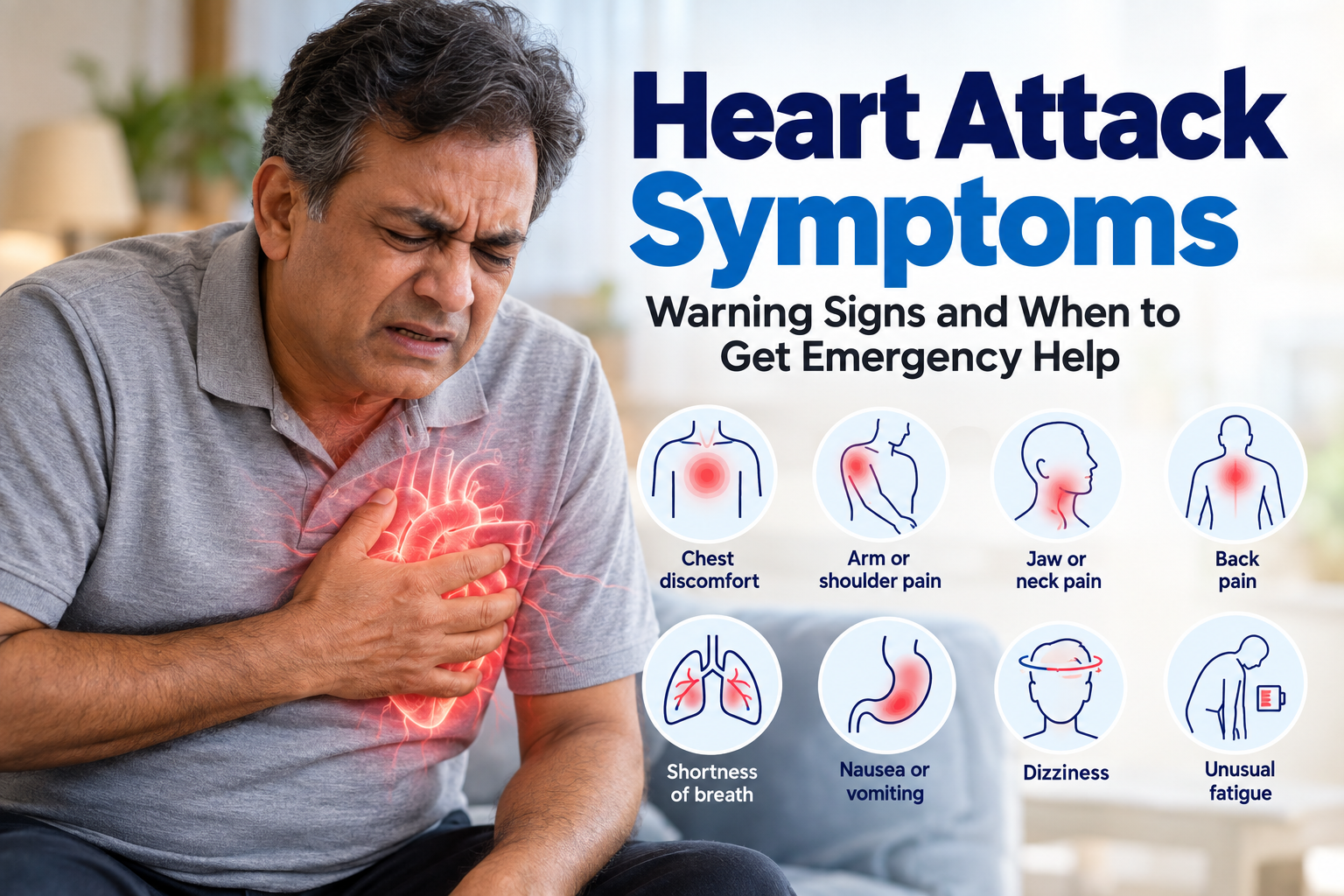
Heart Attack Symptoms: Warning Signs and When to Get Emergency Help
Heart attack symptoms can include chest pressure or pain, shortness of breath, sweating, nausea, dizziness, and discomfort in the arms, back, neck or jaw. Learn the warning signs and when to seek emergency help.
Sat, 3 Oct 2026