MITRA

Caregiver and home nursing jobs in Bengaluru

Respected, steady work caring for patients and elders at home. We match you with families near you, train you for free, and stand behind you through every placement.

Free training & placement ₹20,000–₹35,000 a month Experience certificate All of Bengaluru
  • Paid monthly, same dateBy the family, the amount agreed upfront
  • Free training & placementNo fees, ever
  • Experience certificateFor every placement you complete
  • Never on your ownA coordinator, plus a Mitra doctor
Choose your path

Two ways to join Mitra

One application form for people with a medical qualification, and one for people without. Choose the one that fits you.

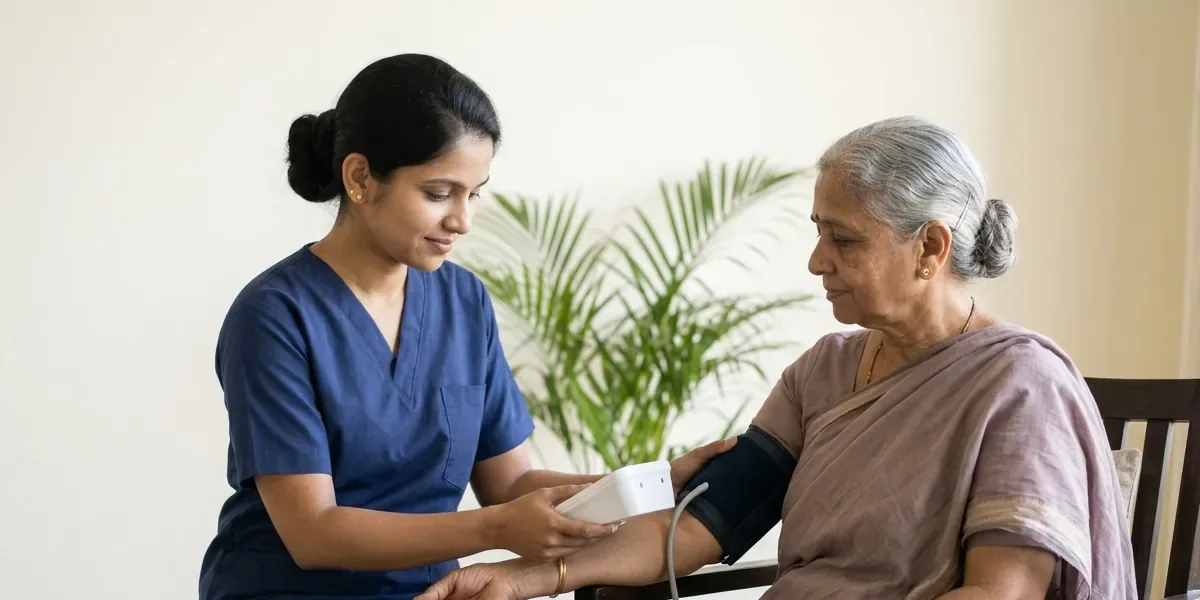
A Mitra nurse checking an elderly woman's blood pressure at home
Medical background

Home nurses and allied health professionals

For people with a nursing or allied health certificate, diploma or degree. You give the daily care every Mitra caregiver gives, plus clinical care as the doctor prescribes.

₹25,000–₹35,000a month, depending on care level and shift

Who should apply

GNMANMBSc / Post-basic BSc NursingMSc Nursing OT technicianPhlebotomistLab technician (DMLT / BMLT) Dialysis technicianEmergency medical technicianPhysiotherapy assistantOther allied health
Apply: medical background

Opens our application form. Takes about 5 minutes. Freshers welcome.

Full job details: home nurse and allied health jobs
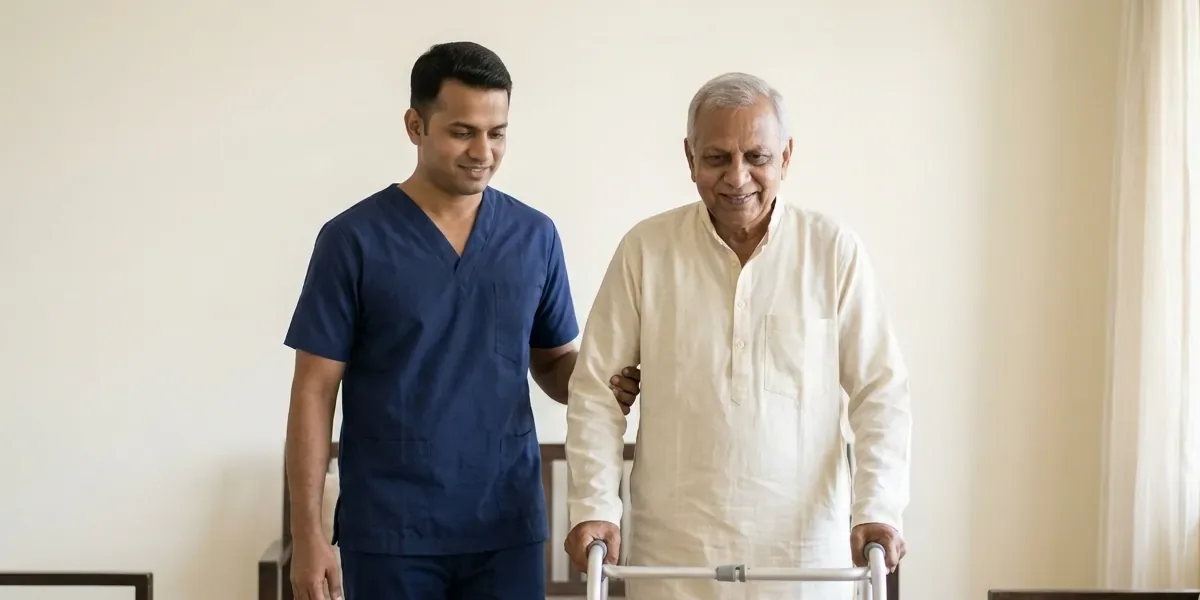
A caregiver walking beside an elderly man using a walker
Non-medical background

Caregivers and patient attendants

For people who have looked after an elderly, bedridden or recovering person at home, in a hospital or in a care home. Also for anyone who wants to try caregiving as a new career. No medical degree needed.

₹20,000–₹25,000a month, depending on care level and shift

Who should apply

Home caregiversPatient attendantsElderly care / ayah General Duty Assistant (GDA)Home health aideHospital ward assistants Care home staffExperience caring for familyLooking for a career change
Apply: non-medical background

Opens our application form. Takes about 5 minutes. Certificates welcome, but not required.

Full job details: caregiver and patient attendant jobs

Not sure which one? If you hold a nursing or allied health certificate, diploma or degree, choose medical background. Otherwise, choose non-medical background. Short certificates such as GDA or home health aide count as non-medical.

A respected profession

Work that builds your career

Families trust Mitra caregivers with the people they love most. That trust is earned, and it's worth something on your CV.

A nurse with a stethoscope attending to an elderly patient at home
For nurses and allied health

Real nursing, one patient at a time

In a hospital ward you share yourself across many patients. At home, you know one patient deeply, and the family sees the difference you make every day.

  • Build experience in elder care, post-surgery recovery and long-term care
  • Work under a care plan, with regular check-ins by a Mitra doctor
  • Move up levels as you gain experience and good feedback
  • An experience certificate for every placement you complete
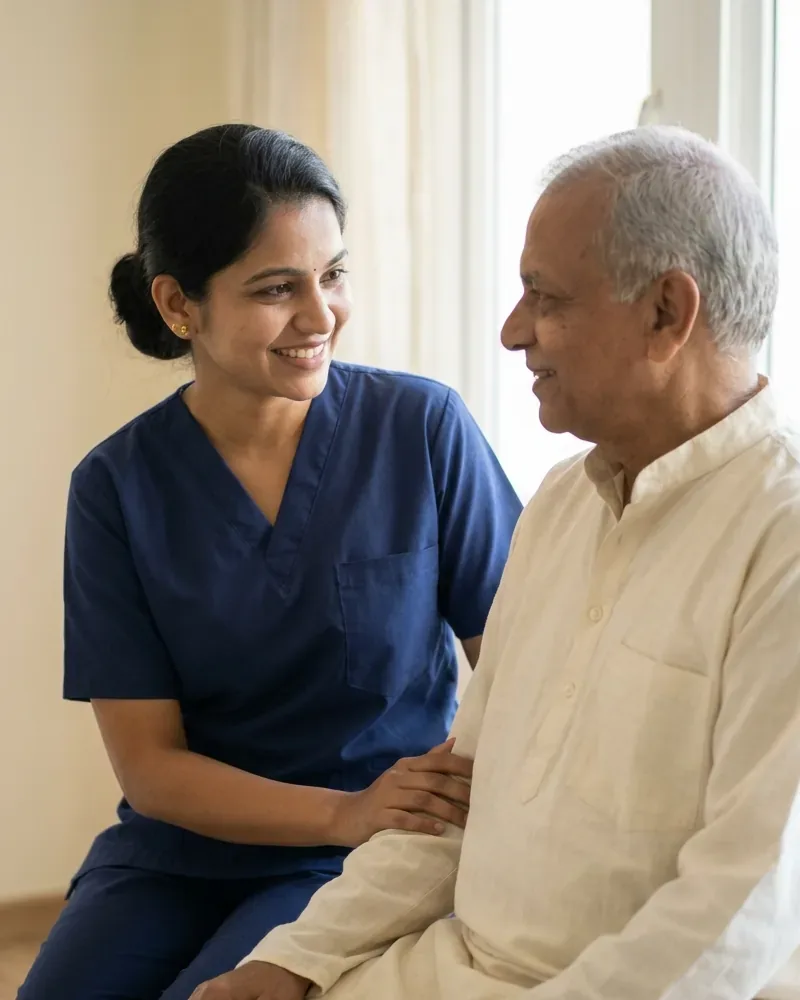
A caregiver and an elderly man smiling together at home
For a new career

Thinking of a career change? Try caregiving.

If you're patient, kind and good with people, caregiving could be your calling. You don't need a degree to start.

  • Free Mitra training before your first placement
  • Start with a 1-month placement and see if it suits you
  • Learn real skills, with a coordinator and a doctor behind you
  • An experience certificate to show future employers
Mitra experience certificateComplete a placement and we give you a certificate with your role, the type of care you gave and your dates. It's proof of verified, supervised home care experience.
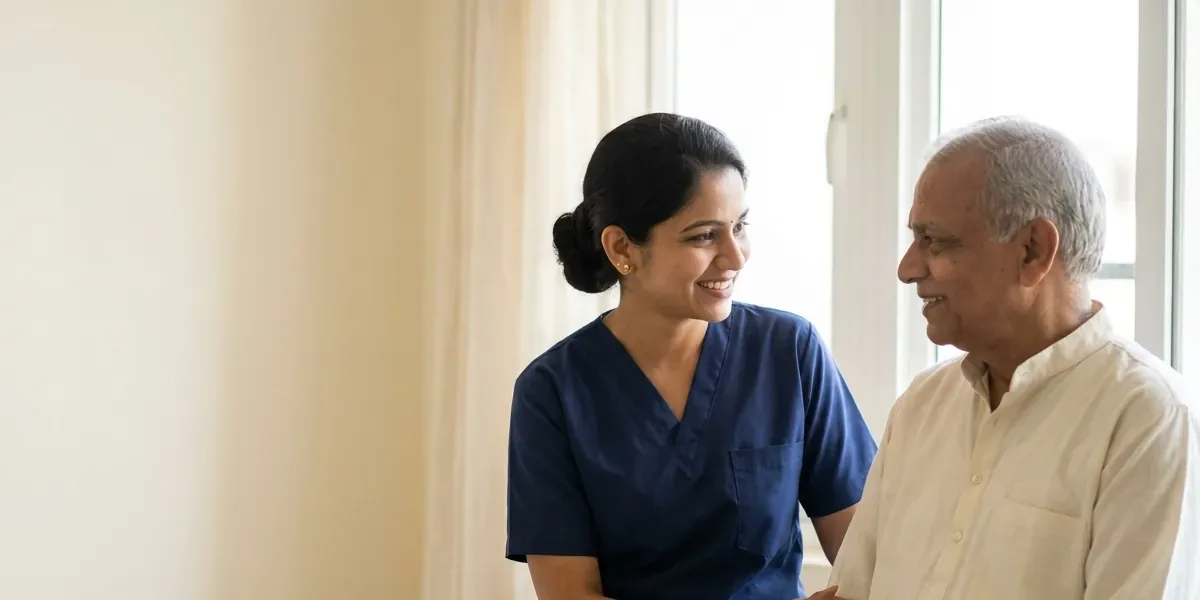
A caregiver chatting with an elderly man by the window

What helps you get chosen

  • Reply quickly when we message you about a family.
  • Keep your availability updated, including shifts and areas.
  • Good feedback from the families you work with.
  • Languages: tell us every language you speak.

Please note: applying and joining the Mitra pool doesn't guarantee work. A placement depends on the requests we receive, whether you want that particular job, and whether the family selects you. Once you're selected, you can start. The pool is free but isn't a salary: you're paid once a family hires you, and while you wait you're free to do other work.

Clear and fair

Who pays you, and how much

The family hires you and pays youYour salary comes straight from the family, on the same date every month as the day you started. The amount is agreed before you start.
Mitra matches, trains and supports youFamilies pay Mitra for finding and supporting their caregiver. You never pay Mitra anything.
Your role and level set your payPatient attendant, or basic or advanced caregiving, based on your qualification, skills and experience. With experience and good feedback, you can move up.

Medical background: nurses and allied health

Care level12-hour shift24-hour live‑in
Basic caregiving₹25,000₹30,000
Advanced caregiving₹30,000₹35,000

Non-medical background: caregivers and patient attendants

Role12-hour shift24-hour live‑in
Patient attendant₹20,000₹25,000

Monthly salary, paid by the family. Confirmed for each family before you start. For both tables:

  • 12-hour shift: accommodation is not provided. Lunch is provided by the family.
  • 24-hour live-in: you stay at the family's home. Accommodation and 3 meals a day are provided by the family.
Know the job before you apply

What the job involves

Home care is hands-on work. A family trusts you with someone they love, often for 12 or 24 hours at a time. Please read this fully before you apply.

Every Mitra caregiver does this

This is the daily care for every role, including nurses and allied health professionals.

  • Personal careBathing or sponge bath, oral care, hair, shaving, nail care and dressing.
  • Toileting and continenceBedpan, urinal and diaper changes, keeping skin clean and dry.
  • Food and fluidsHelp with meals, follow the diet set by the doctor, and note how much they eat and drink.
  • Moving safelyHelp getting up, walking and moving from bed to chair. Turn a bedridden patient every 2 hours to prevent bedsores.
  • Medicines on timeReminders, and making sure medicines are taken exactly as the care plan says.
  • A clean, safe spaceKeep the patient's room, bed linen, clothes and utensils clean. Remove trip hazards.
  • Company and dignityTalk, listen, read, take short walks. Patience and respect, every day, even on hard days.
  • Watch and reportNotice fever, pain, falls, confusion, breathlessness or not eating, and tell the family and Mitra at once.
  • Daily update on CareTrackMark attendance and add a short note about the day in the Mitra app.

Nurses and allied health professionals: bathing, toileting and feeding are part of every Mitra job, including yours. Please apply only if you're comfortable with this.

Medical background: in addition

Only as prescribed by the patient's doctor, and only within your qualification.

  • Vitals and recordsCheck and record BP, pulse, temperature, oxygen and blood sugar. Keep clear notes for the doctor.
  • Giving medicinesIncluding injections and insulin, as prescribed.
  • Tubes and lines already in placeRyles tube feeding, urinary catheter care, tracheostomy care and suctioning, colostomy bags.
  • Wound and bedsore careDressings as advised by the doctor.
  • Breathing supportNebulisation and home oxygen.
  • Recovery after hospital or surgeryFollow the discharge advice and the doctor's care plan. Allied health professionals use their specialist skill where the care plan needs it.

Non-medical: where your role stops

These keep you and the patient safe. If the patient needs any of them, tell Mitra and we arrange the right person.

  • No injections, drips or IV linesThese need a qualified nurse.
  • No inserting tubes or cathetersYou can keep the area clean, but don't insert, remove or adjust them.
  • No wound proceduresTell the family and Mitra if a wound or bedsore looks worse.
  • Never change medicines or dosesGive only what the care plan says. If you're unsure, ask before giving anything.

Not part of any Mitra job: housework for the whole family

Cooking for everyone, cleaning the house, washing the family's clothes or looking after children is not your job. If a family wants extra household help, it must be agreed with you before you start, and paid extra.

The Mitra way of caring

Gentle hands, a patient heart

Many of the people you'll care for are elderly, frail or unwell. Some can't tell you what they need. How you care matters as much as what you do.

  • Be gentle, always

    Move slowly and support them fully. Never pull an arm or rush a transfer.

  • Explain before you touch

    Tell them what you're about to do, every time, even if they can't reply.

  • Protect their dignity

    Close the door and keep them covered during bathing and changing. Knock before entering.

  • Never rush them

    Let them eat, walk and talk at their own pace. A slow day is still a good day.

  • Let them do what they can

    Help with what they can't do, not with everything. Independence keeps them strong.

  • Patience with memory loss

    If they repeat or forget, don't argue or correct. Reassure them calmly and kindly.

  • Speak with respect

    Address them the way the family does. Never scold, mock or raise your voice.

  • Listen and notice

    Small changes, like a quiet mood or a skipped meal, can be the first sign something is wrong.

"Care for them the way you'd want your own parents cared for."The one rule every Mitra caregiver follows

What a shift looks like

A typical 12-hour day shift

Every patient is different, and the care plan sets the routine. Here's what a normal day looks like for a bedridden elder.

Shifts and placements

12-hour dayUsually 8 am to 8 pm. Lunch is provided by the family, and you go home after your shift.
12-hour nightUsually 8 pm to 8 am. Turning, toileting and staying alert through the night.
24-hour live-inYou stay at the family's home, with 3 meals a day provided. Your rest time is agreed before you start.
Placements of 1, 3 or 6 monthsFamilies often renew, so one placement can become long-term work.
  1. HandoverHear from the night caregiver or family how the night went. Read yesterday's CareTrack note.
  2. Morning careToileting, bath or sponge bath, oral care, fresh clothes and bed linen.
  3. Breakfast and medicinesHelp with eating, then medicines as per the care plan. Medical staff check vitals.
  4. MovementSitting up, a short walk or exercises the physiotherapist advised. Turn and reposition.
  5. Lunch and restLunch, fluids, toileting, then a rest. You take your own break when the patient is settled.
  6. CompanyTalk, read, music, a call with family. Watch for any change in mood, appetite or pain.
  7. Evening careTea, medicines, freshen up, tidy the room.
  8. Dinner and CareTrackDinner and fluids. Write the day's update in the Mitra app.
  9. HandoverTell the next caregiver or the family what happened today and anything to watch overnight.
Please read before you apply

What we expect from you, and what you can expect from us

A family depends on you completely. These are the promises that make Mitra caregivers the ones families ask for by name.

You commit to

  1. Stay for the full placement1, 3 or 6 months. Leaving suddenly hurts a patient who depends on you.
  2. Be on time, every shiftAnd never leave the patient alone during your shift.
  3. Follow the care planAnd the doctor's instructions. If you're unsure, ask first.
  4. Respect the homeThe family's privacy, their ways and their belongings.
  5. Stay sober and smoke-free at workNo alcohol or drugs. No smoking at the patient's home.
  6. Keep your phone for work and emergenciesThe patient comes first during care.
  7. Never take money or giftsDon't accept or ask for money, loans or gifts from the family.
  8. Keep the patient's information privateNo photos or videos of the patient, and nothing about them on social media.
  9. Tell us early about leaveAnd give notice if you need to stop, so the patient is never left without care.
  10. Act fast in an emergencyCall an ambulance first, then the family and Mitra.

Mitra commits to

  • Honest matchingWe tell you about the patient and the home before you say yes.
  • Free training and uniformNo fees for anything, ever.
  • Salary agreed upfrontConfirmed before you start, paid by the family on the same date every month.
  • A coordinator you can callFor any problem at work, big or small.
  • Doctor supportMitra doctor check-ins: monthly for daily care, every two weeks for nursing care.
  • Your safety firstIf you ever feel unsafe, call us. We act at once.
  • An experience certificateFor every placement you complete.
  • Your next familyWhen a placement ends, we look for your next match.
Why families trust Mitra caregivers

Background verification before you start

Every Mitra caregiver is background verified

Before you start with a family, we complete a background verification (BGV), with your written consent. It protects you as much as the family, and it's part of why families choose Mitra caregivers.

Your documents are kept private and used only for verification. Families see a short profile, never your documents.

Keep these ready

  • Aadhaar card
  • PAN card
  • A recent photo
  • A mobile number on WhatsApp
  • Your certificates, if you have them (council registration for nurses)
  • Experience letters, if you have them
Before you apply

Is home care right for you?

This is a home-based patient care job. If you can say yes to all of these, we'd love to hear from you.

I'm ready to

  • Work in a patient's home, for 12 or 24 hours at a time
  • Give personal care, including bathing, toileting and diaper changes
  • Be gentle and patient with elderly and unwell people, even on hard days
  • Stay for the full placement of 1, 3 or 6 months
  • Go through background verification before I start

Not sure about one of these? Message us on WhatsApp before you apply. We're happy to talk it through.

FAQ

Questions caregivers ask

Do I have to pay anything to join Mitra?

No. Applying, training and placement are free. Mitra never charges caregivers. If anyone asks you for money in Mitra's name, tell us.

What kind of jobs are these?

Home caregiver, caretaker, patient attendant and home nurse jobs with families across Bengaluru (Bangalore). You work in the patient's home on a 12-hour shift or a 24-hour live-in placement of 1, 3 or 6 months.

Who pays my salary?

The family pays you directly, on the same date every month as the day you started. The amount is agreed before you start.

Will I get an experience certificate?

Yes. When you complete a placement, Mitra gives you an experience certificate with your role, the type of care you gave and your dates.

What is the Mitra pool?

It's our list of screened caregivers who are ready to work. When a family needs care, we match them with caregivers from the pool based on skills, languages, areas and shifts.

Am I paid while I'm in the pool?

No. Joining the pool is free, but you're paid only once a family hires you. While you wait, you're free to do other work. Just keep your availability updated.

Does joining the pool guarantee me a job?

No. Applying and joining the pool doesn't guarantee work. A placement depends on the requests we receive, whether you want that particular job, and whether the family selects you. Once you're selected, you can start.

Is food and accommodation provided?

For a 12-hour shift, accommodation is not provided and the family provides lunch. For 24-hour live-in work, you stay at the family's home and the family provides 3 meals a day.

Can men apply for caregiver jobs?

Yes. Men and women can both apply. Some families ask for a male or female caregiver, and we match accordingly.

I'm a fresh nursing graduate. Can I apply?

Yes. Apply under medical background. Your care level and pay depend on your skills and experience.

I don't have a certificate. Can I apply?

Yes, if you have cared for an elderly or sick person at home, in a hospital or in a care home, or if you want to try caregiving as a new career. Apply under non-medical background.

Do I need to speak English?

No. Tell us the languages you speak. We match you with families who speak them.

Which areas of Bengaluru are the jobs in?

All of Bengaluru. Tell us the areas you can travel to. For 24-hour live-in work you stay at the family's home.

Can I choose day, night or live-in shifts?

Yes. Choose the shifts you want in the application form.

What happens if a placement doesn't work out?

Talk to your Mitra coordinator. If the placement ends, you go back to the Mitra pool and we look for your next family.

How long does it take to get placed?

It depends on what families near you need and when you are available. We keep you updated on WhatsApp.

Is my information safe?

Your documents are used only for matching and verification and are never sold. Families see a short profile, not your documents. Read our privacy policy .

Ready to apply?

Choose your form. It takes about 5 minutes, and our team will call you.

This website uses cookies. Privacy policy