What Tests Should a Full Body Checkup Include?
What should a full body health checkup actually include? Understand CBC, blood sugar, HbA1c, cholesterol, liver, kidney, thyroid, urine, iron, calcium, vitamin D and B12 tests — and why the right package depends on your age, symptoms and health risks.
Written by Dr. Sanjay Kumar K A
Published Wed, 11 Nov 2026 · 12 min read
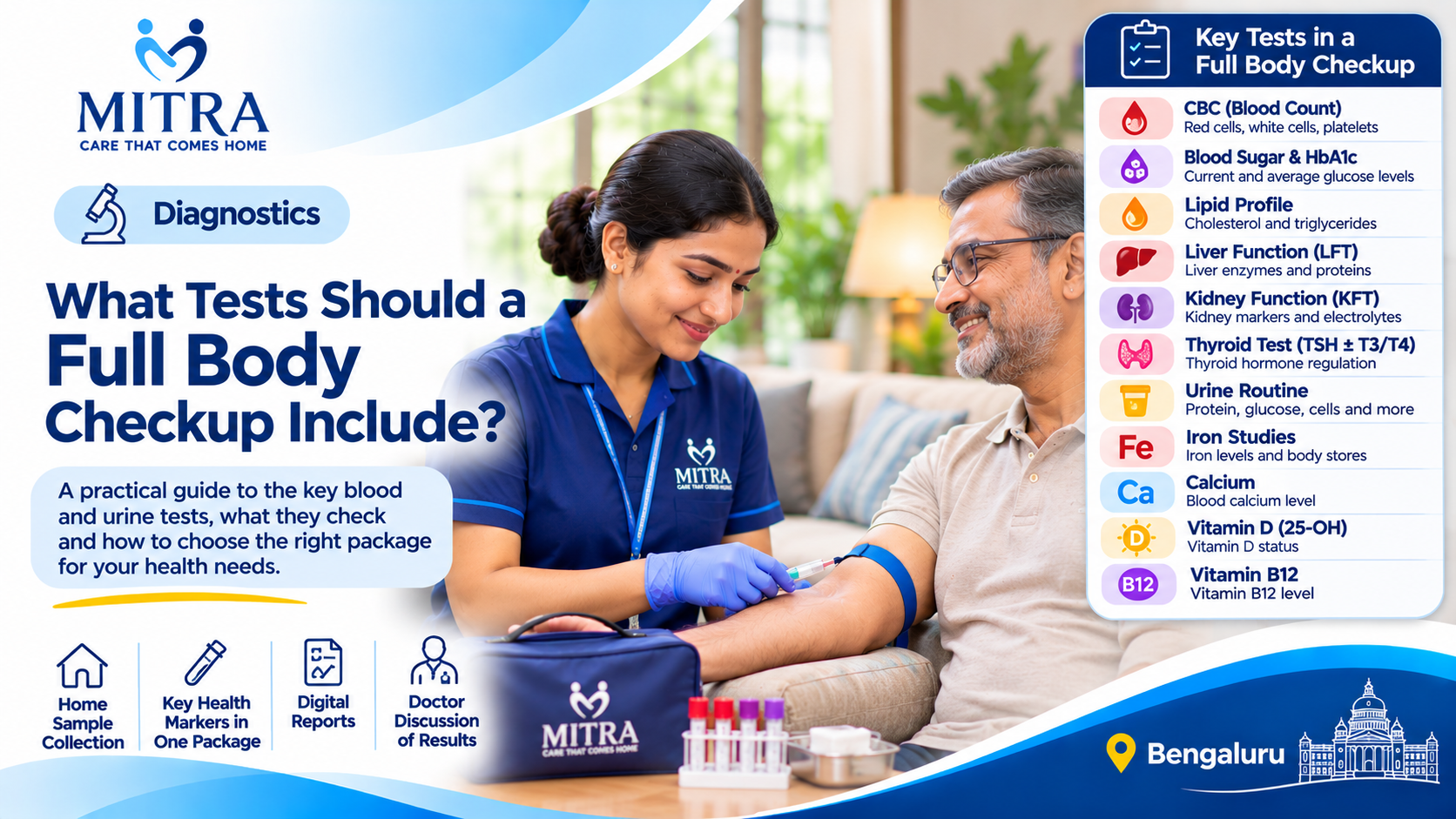
Search for a “full body checkup” and you may find packages containing anywhere from a handful of tests to more than a hundred reported parameters. More tests, however, do not automatically mean a better health check. A useful checkup should answer a simpler question: Which tests give meaningful information about your health, risk factors and existing medical conditions?
What does “full body checkup” actually mean?
“Full body checkup” is a convenient term used for a group of screening blood and sometimes urine tests. It does not mean that every organ in the body has been completely examined. Blood tests can provide useful information about areas such as:- Blood-cell counts- Glucose metabolism- Cholesterol- Liver-related markers- Kidney function- Thyroid function- Nutritional deficienciesBut they cannot replace medical history, physical examination, blood-pressure measurement, age-appropriate cancer screening or other investigations when those are indicated.
Is there one standard full body checkup for everyone?
No. The most appropriate tests depend on factors such as:- Age- Symptoms- Weight- Blood pressure- Family history- Diabetes risk- Cardiovascular risk- Medicines- Existing medical conditions- Previous abnormal results- Pregnancy status where relevantThis is why a 25-year-old healthy adult and a 55-year-old person with hypertension and diabetes risk should not necessarily receive identical screening.
Which tests are commonly included in a comprehensive health checkup?
| Test group | What it broadly evaluates | ||
| Complete Blood Count | Red cells, white cells, platelets | ||
| Blood sugar | Current or longer-term glucose levels | ||
| HbA1c | Average glucose over roughly 2–3 months | ||
| Lipid profile | Cholesterol and triglycerides | ||
| Liver Function Test | Liver enzymes, bilirubin and proteins | ||
| Kidney Function Test | Kidney-related blood markers | ||
| Thyroid testing | Thyroid hormone regulation | ||
| Urinalysis | Protein, glucose, blood, cells and other urine findings | ||
| Iron studies | Iron availability and stores | ||
| Calcium | Blood calcium level | ||
| Vitamin D | 25-hydroxyvitamin D status | ||
| Vitamin B12 | Blood vitamin B12 level |
1. Complete Blood Count — CBC
A Complete Blood Count, commonly called CBC, is one of the most familiar blood tests. It measures different components of your blood and can provide information relevant to conditions such as anaemia, infection and abnormalities affecting blood-cell numbers. MedlinePlus notes that CBC is frequently used as part of a routine health assessment.
- Haemoglobin
- Red blood-cell count
- Haematocrit
- Mean corpuscular volume or MCV
- White blood-cell count
- Platelet count
2. Blood sugar testing
Blood glucose testing helps identify abnormal glucose levels and is particularly important when someone has risk factors for prediabetes or type 2 diabetes. Common tests include:- Fasting Blood Sugar — FBS- Random Blood Sugar — RBS- Postprandial Blood Sugar — PPBS- HbA1cThe USPSTF identifies fasting plasma glucose and HbA1c among established screening tests for prediabetes and type 2 diabetes.
| Test | What it tells you | ||
| FBS | Glucose after an overnight fast | ||
| RBS | Glucose at the time the sample is taken | ||
| PPBS | Glucose after a meal | ||
| HbA1c | Longer-term average glucose exposure |
3. Lipid profile
A lipid profile evaluates fats circulating in the blood and is used as part of cardiovascular-risk assessment. It commonly reports:- Total cholesterol- LDL cholesterol- HDL cholesterol- TriglyceridesCholesterol testing becomes more meaningful when interpreted together with factors such as age, blood pressure, diabetes, smoking and family history rather than viewing one number in isolation. Regular cholesterol assessment is recommended for many adults as part of cardiovascular-risk evaluation.
4. Liver Function Test — LFT
A Liver Function Test is actually a panel of several measurements. Common components include:- ALT- AST- ALP- Bilirubin- Albumin- Total protein- Sometimes GGTThese measurements can provide information about liver-cell injury, bile-flow abnormalities and the liver's protein-producing function. An abnormal liver panel does not by itself identify the exact cause.
5. Kidney Function Test — KFT or RFT
Kidney-related blood testing often includes measurements such as creatinine, urea and electrolytes, depending on the panel. Creatinine is also used when estimating eGFR, which helps assess how effectively the kidneys are filtering blood. For chronic kidney disease assessment, NIDDK highlights two particularly important approaches: blood testing for GFR/eGFR and urine testing for albumin.
Why blood and urine can both matter for kidney assessment
Blood and urine tests provide different information. A blood test can help estimate kidney filtration. A urine test such as urine albumin-to-creatinine ratio, or UACR, can detect albumin leaking into urine — which may indicate kidney damage even when some blood results are still relatively preserved. A routine full-body package does not necessarily include UACR, so people with diabetes, hypertension or known kidney risk may require a more targeted kidney assessment.
6. Thyroid testing
The most common first-line blood test used to assess thyroid function is TSH — thyroid-stimulating hormone. If TSH is abnormal or there is a particular clinical reason, additional thyroid hormone tests such as T4 may be useful. The USPSTF identifies serum TSH as the primary screening blood test for thyroid dysfunction, while also noting that evidence is insufficient to recommend universal thyroid screening for every asymptomatic nonpregnant adult.
Should everyone automatically get a complete thyroid panel?
Not necessarily. A full package may include TSH, T3 and T4 for convenience, but the medical need for thyroid testing varies. Factors that may affect the decision include:- Symptoms- Previous thyroid disease- Family history- Pregnancy-related considerations- Certain medicines- Previous abnormal thyroid testsA larger thyroid panel is not automatically more useful simply because it contains more markers.
7. Urine routine examination
A urinalysis examines several characteristics of urine. It can assess findings such as:- Protein- Glucose- Blood- Ketones- Cells- Crystals- Bacteria or other organisms- pH- AppearanceUrinalysis may be used when evaluating urinary infection, kidney problems, diabetes and several other clinical situations MITRA's Advanced Health Checkup and Master Health Package 1 currently include urine testing.
8. Iron studies
Iron assessment can be particularly useful when investigating anaemia or suspected iron deficiency. Iron testing may involve several markers rather than serum iron alone. Depending on the panel, these can include:- Serum iron- Ferritin- Total iron-binding capacity- Transferrin-related measurementsIron tests are used to investigate both low and excessive iron states, and low iron does not always mean that anaemia is already present.
9. Calcium
A blood calcium test measures calcium circulating in the blood. Calcium is important for:- Nerve function- Muscle function- Cardiac function- Hormonal processesAbnormal blood calcium can occur in several conditions involving the kidneys, thyroid, parathyroid glands and other systems. Importantly, a normal blood calcium result does not tell you that your bones necessarily have normal bone density.
10. Vitamin D
Vitamin D status is generally assessed using 25-hydroxyvitamin D — 25(OH)D. Vitamin D testing is frequently included in comprehensive commercial health packages. However, inclusion in a package should not be confused with a recommendation that every healthy adult must be screened. The USPSTF currently concludes that evidence is insufficient to recommend for or against routine vitamin D deficiency screening in asymptomatic community-dwelling adults.
11. Vitamin B12
A vitamin B12 blood test measures the amount of B12 in the blood. It may be particularly relevant when investigating:- Megaloblastic anaemia- Numbness or tingling- Weakness- Balance problems- Certain neurological symptoms- Conditions or medicines affecting B12 absorptionVitamin B12 testing should therefore be interpreted in the context of symptoms, diet, medicines and other blood results.
Which full body checkup tests are essential for everyone?
| Category | Examples | How to think about it | ||
| Broad baseline tests | CBC, glucose, lipid profile | Common components of health packages | ||
| Organ-related panels | LFT, KFT | Useful broad biochemical information | ||
| Risk-based screening | HbA1c, kidney urine testing | Importance rises with relevant risk | ||
| Thyroid | TSH ± T3/T4 | Depends on symptoms/risk/context | ||
| Nutritional testing | Iron, B12, vitamin D | More useful when clinically relevant | ||
| Urinalysis | Urine routine | Adds information not available from blood alone |
What should a health checkup include in your 20s?
For a younger adult without symptoms or known disease, the emphasis should be on risk assessment rather than simply ordering the largest package available. Relevant considerations include:- Blood pressure- Weight and BMI- Family history- Smoking- Diabetes risk- Cholesterol risk- Diet- Physical activity- Previous abnormal laboratory resultsAdditional tests can then be selected when there is a reason to perform them.
What about a full body checkup in your 30s?
By the 30s, metabolic risk becomes increasingly relevant for many people. Blood sugar and cardiovascular-risk assessment may become more important when there is:- Overweight or obesity- Sedentary lifestyle- Hypertension- Family history of diabetes- Previous gestational diabetes- Polycystic ovary syndrome- Abnormal cholesterolFor diabetes specifically, the USPSTF recommends screening adults aged 35–70 who have overweight or obesity, with earlier consideration in some higher-risk groups.
What about a full body checkup after 40?
After 40, the usefulness of structured preventive health assessment generally increases because cardiovascular, metabolic and other health risks accumulate with age. A broader evaluation may include:- Blood pressure- Diabetes assessment- Lipid profile- Relevant kidney testing- Other blood tests based on history- Age-appropriate cancer screening- Medication review- Lifestyle-risk assessmentA blood-test package is therefore only one component of a proper preventive-health review.
Who may need more attention to diabetes testing?
Diabetes screening deserves particular attention when risk is elevated. Relevant factors include:- Increasing age- Overweight or obesity- Family history- Previous gestational diabetes- Polycystic ovary syndrome- Previously abnormal glucose- Some high-risk ethnic populationsFasting glucose and HbA1c are both established screening approaches.
Do women need a different full body checkup?
Not automatically. Many blood tests are the same for men and women. But individual circumstances can change what is useful. For example, someone with heavy menstrual bleeding may require particular attention to:- CBC- Haemoglobin- Ferritin- Iron studiesIron testing is commonly used when investigating low iron and different forms of anaemia. Pregnancy and reproductive-health situations require a different, clinician-guided approach rather than a generic package.
Does family history change which tests you should choose?
It can. Family history may increase concern for conditions such as:- Diabetes- Premature cardiovascular disease- Thyroid disease- Certain kidney diseases- Some inherited blood disordersA package should therefore be chosen around the person's risk profile rather than simply by comparing the number of included parameters.
Do you need to fast before a full body checkup?
| Test | Fasting | ||
| CBC | Usually not required | ||
| HbA1c | Not required | ||
| Fasting Blood Sugar | Required by definition | ||
| Random Blood Sugar | Not required | ||
| Lipid profile | Usually yes, may depend on test instructions | ||
| Vitamin D | Usually not the reason for fasting | ||
| Calcium | Usually no special preparation by itself | ||
| Combined package | Follow the package instructions |
What about medicines and supplements before testing?
Tell the doctor or laboratory about medicines and supplements you use. Depending on the tests, relevant examples can include:- Diabetes medicines- Insulin- Thyroid medicines- Iron supplements- Vitamin D- Calcium- BiotinDo not stop prescribed medicines on your own simply because you are having a blood test. Follow the specific preparation instructions for the package or your clinician's advice.
What happens if one result is outside the reference range?
An abnormal laboratory value does not automatically mean you have a disease. Results can be affected by factors such as:- Hydration- Recent illness- Exercise- Medicines- Supplements- Menstruation- Laboratory variation- Temporary physiological changesEven a CBC result outside the reference interval can have multiple possible explanations and must be interpreted with the rest of the clinical picture.
How do MITRA's current full body checkup options compare?
| MITRA package | Current coverage | ||
| Basic Health Checkup | CBC, LFT, creatinine, FBS, lipid profile, TSH | ||
| Advanced Health Checkup | CBC, liver, full kidney panel, RBS, HbA1c, lipids, thyroid, calcium, vitamin D, urine | ||
| Master Health Package 2 | Blood count, sugar, cholesterol, liver, kidney, thyroid, iron and calcium | ||
| Master Health Package 1 | Broad Master 2-style coverage plus vitamin D, vitamin B12 and urine analysis |
Basic vs Advanced Health Checkup: which type makes sense?
A basic checkup may be appropriate when someone wants a relatively compact baseline covering major areas such as blood counts, sugar, cholesterol, liver, kidney and thyroid markers. A broader package becomes more useful when there is a reason to add areas such as:- Longer-term glucose assessment with HbA1c- More detailed kidney evaluation- Urinalysis- Calcium- Vitamin testing- Iron studiesThe right choice is not necessarily the package with the longest list.
Master Health Package 1 vs Master Health Package 2
MITRA currently positions Master Health Package 2 as a broad nine-test blood-based health check covering blood counts, glucose, cholesterol, liver, kidney, thyroid, iron and calcium. Master Health Package 1 adds broader nutritional and urine assessment, including vitamin D, vitamin B12 and complete urine analysis. For someone choosing between them, the important question is not only: “Which has more tests?” It is: “Do the additional tests provide information that is relevant to me?”
Frequently asked questions
Is a full body checkup necessary every year?
Not every person needs the same set of laboratory tests every year. Screening frequency should depend on age, previous results, medical conditions and risk factors. For example, even for diabetes screening, recommended intervals vary by risk; the USPSTF notes that approximately three-year intervals may be reasonable for some adults with initially normal glucose results, while higher-risk individuals may require different follow-up.
Looking for a full body health checkup at home in Bengaluru? MITRA currently offers multiple home-collection options, from a basic six-test health check to broader master health packages covering blood counts, sugar, cholesterol, liver, kidney, thyroid and additional nutritional or urine testing. A trained phlebotomist collects the required samples at home and reports are shared digitally.Explore MITRA DiagnosticsMaster Health Package 1Master Health Package 2
Need care at home in Bengaluru? See MITRA services.
Related articles
Diagnostics · 11 min read
Full Body Checkup in Bangalore: How to Choose the Right Package
Choosing a full body checkup in Bangalore can be confusing. Learn how to compare packages by blood sugar, cholesterol, liver, kidney, thyroid, vitamins, iron and urine tests — and choose based on your age, health risks and previous results rather than simply the number of parameters.
Thu, 12 Nov 2026
Diagnostics · 14 min read
Postprandial Blood Sugar Test: When and How to Test After a Meal
A postprandial blood sugar test measures glucose after eating. Learn when the 2-hour timing starts, what to eat before a PPBS test, how medicines affect testing and how to prepare for home sample collection.
Thu, 22 Oct 2026