Postprandial Blood Sugar Test: When and How to Test After a Meal
A postprandial blood sugar test measures glucose after eating. Learn when the 2-hour timing starts, what to eat before a PPBS test, how medicines affect testing and how to prepare for home sample collection.
Written by Dr. Sanjay Kumar K A · Medically reviewed by Dr. Sanjay Kumar K A, M D Anaesthesiology (Thu, 22 Oct 2026)
Published Thu, 22 Oct 2026 · 14 min read
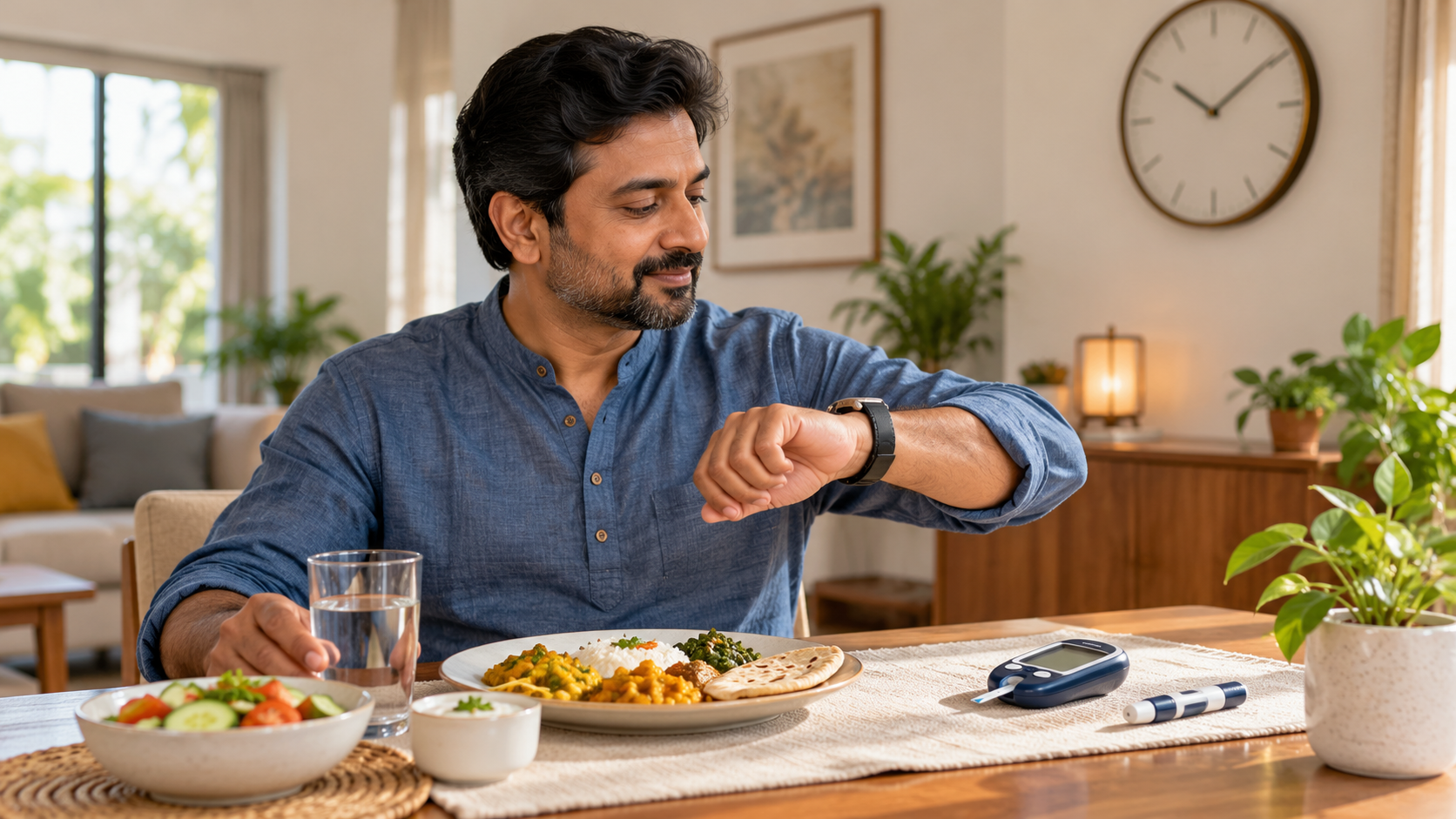
A postprandial blood sugar test, often shortened to PPBS, measures your blood glucose after eating. The test sounds straightforward, but one question causes enormous confusion: When exactly do the two hours begin — from the first bite or after you finish eating? For post-meal glucose monitoring, current diabetes guidance measures postprandial glucose 1–2 hours after the beginning of the meal, with two hours commonly used for PPBS testing.
What is a postprandial blood sugar test?
“Postprandial” simply means after a meal. A PPBS test checks how high your glucose rises after food has been absorbed and your body has had to respond with insulin. It may be used to:- Assess glucose control in someone with diabetes- Investigate unexpectedly high after-meal glucose- Compare fasting and post-meal glucose patterns- Help explain why HbA1c remains high despite reasonable fasting values- Monitor response to treatment
When should PPBS be checked?
For many people with diabetes, postprandial glucose is assessed approximately 1–2 hours after the beginning of the meal. Current ADA guidance notes that this is generally the period around which post-meal glucose reaches its peak in people with diabetes. In Indian practice, 2-hour post-meal glucose is commonly used, and ICMR guidance for glucose self-monitoring similarly describes post-meal measurement 2 hours after the beginning of the meal.
Does the 2-hour clock start from the first bite or last bite?
From the beginning of the meal. For example: If breakfast starts at 8:00 AM, a two-hour PPBS sample would generally be collected around 10:00 AM. If you finish eating at 8:20 AM, you would not normally wait until 10:20 AM unless your clinician or laboratory specifically instructed you to count from the end of the meal.
| Meal starts | Typical 2-hour PPBS sample | ||
| 7:00 AM | 9:00 AM | ||
| 8:00 AM | 10:00 AM | ||
| 8:30 AM | 10:30 AM | ||
| 9:00 AM | 11:00 AM | ||
| 1:00 PM | 3:00 PM |
Why does timing matter so much?
Blood glucose does not remain constant after eating. It rises as carbohydrate is digested and absorbed, reaches a peak and then begins to fall as insulin and other metabolic processes move glucose out of the bloodstream. A sample collected too early or too late can therefore represent a different point on the glucose curve. If you are comparing PPBS results over time, consistent timing makes those results much more meaningful.
What should you eat before a PPBS test?
Unless your clinician gives special instructions, eat your usual meal. Do not deliberately eat an unusually small meal, skip carbohydrates or choose only salad simply because you want a “good” result. A PPBS test is most useful when it reflects how your body handles the kind of meal you normally eat. Likewise, do not deliberately eat an extremely sugary or unusually large meal unless you have specifically been instructed to do so.
Should breakfast be used for PPBS?
Breakfast is commonly used because it makes the timing easy to organise, particularly when the sample is being collected at home or at a laboratory in the morning. However, PPBS can be measured after another meal if that is what your clinician has requested. The important factors are:- Knowing when the meal began- Eating the intended meal- Following medication instructions- Collecting the sample at the correct time
Do you need to fast before a PPBS test?
Not for the PPBS sample itself. PPBS specifically measures glucose after eating. However, your doctor may order fasting blood sugar and PPBS together. In that situation:1. A fasting sample is collected first.2. You eat the planned meal.3. The postprandial sample is collected at the specified interval afterward.That is different from simply arriving for an isolated post-meal glucose test.
See how to prepare if fasting glucose is being collected before your PPBS
FBS and PPBS together: how does it work?
- Fast overnight as instructed.
- Have the fasting blood sample collected.
- Note the time you start breakfast.
- Eat your usual prescribed or normal breakfast.
- Take medicines according to your clinician's instructions.
- Avoid unusual snacking before the second sample.
- Have the PPBS sample collected at the instructed interval — commonly two hours after starting the meal.
Can you drink water between the meal and PPBS sample?
Plain water is generally reasonable unless you have been given a specific fluid restriction. Avoid deliberately drinking:- Sugary drinks- Fruit juice- Soft drinks- Sweetened tea- Sweetened coffee- Energy drinksunless they are genuinely part of the meal your clinician intended you to test. Adding extra carbohydrate after the meal can alter the result.
Can you have tea or coffee after the meal?
The safest approach is to keep the post-meal period standardised. If tea or coffee is normally part of the meal being tested, clarify whether it should be included. If it is not part of the intended meal, avoid adding it afterward before the sample — particularly if it contains milk or sugar. Consistency matters when PPBS values are being compared over time.
Should you take diabetes medicines before PPBS?
Do not change the timing of diabetes medicines or insulin simply to influence the PPBS result. Whether medication should be taken before, with or after the meal depends on the specific treatment. Some glucose-lowering medicines are intended to work specifically around meals, while insulin timing varies according to insulin type and the person's treatment plan. Follow the prescription or the specific instructions given by your clinician.
Can you walk after eating before the test?
Physical activity can change post-meal glucose because working muscles use glucose. If your purpose is to measure your usual post-meal glucose under standard conditions, avoid doing an unusual workout, brisk walk or strenuous activity solely before the test unless your normal routine or clinician's instructions include it. If you routinely walk after meals and the clinician wants to assess your real-life routine, tell them so. The key principle is consistency.
Can you smoke before the PPBS sample?
For a clean, standardised laboratory test, it is sensible to avoid smoking during the testing interval. Smoking can affect cardiovascular and metabolic physiology and adds another variable to the test conditions. If you regularly smoke and your clinician is trying to understand your usual glucose pattern, disclose that rather than changing multiple behaviours without telling them.
What is a normal PPBS level?
The answer depends on why the test is being performed. For many nonpregnant adults who already have diabetes, the ADA lists a peak postprandial glucose target below 180 mg/dL (10.0 mmol/L), measured 1–2 hours after the beginning of the meal. This is a treatment target, not a universal diagnostic cut-off for everyone. For a complete explanation of normal, prediabetes and diabetes glucose ranges, use our dedicated blood sugar chart rather than treating one PPBS target as a diagnostic rule.
See the complete blood sugar range chart and how different glucose results are interpreted
Can PPBS diagnose diabetes?
A routine PPBS after an ordinary meal is not identical to the standard 75-g oral glucose tolerance test used for formal diabetes diagnosis. Current diagnostic criteria recognise:- Fasting plasma glucose- HbA1c- The 2-hour value during a 75-g OGTT- Random plasma glucose in a person with classic symptoms or hyperglycaemic crisisThe diagnostic 2-hour threshold applies specifically to the controlled 75-g glucose tolerance test, not automatically to any ordinary meal.
PPBS and OGTT are not the same test
| PPBS | 75-g OGTT | ||
| Measured after an ordinary meal | Uses a standard glucose drink | ||
| Meal composition varies | Glucose load is standardised | ||
| Often used for glucose monitoring | Used for defined diagnostic purposes | ||
| Commonly checked 2 hours after meal begins | 2-hour sample follows 75 g glucose | ||
| Result depends partly on what was eaten | Controlled glucose challenge | ||
| Should not automatically use OGTT diagnostic thresholds | Has established diagnostic thresholds |
PPBS vs fasting blood sugar
| Fasting blood sugar | PPBS | ||
| Tested after at least 8 hours without calories | Tested after eating | ||
| Reflects fasting glucose regulation | Reflects response to a meal | ||
| Requires fasting preparation | Requires accurate meal timing | ||
| Standard diagnostic test | Frequently used for monitoring | ||
| Usually taken early morning | Can be collected after any planned meal | ||
| Less affected by meal composition | Directly influenced by meal composition |
PPBS vs HbA1c
PPBS shows what happened to glucose after one particular meal. HbA1c reflects average glucose exposure over a much longer period. A person can therefore have reasonable fasting glucose yet still have elevated HbA1c partly because glucose rises significantly after meals. Current ADA guidance specifically notes that postprandial glucose deserves attention when HbA1c remains above target despite achieving premeal glucose goals.
Understand how HbA1c differs from a single post-meal glucose reading
Why can fasting sugar be normal but PPBS high?
Fasting and post-meal glucose depend on overlapping but different aspects of glucose regulation. Someone may maintain a reasonably controlled fasting level overnight but have difficulty handling the carbohydrate load from meals. Possible contributors include:- Reduced early insulin response- Insulin resistance- Meal composition- Portion size- Medication timing- Physical activity- Progression of diabetesThat is why looking at only fasting glucose can sometimes miss meaningful post-meal hyperglycaemia.
Why can PPBS vary from one day to another?
- What you ate
- Portion size
- Carbohydrate content
- Meal timing
- Medicine timing
- Insulin dose
- Physical activity
- Stress
- Acute illness
- Sleep
- Alcohol
- The exact sample timing
What if PPBS is repeatedly high?
Do not respond by independently increasing medication. Repeated high post-meal values may prompt a clinician to review:- Meal pattern- Portion sizes- Medication type- Medication timing- Insulin regimen- Fasting/premeal glucose- HbA1c- Kidney or liver function where relevant- Overall diabetes treatment goalsThe appropriate response depends on the whole pattern rather than one number.
When does PPBS become especially useful?
- Postprandial testing may be particularly useful when:
- - HbA1c remains above target despite reasonable fasting glucose
- - Symptoms occur after meals
- - A medication change is being assessed
- - Insulin around meals is being adjusted
- - Meal-related glucose patterns are unclear
- - A clinician specifically wants to compare fasting and post-meal levels
- ADA guidance specifically identifies elevated HbA1c despite controlled premeal glucose as one situation where postprandial glucose deserves attention.
PPBS during pregnancy is different
Pregnancy uses different glucose targets from routine diabetes care. Do not apply the usual nonpregnant adult target of below 180 mg/dL to gestational diabetes. Current ADA pregnancy guidance uses substantially tighter fasting and post-meal glucose goals, with monitoring at 1 hour or 2 hours after meals depending on the treatment plan. If you are pregnant, follow your obstetric or diabetes team's specific targets and timing instructions.
PPBS by laboratory vs glucometer
A home glucometer is very useful for everyday monitoring, but it is not identical to a laboratory plasma glucose measurement. The laboratory typically measures glucose from a venous blood specimen under controlled analytical conditions. A glucometer measures capillary glucose and is designed mainly for self-monitoring. If your clinician has specifically ordered a laboratory PPBS, use the laboratory result for that assessment rather than substituting one finger-prick value.
Can PPBS be collected at home?
Yes. PPBS is particularly well suited to home sample collection because the timing begins around your normal meal rather than around a trip to the laboratory. A home collection can allow you to:1. Eat at home.2. Record the exact meal-start time.3. Remain in your normal environment.4. Have the phlebotomist arrive close to the scheduled two-hour mark.5. Avoid travelling immediately after eating.The main challenge is accurate scheduling.
How to schedule PPBS home collection correctly
- Choose the intended meal.
- Decide when you will begin eating.
- Book collection for approximately two hours after that start time.
- Allow enough time for the phlebotomist's arrival window.
- Record the exact first-bite time.
- Tell the phlebotomist when the meal began.
- Mention any significant delay in collection.
What happens during the PPBS test?
- The phlebotomist confirms the meal-start time.
- The timing of the sample is documented.
- A vein is selected, usually in the arm.
- The skin is cleaned.
- Blood is collected into the appropriate tube.
- The sample is labelled.
- The sample is transported for laboratory analysis.
- The result is reported according to the laboratory's process.
What should you record with your result?
| Record | Why it helps | ||
| Meal-start time | Confirms whether testing was truly at 2 hours | ||
| Sample time | Allows accurate interpretation | ||
| What you ate | Helps explain unusually high or low values | ||
| Medication timing | Important for assessing treatment effect | ||
| Exercise after the meal | Can influence glucose | ||
| Illness/stress | May raise glucose | ||
| Fasting/premeal value | Useful when comparing glucose rise | ||
| PPBS value | Shows post-meal response |
Frequently asked questions
Is PPBS measured 2 hours after starting or finishing food?
For standard postprandial glucose monitoring, the timing is generally counted from the beginning of the meal. ADA and ICMR guidance describe post-meal monitoring at 1–2 hours, or two hours, after the beginning of the meal.
Can I eat anything before a PPBS test?
Plain water is generally acceptable unless you have a medical fluid restriction. Avoid adding calorie-containing drinks between the meal and the sample unless they are part of the planned meal.
Can I walk after food before PPBS?
Physical activity can lower post-meal glucose in some circumstances. For a standardised test, avoid unusual exercise before the sample. If walking after meals is part of your normal prescribed routine, discuss whether the clinician wants the result to include that routine.
What if the blood sample is 15 minutes late?
Minor delays sometimes occur, but accurate timing matters because glucose changes after eating. Tell the laboratory or phlebotomist the exact meal-start and collection times so the result can be interpreted in context. Do not change the documented meal time to make the test appear exactly two hours.
Is PPBS below 180 mg/dL normal?
Below 180 mg/dL is a commonly recommended peak postprandial treatment goal for many nonpregnant adults who already have diabetes, but targets should be individualised. It is not a universal diagnostic definition of “normal” and should not be applied to pregnancy.
Can PPBS be high if fasting sugar is normal?
Yes. Some people have reasonably controlled fasting glucose but a larger glucose rise after meals. This can be one reason HbA1c remains elevated despite acceptable fasting measurements.
Is PPBS the same as the 2-hour OGTT?
No. A PPBS is measured after an ordinary meal. A diagnostic OGTT uses a standard 75-g glucose drink under defined conditions. The diagnostic thresholds for an OGTT therefore should not automatically be applied to an ordinary post-meal PPBS.
References
- Standards of Care in Diabetes 2026: Glycemic Goals, Hypoglycemia and Hyperglycemic Crises — American Diabetes Association
- Standards of Care in Diabetes 2026: Diagnosis and Classification — American Diabetes Association
- Guidelines for Management of Type 1 Diabetes — Indian Council of Medical Research
- Home Blood Sugar Testing — MedlinePlus (2023) · source
This article is for general health education and does not replace advice from your doctor. Please consult a qualified professional about your specific situation.
Need care at home in Bengaluru? See MITRA services.
Related articles
Diagnostics · 11 min read
Full Body Checkup in Bangalore: How to Choose the Right Package
Choosing a full body checkup in Bangalore can be confusing. Learn how to compare packages by blood sugar, cholesterol, liver, kidney, thyroid, vitamins, iron and urine tests — and choose based on your age, health risks and previous results rather than simply the number of parameters.
Thu, 12 Nov 2026
Diagnostics · 12 min read
What Tests Should a Full Body Checkup Include?
What should a full body health checkup actually include? Understand CBC, blood sugar, HbA1c, cholesterol, liver, kidney, thyroid, urine, iron, calcium, vitamin D and B12 tests — and why the right package depends on your age, symptoms and health risks.
Wed, 11 Nov 2026