Fasting Blood Sugar Test: Preparation, Timing and Results
Learn how to prepare for a fasting blood sugar test, how long to fast, whether water, tea or coffee are allowed, what can affect your result and what happens during the test.
Written by Dr. Sanjay Kumar K A · Medically reviewed by Dr. Sanjay Kumar K A, MD Anaesthesiology (Tue, 20 Oct 2026)
Published Tue, 20 Oct 2026 · 12 min read
A fasting blood sugar test measures the amount of glucose in your blood after you have gone without calories for several hours. It is one of the standard laboratory tests used to screen for and diagnose diabetes and prediabetes. The preparation sounds simple, but common questions — such as whether you can drink water, have morning tea, exercise, smoke or take your medicines — can affect how reliably the result reflects a true fasting state. Current Indian and international guidance defines fasting for this test as no caloric intake for at least 8 hours.
What is a fasting blood sugar test?
A fasting blood sugar test — also called fasting blood glucose, fasting plasma glucose or FPG — measures glucose in a blood sample after an overnight fast. Glucose is the body's major circulating sugar and an important source of energy. Its level is influenced by food intake, insulin and other hormones. Testing after an overnight fast reduces the immediate effect of recent meals and gives clinicians a standardised way to assess fasting glucose regulation.
How long should you fast?
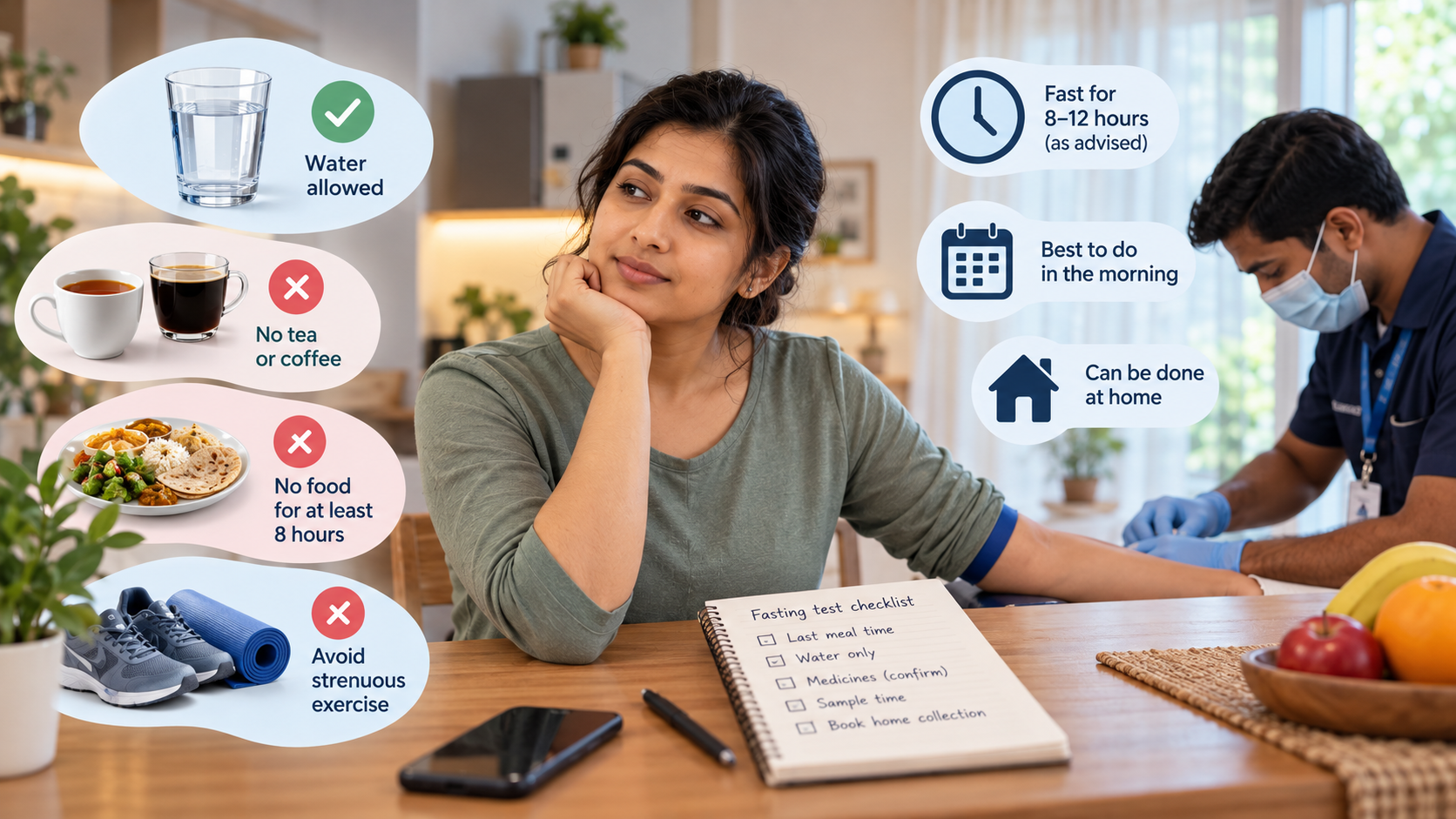
For diagnostic fasting plasma glucose, at least 8 hours without caloric intake is the standard definition used by ICMR and the American Diabetes Association. In routine laboratory practice, you may be given instructions to fast for approximately 8–12 hours, particularly when several fasting blood tests are being collected together. MedlinePlus similarly notes that fasting blood tests commonly require 8–12 hours depending on what has been ordered. Follow the instructions provided for your specific test rather than deliberately extending the fast much longer.
When should the fast begin?
If your sample is scheduled for 8:00 AM and you have been instructed to fast for 8 hours, your last calorie-containing food or drink should be finished by approximately midnight. For a longer fasting instruction, such as 10 hours, the last meal would need to be earlier. Most people therefore find an early-morning blood collection easiest because much of the fasting period occurs while they are asleep.
| Sample time | Example 8-hour fast begins | ||
| 7:00 AM | 11:00 PM previous night | ||
| 8:00 AM | Midnight | ||
| 9:00 AM | 1:00 AM | ||
| 10:00 AM | 2:00 AM |
Can you drink water before a fasting blood sugar test?
Yes. Plain water is generally allowed during a fasting blood test. Water contains no calories and does not break the fasting state used for fasting glucose testing. Staying reasonably hydrated can also make it easier for the phlebotomist to obtain a venous blood sample. MedlinePlus specifically defines fasting for a blood test as avoiding food and drinks except plain water.
Can you drink tea or coffee?
For a fasting laboratory test, the safest rule is water only. Even black tea or black coffee should not be assumed to be acceptable simply because no sugar has been added. General laboratory fasting guidance recommends avoiding coffee, juice, soda and other beverages during the fasting period because they may affect test results.That means avoiding:- Tea- Coffee- Milk- Fruit juice- Soft drinks- Energy drinks- Sweetened beveragesuntil after the sample has been collected.
Does chewing gum break the fast?
Avoid chewing gum while fasting for a blood test. General fasting guidance also recommends avoiding smoking and exercise during the fasting period. The simplest preparation is therefore: water only + your normal overnight rest + no food until the sample is collected.
Can you take your regular medicines?
Do not stop prescribed medicines on your own simply because you have a fasting blood test scheduled. Some medicines can affect blood glucose, while others may need to be taken despite fasting. The correct instruction depends on:- The medicine- Why you take it- Whether you already have diabetes- Whether the medicine can cause low blood sugar- What other tests are being collectedMedlinePlus recommends asking your healthcare professional whether usual prescription or over-the-counter medicines should be taken during a fasting period and specifically advises against stopping medicines unless instructed to do so.
What if you take diabetes medicines or insulin?
This requires particular care. Taking insulin or certain glucose-lowering medicines while delaying breakfast can sometimes increase the risk of hypoglycaemia, while skipping treatment may cause glucose to rise. There is no safe universal instruction such as “always take it” or “always skip it.” If you already have diabetes, confirm your morning medicine or insulin instructions with the prescribing clinician before the day of the fasting test.
What should you eat the night before?
You generally do not need to eat an unusually small dinner or deliberately avoid carbohydrates unless you have been given specific instructions. The objective is to measure your glucose after your usual lifestyle followed by the required fasting period, not after an artificial attempt to produce a “better” number. Eat your normal evening meal, finish it before the fasting period begins and then switch to plain water.
Should you exercise before the test?
Avoid unusual strenuous exercise during the fasting period unless you have been given different instructions. Physical activity can alter glucose metabolism and may influence some laboratory measurements. General laboratory preparation guidance advises avoiding strenuous exercise when instructed to fast for a blood test. A normal walk around the house is very different from intentionally doing a hard workout before the sample.
What happens during the test?
- The phlebotomist confirms the required fasting period.
- A vein is usually selected in your arm.
- The area is cleaned.
- A small needle is inserted.
- Blood is collected into the appropriate tube.
- The needle is removed.
- Pressure is applied briefly to the puncture site.
- The sample is sent to the laboratory for glucose measurement.
Is fasting glucose the same as a glucometer reading?
Not exactly. A home glucometer measures glucose from a small capillary blood sample and is extremely useful for day-to-day monitoring. A diagnostic fasting plasma glucose test uses a laboratory blood sample collected under defined conditions. For diagnosing diabetes, laboratory testing is preferred rather than relying on a single home meter reading.
What is the normal fasting blood sugar level?
Fasting glucose results are interpreted using recognised diagnostic thresholds, but we deliberately keep the full range table in our separate Blood Sugar Levels Chart rather than duplicating it here. One important diagnostic threshold is that a fasting plasma glucose of 126 mg/dL (7.0 mmol/L) or higher meets a diabetes criterion. In the absence of unequivocal hyperglycaemia, diagnosis generally requires confirmation with another abnormal result.For the complete normal, prediabetes and diabetes ranges, use the dedicated guide below.
See the complete fasting and blood sugar range chart
Does one high fasting result mean diabetes?
Not necessarily. When a person does not have unequivocal hyperglycaemia or a hyperglycaemic crisis, current diagnostic standards generally require two abnormal test results for confirmation. That can mean repeating the same test or confirming the finding with another recognised diagnostic test such as HbA1c.Your clinician should interpret the result in the context of symptoms, medical history and other laboratory results.
See how HbA1c is used alongside blood glucose testing
Fasting glucose vs HbA1c
| Fasting glucose | HbA1c | ||
| Measures glucose at one point in time | Reflects average glucose exposure over roughly the previous few months | ||
| Requires fasting | Usually does not require fasting | ||
| Influenced by the immediate fasting state | Less affected by one recent meal | ||
| Can be used for diabetes diagnosis | Can also be used for diagnosis in appropriate circumstances | ||
| Usually inexpensive and widely available | Provides a longer-term picture |
Fasting glucose vs random blood sugar
A random blood glucose test can be collected regardless of when you last ate. That can be useful when someone has significant symptoms and waiting eight hours to fast would be inappropriate. Current diagnostic criteria recognise a random plasma glucose of 200 mg/dL or higher in a person with classic symptoms of hyperglycaemia or hyperglycaemic crisis as one pathway to diagnosing diabetes. The fasting test and random test therefore answer slightly different clinical questions.
Fasting glucose vs PPBS
Fasting glucose measures your glucose after an overnight period without calories. A postprandial blood sugar test (PPBS) measures glucose after eating and is specifically concerned with the body's response following a meal. Timing matters greatly for a PPBS test. Our dedicated PPBS guide will explain when the two-hour timing starts, what meal to eat and how to schedule the blood collection correctly rather than repeating those instructions here.
Fasting glucose vs oral glucose tolerance test
These are also different tests. An oral glucose tolerance test (OGTT) begins with a fasting sample and then measures the body's response after consuming a standard glucose drink. Current diagnostic protocols use 75 g of anhydrous glucose for the standard adult OGTT used in diabetes diagnosis. Do not confuse a normal fasting glucose sample with the full glucose tolerance test.
What can affect a fasting blood sugar result?
- Eating during the fasting period
- Calorie-containing drinks
- Certain medicines
- Acute illness
- Significant physical stress
- Changes in usual activity
- Inadequate fasting
- Some hormonal or metabolic conditions
What if you accidentally eat before the test?
Tell the phlebotomist or laboratory rather than pretending that you remained fasting. If the test was specifically ordered as fasting glucose, eating or drinking calories during the fasting period means the sample may no longer meet the required conditions. Depending on the circumstances, the test may need to be rescheduled. MedlinePlus advises informing the healthcare professional if you accidentally eat or drink something other than water during the fasting period.
What if you feel dizzy while fasting?
Do not ignore significant dizziness, sweating, trembling, weakness, confusion or other symptoms suggestive of low blood glucose — particularly if you already use insulin or medicines that can cause hypoglycaemia. Safety is more important than completing a routine fasting sample. If you become unwell, follow your usual hypoglycaemia plan or seek appropriate medical advice rather than continuing the fast solely for the laboratory test.
Can the fasting blood sample be collected at home?
Yes. A fasting glucose sample can generally be collected through a home blood-collection service as long as correct fasting and sample-handling requirements are followed. Home collection can be particularly useful for an early-morning fasting test because the person does not need to travel to a laboratory while hungry. The phlebotomist visits during the booked time window, collects the venous sample and transfers it for laboratory processing according to the service's protocol.
How to prepare for home sample collection
- 1. Confirm that the ordered test actually requires fasting.
- 2. Confirm the fasting duration.
- 3. Book an early-morning sample slot where practical.
- 4. Finish your final meal before the fasting period begins.
- 5. Drink only plain water during the fast.
- 6. Avoid tea, coffee, juice, smoking and strenuous exercise.
- 7. Follow your clinician's instructions about medicines.
- 8. Tell the phlebotomist when you last ate.
- 9. Inform them if the fast was broken.
- 10. Keep a light meal available for after the sample if appropriate.
Who might be asked to have fasting glucose tested?
Fasting glucose may be used in people being assessed because of:- Diabetes symptoms- Previous borderline glucose results- Family history- Overweight or obesity- High blood pressure- Cardiovascular risk factors- Previous gestational diabetes- Polycystic ovary syndrome- Routine diabetes screeningICMR's Standard Treatment Workflow recognises fasting plasma glucose as one of the standard tests used in diagnosing type 2 diabetes.
See which symptoms and risk factors may prompt diabetes testing
Frequently asked questions
How many hours should I fast for a blood sugar test?
The diagnostic definition of fasting plasma glucose requires at least 8 hours without caloric intake. Laboratories may sometimes instruct patients to fast for 8–12 hours depending on the combination of tests being collected. Follow the preparation instructions given for your specific booking.
Can I drink water before fasting glucose?
Yes. Plain water is generally permitted and does not count as caloric intake. Avoid flavoured or sweetened water unless your testing instructions specifically allow it.
Can I drink black coffee before fasting glucose?
It is better not to. Standard fasting blood-test instructions recommend plain water only, even when coffee does not contain sugar or milk. Have your coffee after the blood sample has been collected.
Can I take my morning medicine before the test?
That depends on the medicine. Do not stop medication without medical advice. People taking insulin or medicines capable of causing low glucose need individual instructions because delaying breakfast can alter the risk of hypoglycaemia.
Is HbA1c a fasting test?
No. HbA1c generally does not require fasting. It measures longer-term glucose exposure rather than your glucose at a single fasting moment.
Can I do a fasting blood sugar test after 12 hours?
An 8–12 hour fasting period is commonly used for fasting blood tests. You generally do not need to deliberately extend the fast beyond the instructions provided by your clinician or laboratory.
What if my fasting sugar is high but HbA1c is normal?
Fasting glucose and HbA1c measure different aspects of glucose metabolism, so occasionally the results may not fall into the same category. Do not choose whichever result looks more reassuring. A clinician can review whether the test needs repeating or whether another recognised glucose test is appropriate.
References
- Standard Treatment Workflow: Diabetes Mellitus Type 2 — Indian Council of Medical Research
- Guidelines for Management of Type 2 Diabetes — Indian Council of Medical Research
- Standards of Care in Diabetes 2026: Diagnosis and Classification — American Diabetes Association (2026) · source
- Fasting for a Blood Test — MedlinePlus · source
This article is for general health education and does not replace advice from your doctor. Please consult a qualified professional about your specific situation.
Need care at home in Bengaluru? See MITRA services.
Related articles
Diabetes · 13 min read
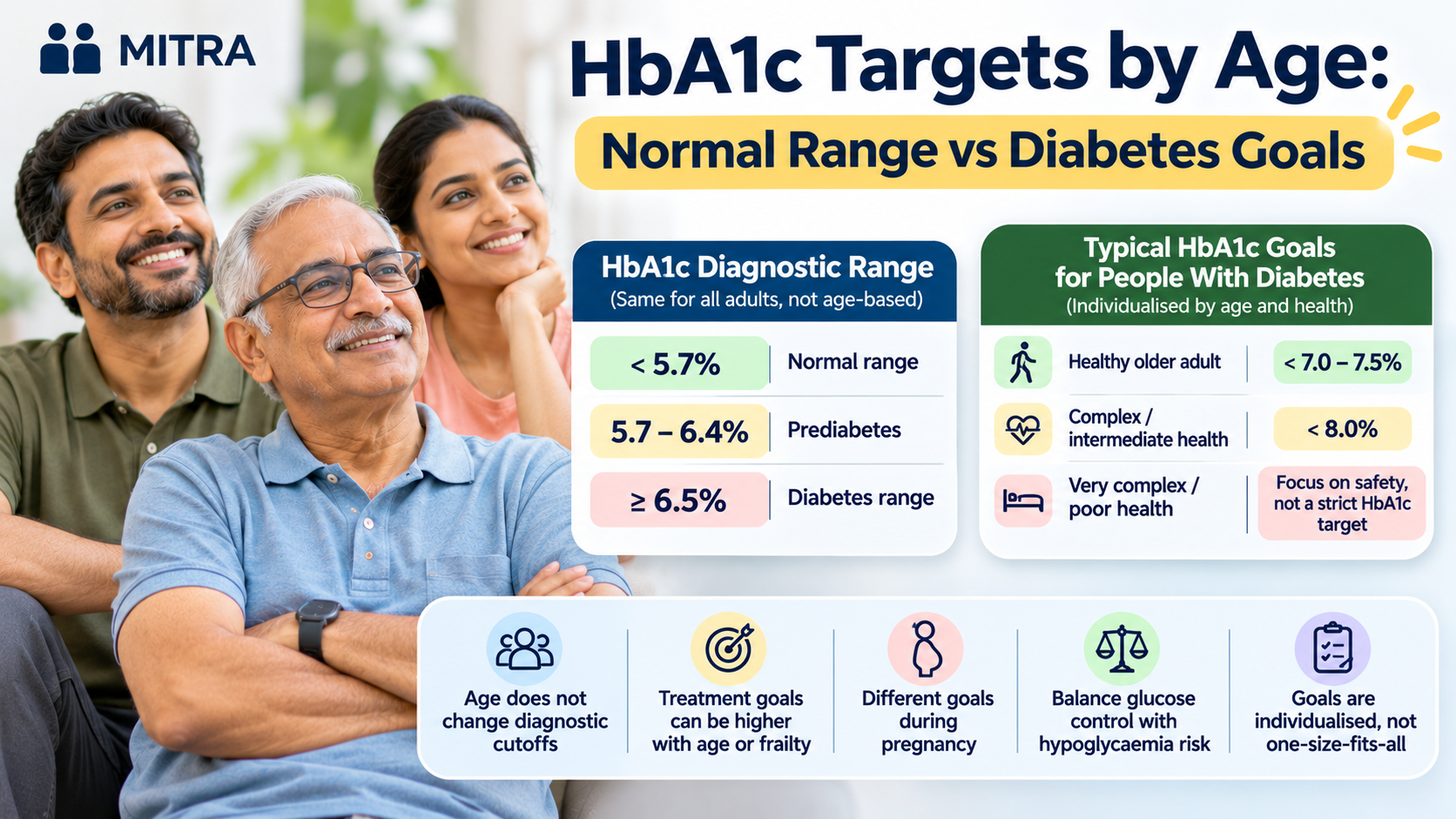
HbA1c Targets by Age: Normal Range vs Diabetes Goals
Does the normal HbA1c range change with age? Learn the difference between HbA1c diagnostic cutoffs and personal diabetes treatment targets, including goals for healthy adults, older adults, frailty and pregnancy.
Wed, 4 Nov 2026
Diabetes · 12 min read
When HbA1c Can Be Wrong: Anaemia, Kidney Disease & Other Causes
HbA1c is useful for estimating long-term glucose levels, but certain conditions can make the result falsely high, falsely low or difficult to interpret. Learn how anaemia, blood loss, transfusion, kidney disease, haemoglobin variants, pregnancy and altered red-cell turnover can affect HbA1c.
Wed, 4 Nov 2026
Diabetes · 11 min read
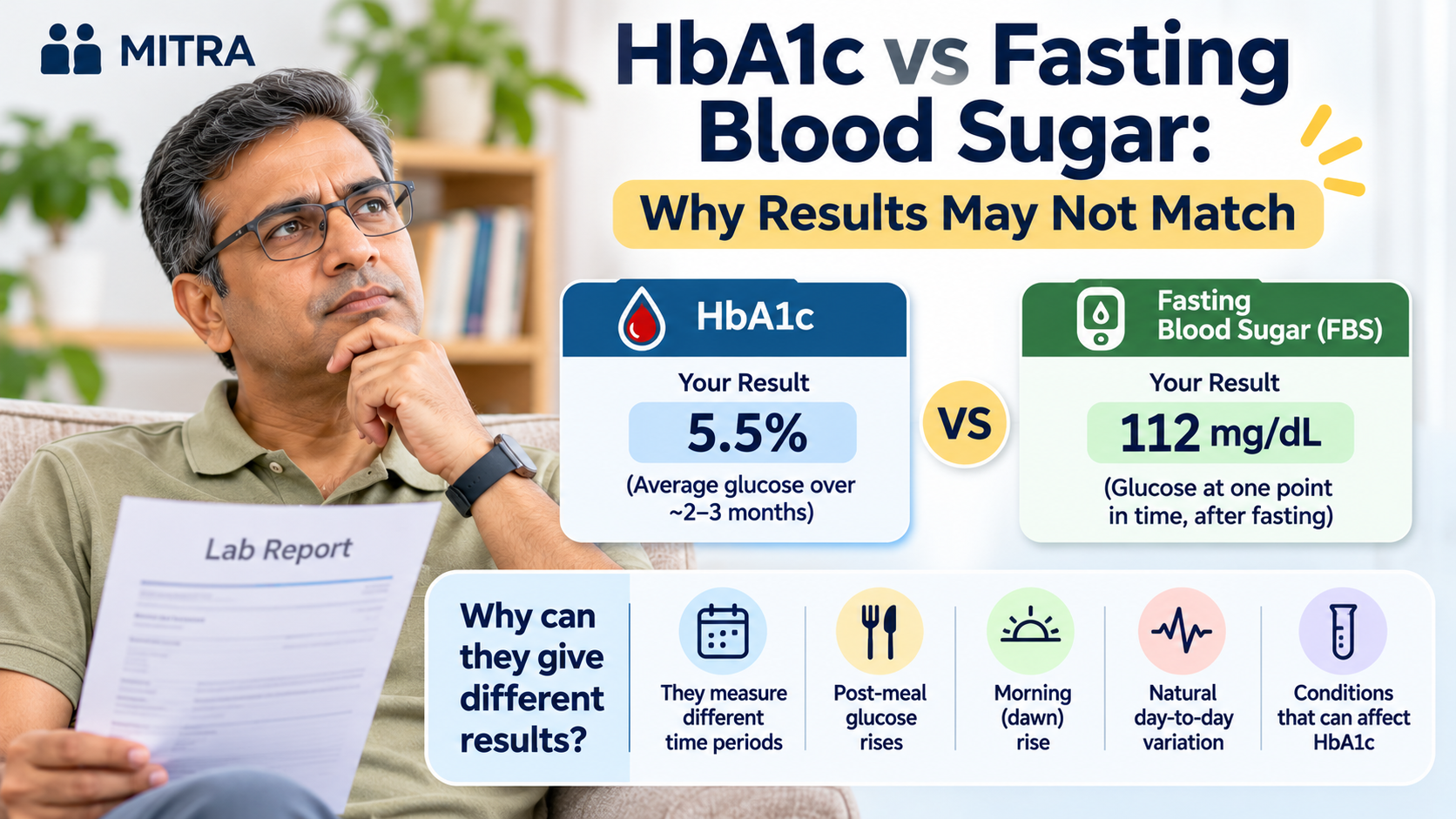
HbA1c vs Fasting Blood Sugar: Why Results May Not Match
Is your fasting blood sugar high but HbA1c normal — or HbA1c high despite a normal fasting glucose? Learn why these diabetes tests can disagree, which result matters, when testing should be repeated and when HbA1c may be unreliable.
Wed, 4 Nov 2026