Urine Microalbumin Test for Diabetes: What UACR Means
A urine albumin-to-creatinine ratio (UACR) test can detect small amounts of albumin leaking into the urine and is an important kidney screening test for people with diabetes. Learn what UACR means, how the sample is collected and why an abnormal result may need to be repeated.
Written by Dr. Sanjay Kumar K A · Medically reviewed by Dr. Sanjay Kumar K A, MD Anaesthesiology (Thu, 22 Oct 2026)
Published Thu, 22 Oct 2026 · 13 min read

Diabetes can affect the kidneys before you notice any symptoms. One of the tests used to look for early kidney damage is the urine albumin-to-creatinine ratio, usually written as UACR or uACR. You may also hear it called a urine microalbumin test, but modern kidney and diabetes guidance increasingly describes the result according to the amount of albumin present rather than using the older “microalbuminuria” terminology.
What is a urine microalbumin test?
The term “microalbumin test” does not mean the laboratory is looking for a special type of tiny albumin molecule. Albumin is a protein normally found in the blood. Healthy kidneys usually prevent large amounts of albumin from passing into the urine. When the kidney's filtering structures are damaged, more albumin can leak through. The preferred quantitative test is the urine albumin-to-creatinine ratio, or UACR.
What does UACR stand for?
UACR = Urine Albumin-to-Creatinine Ratio. The laboratory measures: 1. Albumin in the urine2. Creatinine in the same urine sampleand then expresses albumin relative to creatinine. This helps account for differences in how dilute or concentrated the urine is. A spot UACR therefore provides a much more useful estimate of albumin excretion than simply measuring urine albumin concentration by itself.
Why is creatinine included?
The amount of water in urine can vary considerably. If you are very hydrated, the urine may be dilute. If you are dehydrated, it may be much more concentrated. By comparing urine albumin with urine creatinine, UACR helps correct for this variation and provides a result that better reflects albumin excretion.
Why is UACR important in diabetes?
Persistently high blood glucose can damage small blood vessels throughout the body, including the filtering structures of the kidneys. Over time, this can contribute to chronic kidney disease related to diabetes. Albumin appearing persistently in the urine is an important marker of kidney damage and is also associated with greater cardiovascular and kidney risk. This is why kidney screening in diabetes uses both UACR and estimated glomerular filtration rate (eGFR) rather than relying on symptoms.
What is a normal UACR result?
| UACR result | Category | General interpretation | ||
| <30 mg/g | A1 — Normal to mildly increased | Below the usual albuminuria threshold | ||
| 30–299 mg/g | A2 — Moderately increased | Increased urine albumin | ||
| ≥300 mg/g | A3 — Severely increased | Substantially increased albuminuria |
What does UACR below 30 mg/g mean?
A UACR below 30 mg/g falls into the A1 category and is generally considered normal to mildly increased. That is reassuring, but it does not completely rule out kidney disease. Some people can have a reduced estimated glomerular filtration rate, or eGFR, without having significant albumin in the urine. This is why diabetes kidney screening usually considers both UACR and eGFR rather than relying on one test alone.
What does UACR between 30 and 299 mg/g mean?
A UACR between 30 and 299 mg/g is called moderately increased albuminuria, or A2. This range was historically referred to as microalbuminuria. An isolated result in this range does not automatically confirm persistent kidney damage because urinary albumin can vary from day to day and can temporarily rise because of exercise, infection, menstruation, marked hyperglycaemia and other factors.
What does UACR of 300 mg/g or higher mean?
A UACR of 300 mg/g or higher is classified as severely increased albuminuria, or A3. Higher albuminuria is associated with greater risk of chronic kidney disease progression and cardiovascular complications. A result in this range should be reviewed clinically rather than interpreted only from the laboratory report.
Does one high UACR result mean kidney disease?
Not necessarily. Urinary albumin shows considerable natural variation between samples. Current diabetes guidance recommends confirming persistent albuminuria with at least two abnormal results out of three samples collected over approximately 3–6 months, unless the clinical situation clearly requires more immediate investigation. A single unexpected result therefore often leads to repeat testing rather than an immediate diagnosis.
What can temporarily increase UACR?
- Vigorous exercise
- Fever or acute illness
- Urinary tract infection
- Menstruation or urinary bleeding
- Markedly high blood glucose
- Markedly high blood pressure
- Heart failure exacerbation
- Other acute infections
How do you prepare for a UACR test?
UACR generally requires much less preparation than fasting blood glucose testing. Fasting is usually not required. However, avoiding temporary factors that can distort the result can improve the usefulness of the test. Follow the laboratory's collection instructions and mention any significant illness, urinary symptoms, recent vigorous exercise or menstrual bleeding.
Avoid intense exercise before the sample
Vigorous exercise can temporarily increase urinary albumin. When the test is being performed routinely — particularly when confirming a previous abnormal result — avoid unusually strenuous exercise during the 24 hours before collection where practical. Normal daily activity is different from a hard gym workout, long run or intense sports session.
Can UACR be tested during menstruation?
Menstrual blood can contaminate a urine sample and make the result harder to interpret. For routine non-urgent testing, it may be preferable to collect the sample after menstrual bleeding has stopped. If menstruation is present when the sample is collected, inform the laboratory or healthcare professional.
What if you have a urinary tract infection?
A urinary infection can temporarily increase urinary protein or albumin. Tell your clinician if you have symptoms such as burning while urinating, increased urinary frequency, fever, lower abdominal discomfort or cloudy or foul-smelling urine. A routine UACR may need to be repeated after the infection has resolved.
Do you need a 24-hour urine collection?
Usually, no. For routine diabetic kidney screening, a spot urine UACR is preferred. A timed or 24-hour urine collection is generally unnecessary because the albumin-to-creatinine ratio provides a practical estimate of albumin excretion from a single urine sample.
Is a first-morning urine sample better?
A first-morning urine sample is often preferred because it provides a more standardised specimen and reduces some of the variability caused by activity and hydration during the day. However, a random spot urine sample can also be used when a first-morning sample is not practical. Follow the collection instructions provided by your laboratory.
How is the urine sample collected?
- Wash your hands.
- Use the sterile container provided.
- Clean the genital area if instructed.
- Begin urinating into the toilet.
- Collect the midstream urine in the container.
- Avoid touching the inside of the container or lid.
- Finish urinating into the toilet.
- Close the lid securely.
- Label the sample if instructed.
- Hand it over or store it according to the laboratory's directions.
UACR vs routine urine test
A routine urine examination and a UACR test are not the same thing. A routine urinalysis may assess glucose, protein, blood, cells, infection-related findings, urine pH and other chemical or microscopic features. UACR specifically measures urine albumin relative to urine creatinine, allowing smaller amounts of albumin to be quantified more accurately.
UACR vs urine protein test
Albumin is one type of protein. A general urine-protein test detects or measures a broader range of proteins, while UACR specifically measures albumin relative to creatinine. For diabetes-related kidney screening, UACR is particularly useful because increased albumin can be an important early marker of kidney damage.
UACR vs serum creatinine
| UACR | Serum creatinine | ||
| Urine test | Blood test | ||
| Detects albumin leakage | Measures creatinine in blood | ||
| Helps identify kidney damage | Helps estimate kidney filtration | ||
| May become abnormal while eGFR is still preserved | Used as part of the calculation of eGFR | ||
| Usually reported as mg/g or mg/mmol | Usually reported as mg/dL or µmol/L |
UACR vs eGFR
eGFR estimates how effectively the kidneys filter blood. UACR looks for albumin leaking through the kidneys into the urine. A person can therefore have elevated UACR with preserved eGFR, reduced eGFR with little albuminuria, or abnormalities in both. This is why modern diabetes kidney screening generally includes both UACR and eGFR.
How often should people with diabetes have UACR tested?
Current diabetes guidance recommends checking UACR and eGFR at least once a year in people with type 1 diabetes for 5 years or more and in all people with type 2 diabetes, starting from diagnosis. People who already have chronic kidney disease may need monitoring more frequently depending on the severity of albuminuria, eGFR and treatment plan.
What does Indian guidance recommend?
Indian diabetes guidance recommends assessing kidney health in people with type 2 diabetes using urine albumin-to-creatinine ratio together with serum creatinine and estimated GFR. For people with type 2 diabetes, kidney evaluation begins from diagnosis because diabetes may have existed for years before being recognised.
Why is screening different in type 1 and type 2 diabetes?
Type 2 diabetes may remain undiagnosed for a long period. Kidney involvement can therefore already be present by the time diabetes is first detected, which is why screening generally begins at diagnosis. In type 1 diabetes, diabetic kidney disease usually takes time to develop, so routine UACR screening commonly begins after approximately 5 years of diabetes duration, unless another reason for earlier investigation exists.
Can UACR be high even when blood sugar is controlled?
Yes. Diabetes is an important cause of albuminuria, but it is not the only one. High blood pressure, other kidney diseases, heart failure, acute illness and glomerular disorders can also increase urine albumin. Clinicians therefore interpret UACR alongside diabetes duration, blood pressure, eGFR, other urine findings and the wider medical history.
When might an abnormal UACR need further investigation?
- Rapidly increasing albuminuria
- Very high UACR
- Rapidly declining eGFR
- Blood in the urine
- Abnormal urinary sediment
- Significant swelling
- Heavy protein loss
- An unusual clinical pattern
- Findings suggesting another kidney disease
What happens if UACR stays high?
Persistent albuminuria may prompt a review of the person's broader kidney-protection plan. This can include blood-pressure control, glucose management, cardiovascular-risk reduction, medication review, repeat UACR, repeat eGFR and kidney-protective medicines where clinically appropriate. Some people may also need nephrology evaluation. Treatment depends on the person's overall kidney function, blood pressure, diabetes treatment and other medical conditions.
Does lowering UACR matter?
Yes. Changes in UACR can provide useful information about kidney risk and response to treatment. A reduction in persistent albuminuria may be clinically meaningful, although UACR should always be interpreted alongside eGFR, blood pressure and the overall disease course.
Should you start kidney medicines yourself if UACR is high?
No. Medicines such as ACE inhibitors, ARBs, SGLT2 inhibitors and other kidney-protective therapies can be important for selected patients, but their use depends on factors such as blood pressure, eGFR, potassium, diabetes treatment, pregnancy status and other medical conditions. Do not start, stop or change these medicines solely because of one UACR value.
Can UACR testing be done at home?
Yes. UACR testing can usually be arranged through home diagnostic sample collection when the correct sterile container and laboratory instructions are provided. The patient typically collects the urine specimen and hands it to the phlebotomist or collection professional for transport to the laboratory. Correct collection and timely handling remain important.
What should you have ready for home collection?
- The correct sterile urine container
- The test request or booking details
- Confirmation of whether a first-morning sample is preferred
- Information about menstruation
- Information about fever or urinary symptoms
- Recent kidney-test reports if relevant
- Instructions about how and when the sample should be handed over
Frequently asked questions
Is urine microalbumin the same as UACR?
They are closely related terms, but UACR is the more precise modern test description. “Urine microalbumin” is commonly used to describe testing for small increases in urinary albumin, whereas UACR reports the amount of albumin relative to urine creatinine.
What UACR level is considered abnormal?
A UACR of 30 mg/g or higher is above the normal-to-mildly-increased category. Values from 30–299 mg/g are moderately increased, while 300 mg/g or higher represents severely increased albuminuria. Because urinary albumin varies naturally, an abnormal result may need repeat confirmation.
Do I need to fast for a UACR test?
Usually not. UACR is normally performed on a spot urine sample and does not require the fasting used for a fasting glucose test. However, other blood tests being collected at the same appointment may require fasting, so check the preparation instructions for the entire booking.
Can dehydration affect UACR?
Urine concentration changes with hydration. One reason UACR uses the albumin-to-creatinine ratio is to reduce the effect of dilute or concentrated urine. Normal hydration is generally preferable unless you have been given a medical fluid restriction.
Can exercise increase urine microalbumin?
Yes. Strenuous exercise can temporarily increase urinary albumin. Avoid intense exercise during the 24 hours before a routine UACR test where practical, particularly when confirming a previously elevated result.
Can UACR be abnormal while creatinine is normal?
Yes. Albuminuria can appear while kidney filtration remains relatively preserved. This is why diabetic kidney screening commonly includes both UACR and eGFR, rather than relying on serum creatinine alone.
How many times should an abnormal UACR be repeated?
Because urinary albumin varies between samples, persistent albuminuria is generally confirmed when at least two of three samples collected over approximately 3–6 months are abnormal. The timing may differ depending on the severity of the result and the clinical situation.
Does a high UACR mean kidney failure?
No. A high UACR indicates increased albumin leakage and greater kidney risk, but kidney failure cannot be diagnosed from UACR alone. Kidney function also depends on eGFR, the severity and persistence of abnormalities, the underlying cause and the wider clinical picture.
Can a urine dipstick replace UACR?
Not reliably for diabetic kidney screening. A dipstick may detect larger amounts of urinary protein, but UACR provides a quantitative measure of albumin adjusted for urine creatinine. That makes it more suitable for detecting and monitoring lower levels of albuminuria.
References
- Standards of Care in Diabetes 2026: Chronic Kidney Disease and Risk Management — American Diabetes Association
- Guidelines for Management of Type 2 Diabetes Mellitus — Indian Council of Medical Research
- Assess Urine Albumin — NIDDK (2012) · source
- Urine Albumin-Creatinine Ratio (UACR) — National Kidney Foundation (2023) · source
This article is for general health education and does not replace advice from your doctor. Please consult a qualified professional about your specific situation.
Need care at home in Bengaluru? See MITRA services.
Related articles
Diabetes · 13 min read
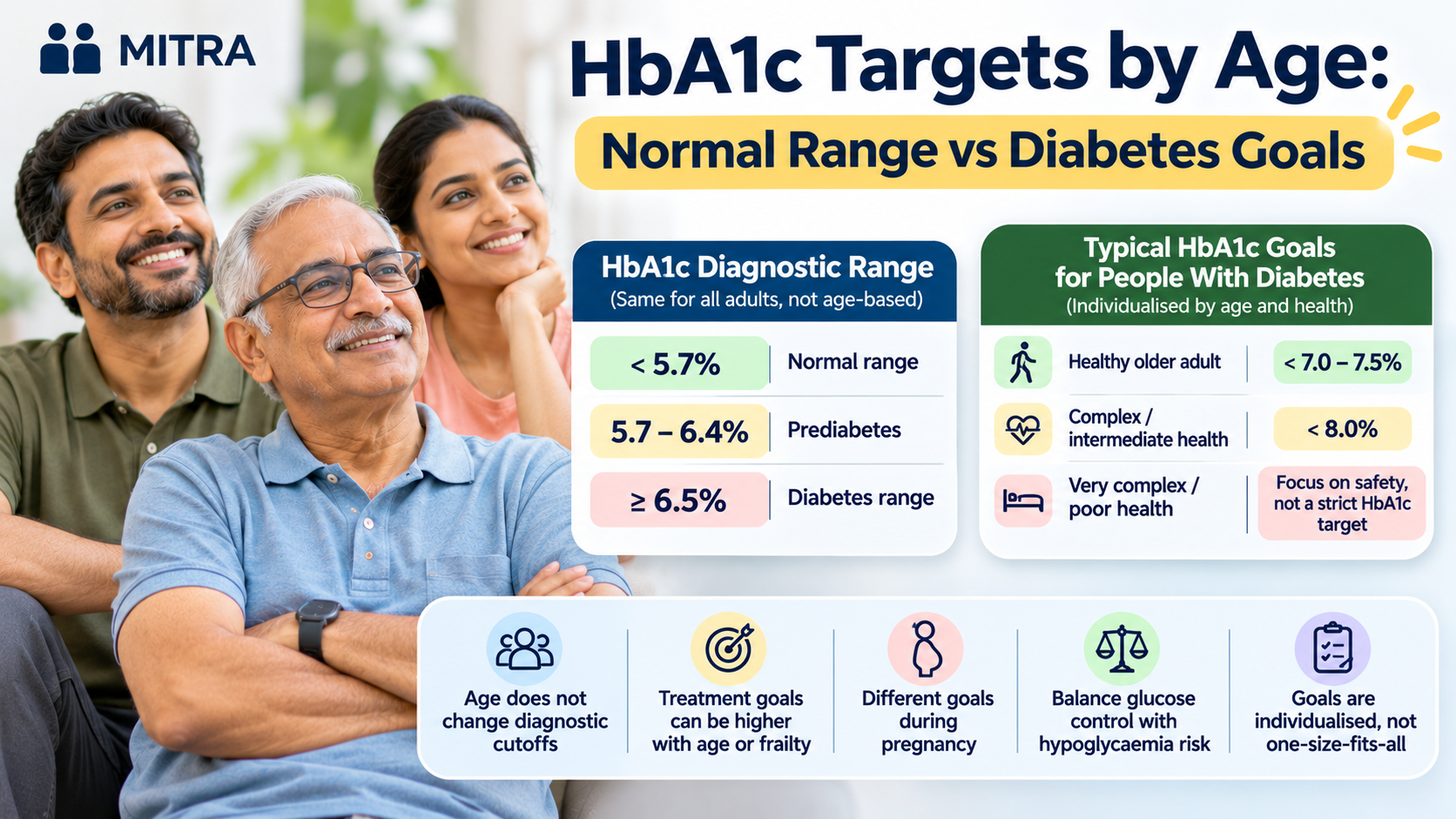
HbA1c Targets by Age: Normal Range vs Diabetes Goals
Does the normal HbA1c range change with age? Learn the difference between HbA1c diagnostic cutoffs and personal diabetes treatment targets, including goals for healthy adults, older adults, frailty and pregnancy.
Wed, 4 Nov 2026
Diabetes · 12 min read
When HbA1c Can Be Wrong: Anaemia, Kidney Disease & Other Causes
HbA1c is useful for estimating long-term glucose levels, but certain conditions can make the result falsely high, falsely low or difficult to interpret. Learn how anaemia, blood loss, transfusion, kidney disease, haemoglobin variants, pregnancy and altered red-cell turnover can affect HbA1c.
Wed, 4 Nov 2026
Diabetes · 11 min read
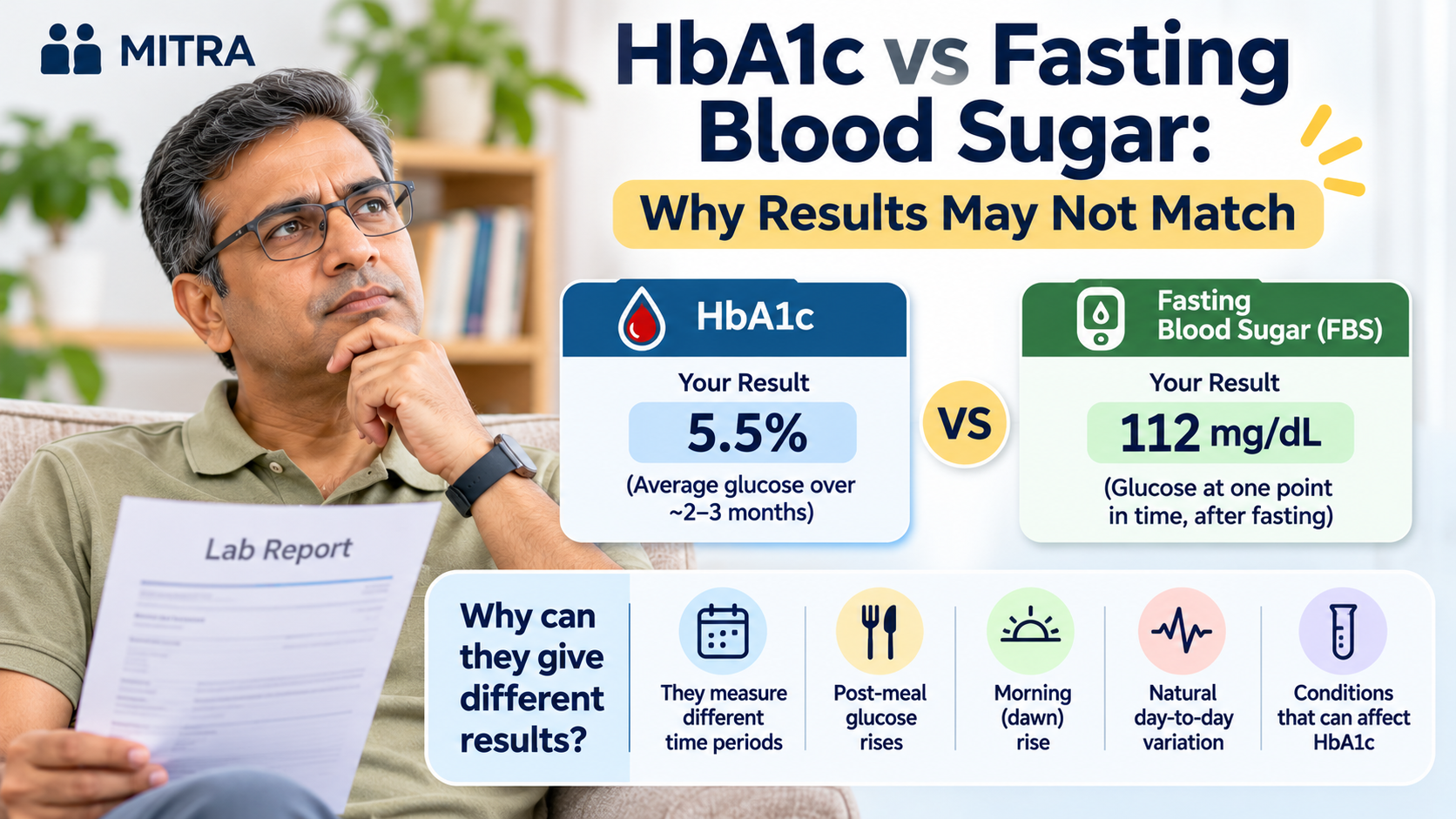
HbA1c vs Fasting Blood Sugar: Why Results May Not Match
Is your fasting blood sugar high but HbA1c normal — or HbA1c high despite a normal fasting glucose? Learn why these diabetes tests can disagree, which result matters, when testing should be repeated and when HbA1c may be unreliable.
Wed, 4 Nov 2026