What Does a Home Caregiver Do?
What does a home caregiver actually do? Learn about personal care, feeding, mobility, toileting, medication reminders, companionship, monitoring and the limits of a caregiver's role.
Written by Mr. Rahul B S
Published Wed, 7 Oct 2026 · 8 min read

A home caregiver helps an older adult, recovering patient or person with disability manage the everyday activities they can no longer perform safely or comfortably on their own. That can include bathing, dressing, toileting, feeding, walking, transfers, medication reminders, companionship and basic observation. The role is different from that of a nurse. A caregiver primarily supports daily living, safety and independence, while clinical procedures require appropriately trained nursing personnel.
What are the main duties of a home caregiver?
The exact duties depend on the person's abilities and care plan. WHO's South-East Asia long-term-care training framework describes basic activities of daily living as bathing, dressing, toileting, transferring, continence and feeding. These are exactly the areas in which many families first notice an ageing parent beginning to require assistance.
| Area of care | What a caregiver may help with | ||
| Personal hygiene | Bathing, oral care, grooming, dressing | ||
| Toileting | Toilet assistance, commode, diaper and continence care | ||
| Eating and drinking | Serving meals, feeding assistance, encouraging fluids | ||
| Mobility | Walking, transfers, wheelchair/walker support | ||
| Positioning | Helping a person change position when mobility is limited | ||
| Medicines | Reminding or assisting with prescribed medicines within the care plan | ||
| Monitoring | Observing changes and recording basic information when trained and instructed | ||
| Companionship | Conversation, routine, activities and social interaction | ||
| Safety | Supervision and reducing avoidable risks around the home |
1. Personal hygiene and grooming
Bathing can become difficult because of weakness, arthritis, poor balance, stroke, dementia or fear of falling. A caregiver may assist with:
- Bathing or assisted showering
- Sponge or bed baths when appropriate
- Oral hygiene
- Hair care
- Shaving
- Dressing and undressing
- Changing soiled clothing or bedding related to the patient's care
- Maintaining privacy and dignity during personal care
2. Toileting and incontinence care
Toileting is one of the most important reasons families arrange caregiving. Support may include helping the person reach the toilet, use a bedside commode or bedpan, change diapers and maintain hygiene after episodes of incontinence. A caregiver should also report important changes such as new diarrhoea, constipation, blood in the urine or stool, markedly reduced urine output, or a sudden new loss of bladder control rather than assuming they are simply part of ageing.
3. Feeding and hydration
A caregiver can help serve food prepared for the patient, assist someone who has difficulty feeding themselves and encourage regular fluid intake. They may also observe and record how much the person is eating and drinking when this is part of the care plan. Changes such as persistent poor appetite, coughing or choking during meals, difficulty swallowing, repeated vomiting or unexplained weight loss should be reported for medical assessment.
4. Walking, mobility and transfers
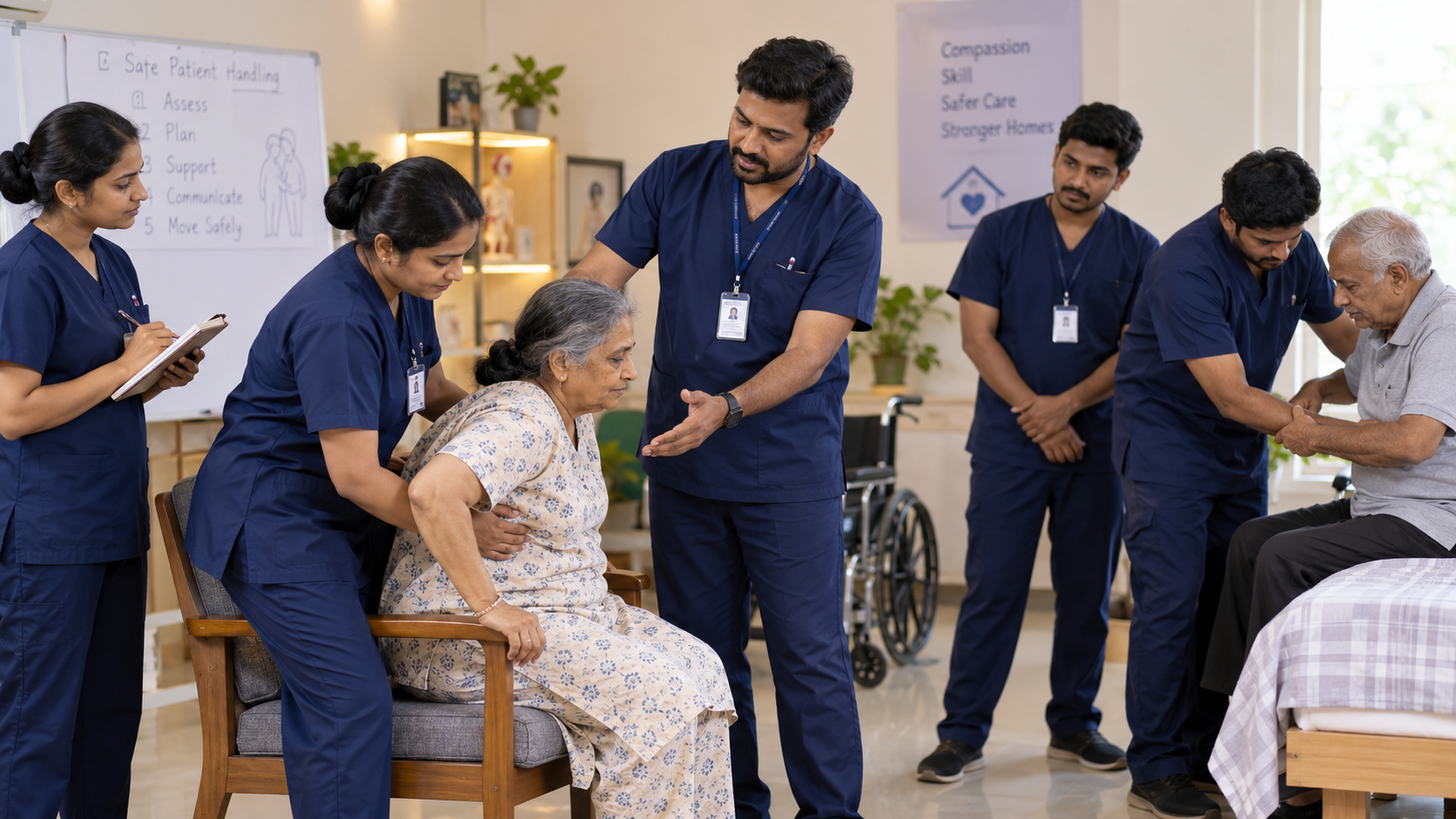
Reduced mobility can quickly affect independence. A caregiver may assist a person to: - Get out of bed - Stand from a chair - Walk safely around the home - Use a walker or wheelchair - Move between bed, chair and toilet - Follow simple mobility activities prescribed by a physiotherapist or doctor Functional dependency becomes more common with advancing age. A 2026 Indian Journal of Community Medicine study of older patients attending a tertiary-care outpatient clinic found some degree of dependency in activities of daily living in 30.6% of participants, although this was a hospital-based study and should not be interpreted as a national prevalence estimate.
5. Care for someone who is bedridden
A medically stable bed-bound person can require a substantial amount of caregiving even when they do not need a nurse. Care may include:
- Bed bathing and hygiene
- Diaper and continence care
- Feeding assistance
- Regular repositioning according to the care plan
- Keeping bedding dry and comfortable
- Observing the skin for redness or pressure areas
- Helping with safe transfers when appropriate
- Maintaining a regular daily routine
6. Medication reminders
A caregiver can help a person follow an existing written prescription, for example by reminding them when it is time for a medicine or bringing the prescribed tablets to them. A caregiver should not independently diagnose an illness, prescribe medicines, change doses or decide to stop a prescribed medication. If medicines are repeatedly being missed or duplicated, that is a sign the care arrangement needs to be reviewed.
7. Basic monitoring and observation
Depending on the caregiver's training and the person's care plan, basic observations may include measurements such as: - Blood pressure - Pulse - Temperature - Oxygen saturation - Food and fluid intake - Bowel and bladder patterns The important role is not merely recording numbers. A trained caregiver should also know when a reading or change in condition needs to be reported to the family or escalated according to the care plan.
8. Companionship is part of caregiving
Caregiving is not only physical assistance. Conversation, reading, accompanying someone on a short walk, maintaining routines and encouraging participation in safe activities can help an older person remain engaged with everyday life. WHO's ICOPE model explicitly includes cognition, psychological wellbeing and social-support needs alongside physical function when planning care for older adults.
What does a home caregiver not do?
See when your parent needs a caregiver and when nursing care is more appropriate
Is a caregiver the same as a domestic helper?
No. A home caregiver's primary responsibility is the person receiving care. They should not automatically be expected to cook for the entire family, clean the whole house, wash everyone else's clothes, look after children or pets, run unrelated errands or function as general domestic staff. Keeping the role clear protects both the patient and the caregiver and allows the caregiver to focus on the activities in the care plan.
What does a typical day with a caregiver look like?
| Time of day | Example support | ||
| Morning | Getting out of bed, toileting, bathing, grooming and dressing | ||
| Breakfast | Meal assistance, fluids and medicine reminder | ||
| Late morning | Walking, prescribed exercises, conversation or activities | ||
| Afternoon | Lunch, toileting, rest and basic observations if required | ||
| Evening | Mobility, hygiene, dinner and medication routine | ||
| Night | Toileting, preparing for sleep and safety supervision where included |
Does your parent need a 12-hour or 24-hour caregiver?
That depends primarily on when assistance is required. A 12-hour caregiver may be sufficient when the person needs substantial support during the day but can remain safe overnight with family or independently. Twenty-four-hour support may be more appropriate when the person cannot safely be left alone, requires assistance across both daytime and nighttime routines or the family cannot reliably cover the remaining hours.
Compare 12-hour and 24-hour caregiving
When is caregiving alone no longer enough?
A person's needs can change. Someone who initially needed only help bathing and walking may later develop a wound, catheter, feeding tube or other clinical requirement. Another person may suddenly become confused, breathless or unable to walk. When this happens, the answer is not automatically to ask the existing caregiver to do more. The care plan and skill level should be reassessed. India's National Programme for Health Care of the Elderly similarly describes elderly care as a continuum that can include preventive, rehabilitative and home-based services according to need.
How MITRA home caregiving works
MITRA provides home caregiving in Bengaluru based on the person's actual daily-care requirements. Depending on the care plan and provider level, support can cover areas such as personal hygiene, toileting, feeding, mobility, medication reminders, companionship, routine observations and ongoing care records. If the person's needs involve clinical nursing procedures, they should be matched to an appropriately trained higher level of provider rather than expecting a basic caregiver to perform tasks outside their role. MITRA offers both 12-hour and 24-hour caregiving options, so families can choose the duration and level of support that best matches the person's needs.
See what home caregiving and nursing typically cost in Bengaluru
How do you know if your parent needs a caregiver?
- Is struggling to bathe or dress safely
- Needs help using the toilet
- Requires assistance with meals
- Is repeatedly falling or becoming unsteady
- Needs support getting out of bed or walking
- Cannot reliably manage medicines
- Has memory problems affecting safety
- Cannot safely remain alone for long periods
- Needs more physical assistance than the family can provide consistently
Frequently asked questions
Can a caregiver give insulin injections?
A basic caregiver should not independently administer injections. If insulin or another prescribed injection needs to be administered by a provider, the person should be matched to an appropriately trained and competent nursing professional according to the care plan.
Can a caregiver stay with a patient for 24 hours?
Yes, live-in caregiving arrangements exist, but a 24-hour caregiver still requires adequate uninterrupted rest. If the patient needs repeated active assistance throughout the night, two separate shifts may be safer than expecting one caregiver to remain awake continuously.
Can a caregiver take an elderly person to the bathroom?
Yes. Toileting assistance is a common caregiving responsibility and may include walking support, transfers, commode assistance and continence care, provided these can be performed safely within the person's care plan.
Need a caregiver for a parent or recovering family member in Bengaluru?
Need care at home in Bengaluru? See MITRA services.
Related articles
Home Care Guides · 9 min read
How MITRA Screens, Trains and Matches Home Care Providers
See how MITRA screens, trains and verifies home care providers, matches families with four suitable options, and continues supporting care after the caregiver joins.
Sat, 10 Oct 2026
Home Care Guides · 8 min read
Night Care for Elderly Parents: When Overnight Support Is Needed
Does your elderly parent need help at night? Learn the warning signs, including falls, frequent toileting, dementia, confusion and mobility problems, and when overnight caregiving may help.
Sat, 10 Oct 2026
Home Care Guides · 8 min read
24-Hour Elderly Care at Home in Bengaluru: What Families Should Know
Considering 24-hour elderly care in Bengaluru? Learn who may need round-the-clock support, what a live-in caregiver does, night-care limits, costs and when nursing care is needed.
Fri, 9 Oct 2026