DVT Symptoms: When Leg Swelling Could Be a Blood Clot
One swollen or painful leg can sometimes be a sign of deep vein thrombosis (DVT). Learn the warning signs, risk factors, how DVT is diagnosed and when symptoms may be an emergency.
Written by Dr. Sanjay Kumar K A · Medically reviewed by Dr. Sanjay Kumar K A, MD Anaesthesiology (Tue, 13 Oct 2026)
Published Tue, 13 Oct 2026 · 7 min read
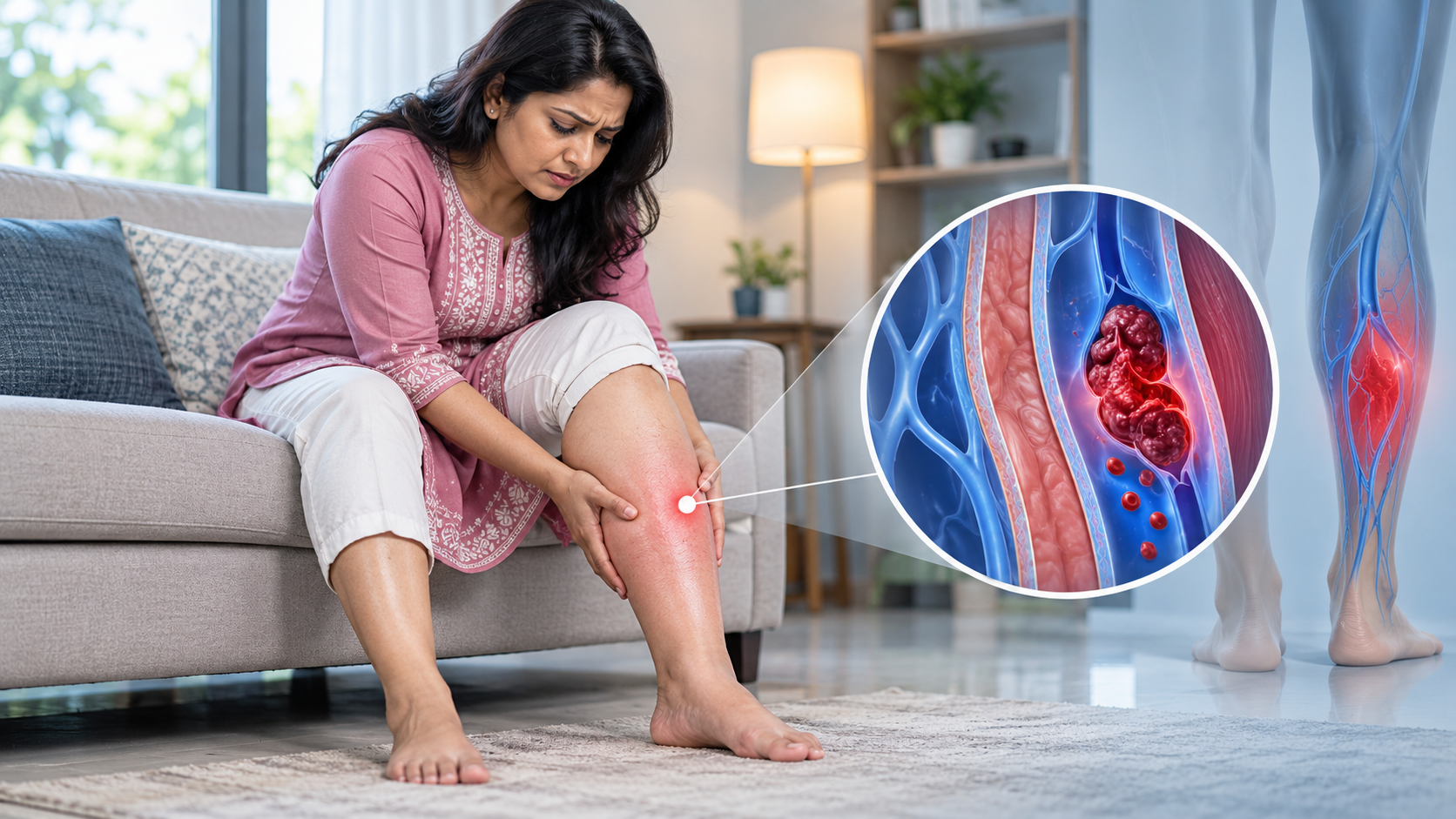
A swollen leg can have many causes — from an injury or infection to problems with the veins. But new swelling in one leg, especially when accompanied by pain, tenderness, warmth or skin colour change, can sometimes be caused by a deep vein thrombosis (DVT). A DVT is a blood clot that forms in a deep vein, most commonly in the leg. It matters because part of the clot can occasionally travel to the lungs and cause a potentially life-threatening pulmonary embolism (PE).
What is deep vein thrombosis?
Deep vein thrombosis occurs when a blood clot develops inside one of the body's deeper veins. DVT most often affects veins in the leg, although clots can occur elsewhere. DVT and pulmonary embolism are collectively called venous thromboembolism, or VTE. The condition can occur without obvious symptoms. The CDC notes that about half of people with DVT may have no symptoms at all, which is one reason risk factors and clinical assessment matter.
What are the symptoms of DVT?
- Swelling
- Pain or tenderness
- Warmth
- Redness or other skin discolouration
- A feeling of heaviness or discomfort
- Swelling affecting much of one leg
Is one swollen leg always a DVT?
No. One-sided leg swelling has several possible causes. These can include injury, infection, inflammation, venous problems and other conditions. That is why doctors do not diagnose DVT simply by looking at the leg. What matters is the combination of symptoms, medical history, examination and appropriate testing.
| Feature | Why it matters | ||
| New swelling in one leg | Can occur with DVT | ||
| Calf or leg tenderness | Can increase suspicion | ||
| Warmth or colour change | May occur around a clot | ||
| Entire leg swollen | Considered in clinical DVT assessment | ||
| Recent surgery/immobility | Important risk factor | ||
| Previous DVT | Raises future risk | ||
| Cancer | Can increase clotting risk | ||
| Alternative obvious cause | May make DVT less likely |
Who is more likely to develop a DVT?
Blood clots become more likely when normal blood flow is reduced, blood is more prone to clotting or the blood-vessel wall has been affected.Risk is particularly relevant in situations such as:
- Recent major surgery
- Being confined to bed for several days
- Leg immobilisation
- Previous DVT or pulmonary embolism
- Active cancer
- Prolonged periods of reduced mobility
- Pregnancy and the postpartum period
- Certain hormone-containing medicines
- Some inherited or acquired clotting disorders
- Increasing age
- Serious illness or hospitalisation
Can long travel cause DVT?
Long journeys can contribute to DVT risk because people may remain relatively immobile for several hours. The issue is not simply being on an aeroplane. Long periods of limited movement can occur during flights, car journeys, buses or trains. For most healthy people, the absolute risk remains low, but risk becomes more important when prolonged travel is combined with factors such as recent surgery, previous VTE, active cancer or other clotting risks.
How do doctors check for DVT?
Doctors first assess the symptoms, medical history and physical findings. When DVT is suspected, clinical probability can be estimated using a structured assessment such as the Wells score. Depending on that probability, investigations may include:
- A D-dimer blood test
- Ultrasound of the leg veins
- Repeat ultrasound in selected situations when initial testing is negative but suspicion remains
NICE recommends ultrasound and D-dimer testing according to the patient's clinical probability rather than relying on symptoms alone.
Why can DVT become dangerous?
The major immediate concern is pulmonary embolism. A piece of clot can break away, travel through the circulation and lodge in blood vessels supplying the lungs. A pulmonary embolism can impair blood flow through the lungs and, when large or severe, can become life-threatening. Importantly, PE can sometimes occur without obvious preceding leg symptoms.
These symptoms need urgent medical attention
Can you massage a leg if DVT is suspected?
If a leg has developed new unexplained swelling and pain, the priority is medical assessment rather than trying to treat the problem yourself. Do not assume that massage, vigorous exercise, compression or home remedies will resolve the cause. If DVT is genuinely suspected, seek medical advice promptly so the leg can be assessed appropriately.
How is DVT treated?
Confirmed DVT is commonly treated with anticoagulant medicines, often referred to as blood thinners. These medicines reduce the blood's ability to form additional clot and help prevent the existing clot from becoming larger while the body gradually deals with it. Treatment depends on factors including where the clot is located, the person's medical history, bleeding risk and whether there are provoking factors. NICE recommends anticoagulation for at least 3 months for confirmed proximal DVT, with subsequent treatment duration individualised according to the clinical situation.
Can DVT be prevented?
Not every blood clot can be prevented, but risk can often be reduced. Prevention becomes particularly important during hospitalisation, after certain operations and during periods of reduced mobility. Depending on the person's risk, prevention may involve:
- Getting mobile when medically safe
- Avoiding unnecessary prolonged immobility
- Following the hospital's post-operative mobilisation plan
- Using prescribed preventive anticoagulants when indicated
- Using mechanical preventive measures when prescribed
- Discussing individual clot risk before major surgery or prolonged immobilisation
DVT after surgery or hospitalisation
Recent surgery and periods of bed rest are recognised risk factors for DVT. After returning home, families often concentrate on the wound, medicines and pain control. Mobility and changes in the legs are also worth paying attention to. New one-sided leg swelling or unexplained leg pain after a recent hospital admission or operation should not automatically be dismissed as part of recovery.
See what families should prepare when a patient returns home from hospital
Frequently asked questions
Can DVT cause swelling without pain?
Yes. Symptoms vary considerably, and some people with DVT have little discomfort or no obvious symptoms. Swelling alone cannot diagnose DVT, but unexplained new one-sided swelling warrants assessment when a clot is a possibility.
Does DVT always cause redness?
No. Redness or other colour change can occur, but it is not present in every DVT. The absence of redness does not reliably rule out a clot.
Can DVT happen in young people?
Yes. DVT becomes more common with certain risk factors and increasing age, but younger adults can also develop blood clots, particularly when additional risks such as surgery, immobilisation, pregnancy, hormone use, cancer or clotting disorders are present.
Can I diagnose DVT from a photo of my leg?
No. A photo cannot establish whether swelling is caused by a deep vein clot. DVT diagnosis requires clinical assessment and, when indicated, investigations such as D-dimer testing and ultrasound.
References
- Venous thromboembolic diseases: diagnosis, management and thrombophilia testing (NG158) — NICE
- ASH Clinical Practice Guidelines on Venous Thromboembolism (VTE) — American Society of Hematology · source
This article is for general health education and does not replace advice from your doctor. Please consult a qualified professional about your specific situation.
Need care at home in Bengaluru? See MITRA services.
Related articles
Heart Health · 5 min read
Blood Pressure Chart: Normal, High and Low BP Readings
Use this blood pressure chart to understand normal, elevated, high and low BP readings, what systolic and diastolic mean, and when to seek care.
Sat, 3 Oct 2026
Heart Health · 8 min read
Heart Attack Symptoms: Warning Signs and When to Get Emergency Help
Heart attack symptoms can include chest pressure or pain, shortness of breath, sweating, nausea, dizziness, and discomfort in the arms, back, neck or jaw. Learn the warning signs and when to seek emergency help.
Sat, 3 Oct 2026