Knee Arthroscopy Recovery: Timeline, Walking & Return to Activity
How long does knee arthroscopy recovery take? Learn what to expect after keyhole knee surgery, including walking, crutches, swelling, wound care, driving, work and return to sport.
Written by Dr. Sanjay Kumar K A · Medically reviewed by Dr. Sanjay Kumar K A, MD Anaesthesiology (Thu, 29 Oct 2026)
Published Thu, 29 Oct 2026 · 11 min read
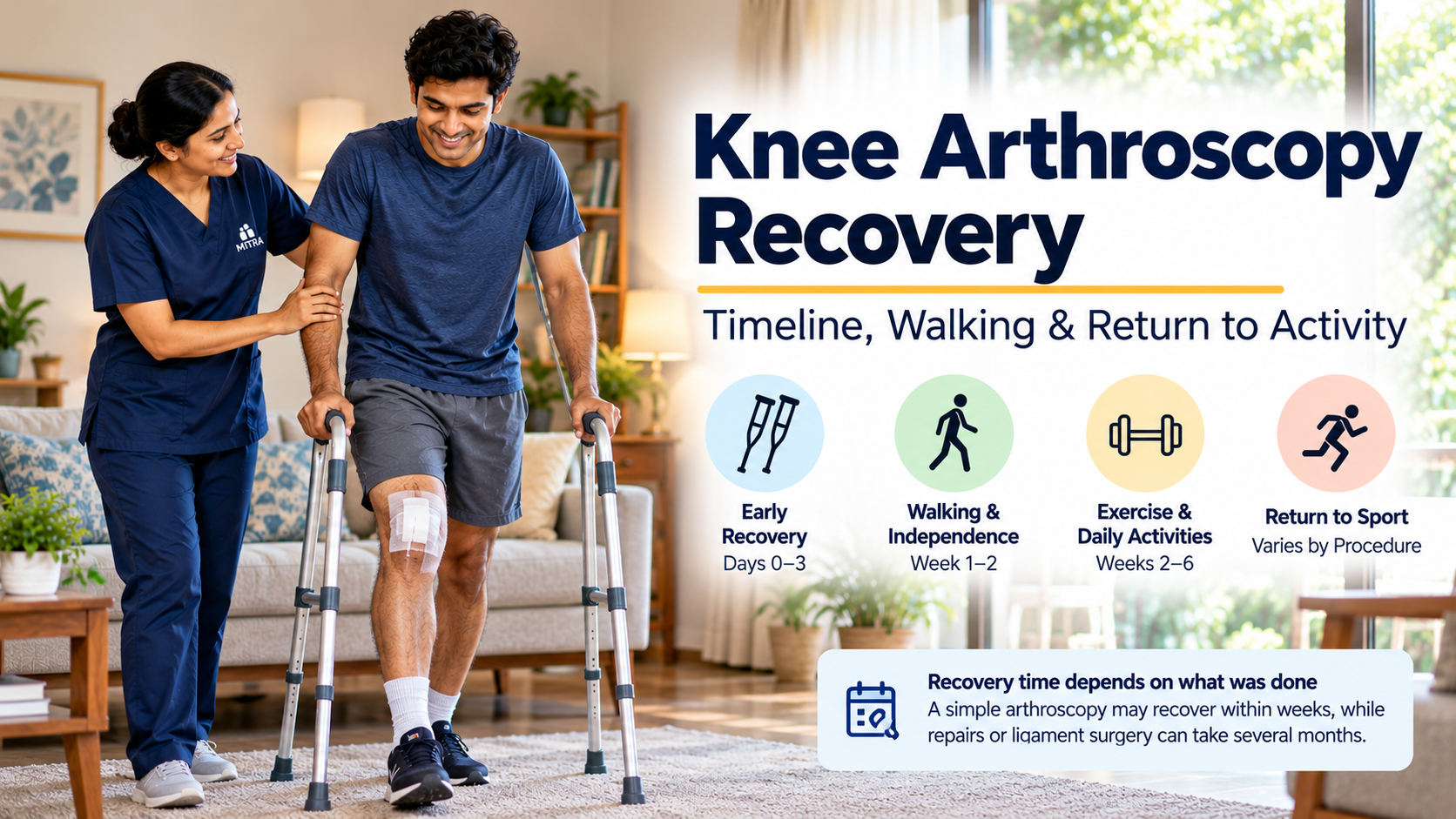
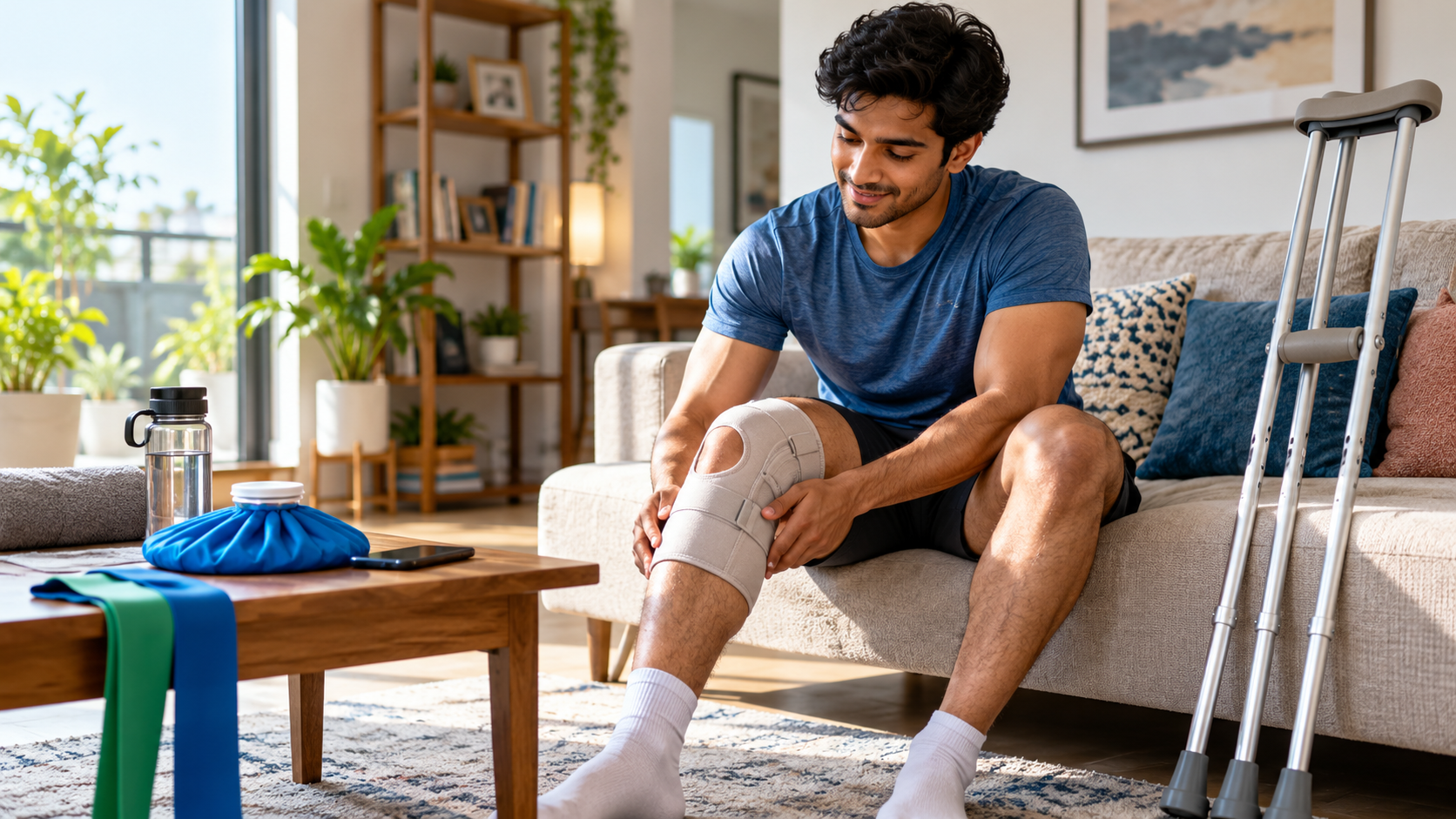
Knee arthroscopy recovery can take anywhere from around a week to several months because “arthroscopy” describes how the surgeon enters the knee — not necessarily what was done inside it. A relatively simple arthroscopic procedure may recover quickly. An ACL reconstruction or meniscus repair performed arthroscopically can take many months. That distinction is the most important thing to understand when searching for a knee arthroscopy recovery timeline.
What is knee arthroscopy?
Knee arthroscopy is a form of keyhole knee surgery in which a small camera is inserted through tiny incisions so the surgeon can see inside the joint. Additional instruments can then be used to diagnose or treat damage. Knee arthroscopy is commonly performed as a day-case procedure, allowing many patients to return home on the same day.
What can be done during knee arthroscopy?
- Examination of the knee
- Trimming damaged meniscus tissue
- Meniscus repair
- Removal of loose fragments
- Cartilage procedures
- Treatment of some joint problems
- ACL reconstruction or associated procedures
How long does knee arthroscopy recovery take?
For relatively uncomplicated arthroscopic knee procedures, return to ordinary activities is often measured in weeks rather than months. Leeds Teaching Hospitals states that full activity after routine knee arthroscopy commonly takes around 2–6 weeks, depending on what was treated and how much damage was present. The NHS gives a wider overall arthroscopy recovery range of approximately one week to several months because different procedures have very different recovery requirements.
| Procedure | Broad recovery pattern | ||
| Simple diagnostic/minor arthroscopy | Often relatively fast | ||
| Partial meniscectomy | Usually several weeks | ||
| Meniscus repair | Several months | ||
| ACL reconstruction | Commonly 6–12 months | ||
| Cartilage procedure | Depends heavily on procedure | ||
| Combined surgery | Usually follows the more restrictive procedure |
The first 24 hours after knee arthroscopy
Most patients spend a short period in recovery after surgery and can leave hospital once they are medically stable. After a general anaesthetic, arrange for someone to take you home. The NHS advises that patients should not drive themselves after the operation.
What may the knee feel like?
- Pain
- Swelling
- Stiffness
- Tenderness around the incisions
- Difficulty bending the knee fully
- Temporary weakness
- A slower walking pattern
Walking after knee arthroscopy
After many uncomplicated knee arthroscopies, patients are allowed to put weight through the leg and begin walking soon after surgery. Some people require crutches temporarily for comfort and stability, while others may be able to walk without them. This does not apply when the surgeon has prescribed restricted weight-bearing because of a repair or additional procedure.
How long do you need crutches after knee arthroscopy?
After a simple arthroscopic procedure, crutches may only be needed for a few days. Royal National Orthopaedic Hospital guidance notes that some patients gradually stop using crutches after around 2–3 days once walking becomes comfortable, while others may not require them at all. However, a prescribed period of crutch use after meniscus repair, ligament surgery or another procedure must be followed.
What if your arthroscopy included meniscus surgery?
Recovery depends on whether the surgeon performed a partial meniscectomy or a meniscus repair. Meniscectomy generally allows faster progression. A repair requires protection while the meniscus heals and may involve longer crutch use, restrictions on weight-bearing or limits on knee bending.
If your arthroscopy included meniscus surgery, use the dedicated meniscus recovery guide
What if your arthroscopy included ACL reconstruction?
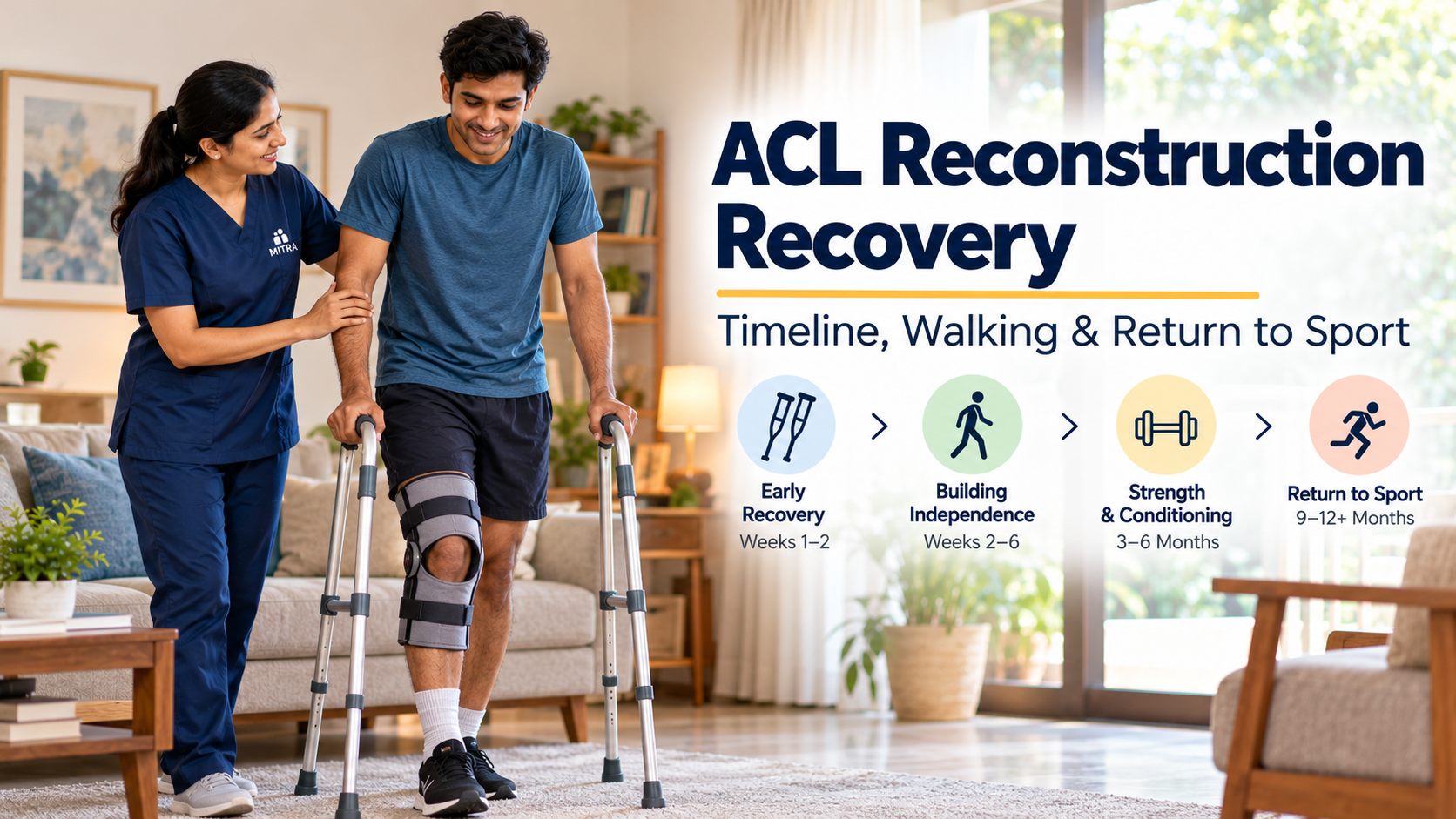
ACL reconstruction is usually performed arthroscopically, but it should not be treated like a routine knee scope. ACL recovery commonly takes many months and involves a structured rehabilitation and return-to-sport pathway. See the dedicated recovery timeline if your arthroscopy included ACL reconstruction
Swelling after knee arthroscopy
Swelling is common after arthroscopic knee surgery. Leeds Teaching Hospitals notes that the knee can remain sore and swollen for approximately 2–6 weeks, sometimes longer depending on the extent of surgery. Other NHS guidance notes that some residual swelling can persist for several months. The overall trend should gradually improve.
How can you reduce swelling after knee arthroscopy?
- Rest during the early period
- Elevate the leg when sitting
- Use cold therapy
- Avoid excessive standing
- Gradually increase movement
- Use prescribed compression if supplied
How long should you ice the knee?
Avoid placing ice directly against the skin. NHS guidance suggests applying a wrapped ice pack for around 20 minutes at a time, while Royal Berkshire advises limiting applications to approximately 20 minutes with breaks between sessions. Follow your own hospital's instructions if they differ.
Pain after knee arthroscopy
Pain and stiffness are expected initially. Simple arthroscopy generally causes less postoperative discomfort than major open knee surgery, but pain still depends on the procedure performed. Take prescribed pain relief according to the discharge instructions. Severe or progressively increasing pain deserves medical review.
Wound care after knee arthroscopy
Arthroscopy usually leaves two or more small incisions. Although the wounds are small, they still need appropriate care. Hospitals use different dressings and closure methods, so follow the instructions you were given regarding:- Dressing removal- Showering- Keeping the wounds dry- Suture removal- Swimming- Bathing
How long do arthroscopy wounds take to heal?
Many small arthroscopy wounds heal over approximately 10–14 days, although tenderness around the portals can persist longer. One NHS arthroscopy guide notes that incision sites can remain tender for up to several months even when the wounds themselves have healed.
When can you shower after knee arthroscopy?
The answer depends on your dressing. Some hospitals allow showering with waterproof dressings, while others advise keeping the wounds dry until a later review. Do not use one generic internet rule if your discharge instructions provide a specific timeline.
When can you return to work after knee arthroscopy?
Return to work depends strongly on the physical demands of the job. For uncomplicated arthroscopy, published NHS guidance commonly places return to sedentary office work within a few days to about one week. Physical jobs may require approximately 2–4 weeks or longer, depending on swelling, walking and the procedure performed.
| Work type | General consideration | ||
| Work from home | May return relatively early | ||
| Desk-based office | Often days to around 1 week | ||
| Standing job | Usually longer | ||
| Frequent stairs | Requires comfortable mobility | ||
| Squatting/kneeling | Greater knee demand | ||
| Heavy manual work | May require several weeks or surgeon clearance |
When can you drive after knee arthroscopy?
Published advice varies because recovery varies. The NHS says driving generally resumes once the patient has recovered sufficiently and can perform an emergency stop, commonly at least two weeks after arthroscopy overall. Some knee-specific hospital pathways allow earlier driving after uncomplicated procedures — sometimes around one week — if the patient can safely control the vehicle.
When can you use stairs after knee arthroscopy?
Many patients can use stairs soon after uncomplicated arthroscopy, although they may need to climb one step at a time during the first few days. If using crutches, follow the stair technique taught before discharge. A more restrictive procedure may require different instructions.
When can you return to normal daily activities?
For uncomplicated knee arthroscopy, many normal day-to-day activities return over approximately 1–2 weeks, although discomfort and swelling may remain. Frimley Health notes that most patients should be walking without excessive pain and managing normal sedentary activities within this period.
When can you exercise after knee arthroscopy?
Activity should progress gradually. Leeds guidance suggests light training may begin around three weeks after relatively uncomplicated arthroscopy, progressing toward higher-impact activity around 4–6 weeks if swelling and comfort allow. These timelines do not apply to procedures such as ACL reconstruction or protected meniscus repair.
When can you run after knee arthroscopy?
There is no universal running date. For simple arthroscopy, some patients may begin running within several weeks once the knee has:- Minimal swelling- Good movement- Adequate strength- Comfortable walking- Sufficient controlOther procedures require much longer. Do not use “keyhole surgery” alone to decide when running is safe.
When can you return to sport after knee arthroscopy?
For a relatively minor arthroscopic procedure, return to sport may occur within several weeks. Leeds places higher-impact activity around 4–6 weeks for suitable patients, while Frimley advises that running, racquet sports, skiing and contact sports may take at least around six weeks. The actual procedure remains the deciding factor.
What about football, badminton and other pivoting sports?
These sports require:- Acceleration- Sudden stopping- Cutting- Pivoting- Single-leg control- Rapid changes of directionThe knee should tolerate simpler activities first. If the arthroscopy included ligament reconstruction or meniscus repair, use the recovery timeline for that specific surgery rather than a routine arthroscopy timeline.
Do you always need physiotherapy after knee arthroscopy?
No. Gateshead Health notes that not everyone requires a formal course of physiotherapy after arthroscopy; the need depends on the operation and recovery. Some patients receive a home exercise programme, while others need structured physiotherapy because of weakness, stiffness or a more significant procedure. See when structured physiotherapy may be useful after knee surgery
Do you need a caregiver after knee arthroscopy?
Most otherwise healthy people undergoing a simple knee arthroscopy do not need long-term professional caregiving. Short-term help may still be useful during the first few days for:- Transport- Meals- Shopping- Stairs- Carrying items while using crutches- Household workCare requirements are greater if the arthroscopy included a more restrictive procedure.
When can you be left alone after knee arthroscopy?
After anaesthesia, follow the supervision instructions provided by the hospital. Beyond that, consider whether the patient can safely:- Get up- Walk to the bathroom- Use crutches- Access food and water- Take medicines- Use a phone- Manage stairs if necessaryThe answer depends more on function than on the operation date.
What can make knee arthroscopy recovery slower?
- More extensive surgery
- Meniscus repair
- Ligament reconstruction
- Cartilage procedures
- Significant arthritis
- Poor preoperative strength
- Ongoing swelling
- Older age or frailty
- Other medical conditions
- Physically demanding work
- Delayed rehabilitation
Warning signs after knee arthroscopy
| Symptom | Possible concern ||||| Fever or chills | Infection || Increasing wound redness | Infection || Smelly or pus-like drainage | Infection || Severe increasing knee pain | Complication || Severe or rapidly worsening swelling | Complication || Persistent numbness or tingling | Needs assessment || Calf pain and swelling | Possible DVT || Sudden breathlessness | Possible pulmonary embolism || Chest pain | Emergency assessment |
Know when symptoms after knee arthroscopy need medical assessment
Frequently asked questions
How long does it take to recover from a knee arthroscopy?
After a relatively uncomplicated knee arthroscopy, many patients return to everyday activities within approximately 1–2 weeks and fuller activity within around 2–6 weeks. However, recovery can take several months if a more significant repair or reconstruction was performed.
Can you walk straight after knee arthroscopy?
Often yes after an uncomplicated procedure. Many patients can bear weight and walk with or without crutches soon after surgery. Do not do this if your surgeon has specifically prescribed restricted weight-bearing.
How long does swelling last after knee arthroscopy?
Swelling commonly lasts several weeks and can sometimes persist longer. Leeds reports soreness and swelling commonly lasting around 2–6 weeks, while other NHS guidance notes that residual swelling may persist for a few months in some patients.
How long are you off work after keyhole knee surgery?
For a simple arthroscopy, desk-based work may be possible within several days to around a week. Jobs requiring prolonged standing, climbing, squatting or heavy physical work may require two weeks or longer. The exact procedure matters more than the fact that the surgery was performed through small incisions.
Is knee arthroscopy a minor surgery?
The incisions are small and many arthroscopies are day-case procedures, but “arthroscopy” can include anything from a relatively minor procedure to major ligament or meniscus surgery. The safest way to judge recovery is to identify exactly what was done inside the knee. A patient after simple arthroscopy may recover within weeks; someone after arthroscopic ACL reconstruction may require many months.
References
This article is for general health education and does not replace advice from your doctor. Please consult a qualified professional about your specific situation.
Need care at home in Bengaluru? See MITRA services.
Related articles
Post-Surgery & Recovery · 12 min read
Meniscus Surgery Recovery: Repair vs Meniscectomy
Meniscus repair and partial meniscectomy have very different recovery timelines. Learn what to expect after meniscus surgery, including walking, crutches, swelling, driving, work and return to sport.
Thu, 29 Oct 2026
Post-Surgery & Recovery · 11 min read
ACL Reconstruction Recovery: Timeline, Walking & Return to Sport
Recovering from ACL reconstruction takes months. Learn what to expect after ACL surgery, including walking, crutches, swelling, wound care, driving, work and the gradual return to sport.
Thu, 29 Oct 2026
Post-Surgery & Recovery · 14 min read
Knee Replacement Recovery Timeline: Week-by-Week Milestones
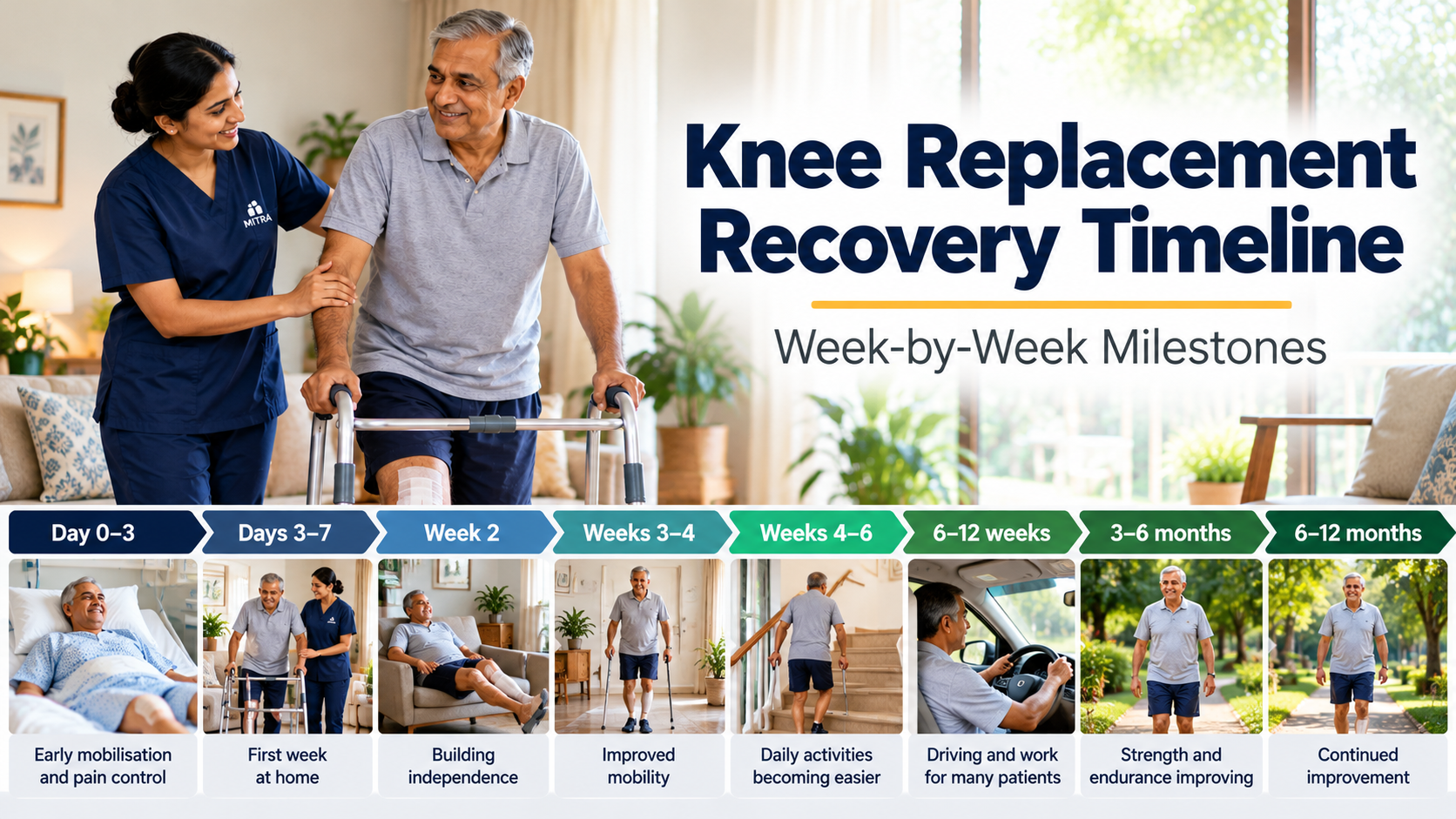
How long does knee replacement recovery take? See a practical week-by-week timeline covering walking, walker use, swelling, pain, stairs, driving, work and return to normal activities after knee replacement.
Tue, 27 Oct 2026