Post-Surgery Care at Home in Bengaluru: Complete Recovery Guide
Recovering after surgery at home involves more than rest. Learn what to arrange before discharge, who may need a caregiver, nurse or physiotherapist, how to manage medicines, wounds and mobility, and which warning signs need medical attention.
Written by Mr. Rahul B S
Published Fri, 23 Oct 2026 · 17 min read

Coming home after surgery can feel like the difficult part is over. In reality, the first days and weeks at home often determine how smoothly recovery continues. The patient may be medically stable enough to leave hospital but still need help with walking, bathing, toileting, medicines, meals, wound care, rehabilitation or simply getting safely through the day. Good post-surgery care at home starts before the patient leaves the hospital.
What is post-surgery care at home?
Post-surgery care at home — also called post-operative care, post-surgical care or recovery care — is the support a person receives after leaving the hospital following an operation. The exact plan differs enormously depending on the surgery. Someone returning after a minor procedure may mainly need rest and temporary family support. An older person after a major joint replacement, abdominal operation, cardiac surgery or prolonged hospital stay may need structured caregiving, nursing and rehabilitation.
What should be arranged before hospital discharge?
Discharge planning should begin before the patient reaches the front door. AHRQ's discharge-planning framework highlights five particularly important areas for patients and families: what life at home will be like, medicines, warning signs, test results and follow-up appointments. Before leaving hospital, the family should know the answers to the practical questions below.
- What operation was performed?
- Were there any complications?
- What medicines should now be taken?
- Which previous medicines were stopped or changed?
- How should the wound or dressing be managed?
- Are stitches, staples or drains present?
- Are there restrictions on lifting, bending, walking or weight-bearing?
- Is physiotherapy required?
- Is any nursing procedure required at home?
- What food or fluid instructions apply?
- Can the patient bathe independently?
- Can the patient use the toilet independently?
- What mobility aid should be used?
- When is follow-up with the surgeon?
- Who should the family contact with concerns?
- Which symptoms require urgent medical attention?
Keep the discharge documents together
Create one place — physical or digital — for the patient's important recovery information. That can include the discharge summary, current prescription, operation notes where provided, investigation reports, follow-up date, wound instructions, physiotherapy plan and emergency contact details. Keeping the information together makes it easier for a caregiver, nurse, physiotherapist or doctor to understand what has already happened.
Reconcile the medicines carefully
One of the most important discharge tasks is understanding exactly which medicines the patient should now be taking. Hospital admission can result in medicines being added, stopped, temporarily withheld or given at different doses. Compare the discharge prescription with the medicines used before admission and clarify discrepancies before leaving hospital. AHRQ specifically includes medication review as a core part of safe discharge planning.
Make a simple medication schedule
| Information | Example | ||
| Medicine | Name as written on prescription | ||
| Dose | e.g. 1 tablet | ||
| Time | Morning / afternoon / night | ||
| With food? | As prescribed | ||
| Purpose | Pain / blood pressure / antibiotic etc. | ||
| Start date | If relevant | ||
| Stop date | If prescribed for a limited period | ||
| Special instruction | e.g. do not crush |
What should happen on the first day home?
- Settle the patient into a safe, accessible room.
- Confirm the medication schedule.
- Review the discharge instructions again.
- Make sure food and fluids are available according to the prescribed plan.
- Help the patient mobilise only as instructed.
- Check that walking aids and bathroom access are safe.
- Confirm how the wound or dressing should be managed.
- Keep emergency contacts easily accessible.
- Record unusual symptoms rather than relying on memory.
- Make sure someone knows whether the patient can safely remain alone.
After general anaesthesia or sedation, some patients may continue to have impaired judgement, coordination or memory during the early recovery period. General surgical discharge guidance commonly recommends having a responsible adult available during the initial period after anaesthesia, depending on the procedure and discharge instructions.
Who should stay with the patient after surgery?
The answer depends on the patient's independence rather than simply the operation name. Ask whether the person can safely:- Get out of bed- Walk to the bathroom- Use the toilet- Eat and drink- Take medicines correctly- Call for help- Manage stairs- Get into and out of a chair- Recognise concerning symptomsA person who cannot safely perform these tasks may need family supervision or professional support.
Caregiver, nurse or physiotherapist?
| Recovery need | Usually most relevant | ||
| Bathing and grooming | Caregiver | ||
| Dressing | Caregiver | ||
| Toileting | Caregiver | ||
| Meals and hydration support | Caregiver | ||
| Medication reminders | Caregiver | ||
| Mobility supervision after instruction | Caregiver | ||
| Companionship / safety supervision | Caregiver | ||
| Prescribed injections | Nurse | ||
| IV medicines where appropriate | Nurse | ||
| Skilled wound dressing | Nurse | ||
| Catheter-related nursing | Nurse | ||
| Drain/tube-related nursing where appropriate | Nurse | ||
| Clinical monitoring requiring nursing skill | Nurse | ||
| Gait retraining | Physiotherapist | ||
| Strength and mobility rehabilitation | Physiotherapist | ||
| Transfer training | Physiotherapist | ||
| Prescribed exercise programme | Physiotherapist |
See when clinical nursing support is needed after hospital discharge
Prepare the home for recovery
The safest home is not necessarily the home with the most medical equipment. It is the one that matches the patient's current limitations. For someone with reduced mobility, consider:- Clear walking paths- Good lighting- A stable chair with suitable height- Easy bathroom access- Removal of loose rugs and clutter- Walker or crutches if prescribed- Frequently used items within reach- Space for safe transfers- A method of calling for helpNHS surgical guidance specifically recommends arranging appropriate support and equipment before discharge when required.
Do you need a hospital bed?
Not automatically. A hospital-style bed may be useful for some highly dependent patients, but many post-operative patients can safely recover in an ordinary bed. The decision should depend on mobility, transfer ability, positioning needs, wound location and clinical requirements rather than the fact that surgery occurred.
Wound care after surgery
Surgical wounds should be managed according to the specific instructions given by the surgical team. Different operations use different dressings, sutures, staples, glue and wound-care protocols. General guidance commonly emphasises keeping the wound and dressing appropriately clean and dry, using good hand hygiene and avoiding unnecessary handling. The exact timing for dressing removal, showering and wound exposure should follow the surgical team's instructions.
What should a normal healing wound look like?
Some discomfort, bruising, mild swelling and limited redness can occur as part of normal healing. What matters is the direction of change. A wound that gradually becomes less painful and less inflamed is different from one becoming progressively more painful, hot, swollen or wet.
Signs of possible wound infection
- Increasing redness
- Increasing warmth
- Increasing swelling
- Increasing pain or tenderness
- Yellow or green discharge
- Pus
- Unpleasant smell
- Wound edges opening
- Fever or chills
- Feeling increasingly unwell
What about dressings?
Do not remove or repeatedly open a surgical dressing simply to check the wound unless instructed. Some dressings are designed to remain in place for several days; others require scheduled changes. If the dressing becomes soaked, loose, contaminated or unexpectedly blood-stained, follow the surgical team's instructions or contact the appropriate healthcare professional.
Can the patient shower after surgery?
There is no universal showering rule for every operation. Some surgical guidance allows showering after approximately 24–48 hours for uncomplicated wounds, while particular procedures or dressings may require different timing. Follow the instructions for the actual wound and dressing rather than assuming that a generic internet timeline applies.
Pain after surgery
Some pain after surgery is expected. The aim is usually not to make the patient completely pain-free at every moment, but to keep pain controlled enough that they can breathe comfortably, sleep, eat, mobilise and participate in rehabilitation. Take prescribed pain medicines according to the discharge plan rather than waiting until pain becomes severe.
When is pain concerning?
Seek clinical advice when pain is: - Suddenly much worse- Increasing rather than improving- Associated with swelling or wound changes- Associated with chest pain or breathlessness- Severe despite prescribed medication- Preventing previously possible movement- Accompanied by new weakness, numbness or another neurological symptom A change from the patient's expected recovery pattern matters more than a universal pain score.
Movement after surgery matters
Prolonged immobility can contribute to muscle weakness, loss of function and blood-clot risk. For many operations, gradual mobilisation begins relatively early, but the exact timing and limits depend on the procedure and the surgeon's instructions. NHS recovery guidance encourages patients to begin moving as soon as appropriate and to follow their medical team's advice regarding activity.
Do not confuse movement with overexertion
Early mobilisation does not mean ignoring surgical restrictions. The patient may still have limits on:- Weight-bearing- Lifting- Bending- Twisting- Stair climbing- Driving- Raising an arm- Sitting duration- Exercise intensityThose restrictions depend heavily on the operation and are one reason surgery-specific guidance matters.
Watch for blood clots after surgery
Surgery and reduced mobility can increase the risk of venous thromboembolism, including deep vein thrombosis (DVT) and pulmonary embolism. Risk varies according to surgery type, age, mobility, previous clot history and other factors. Some patients are discharged with anticoagulant medicine or mechanical prevention measures. These should be continued for exactly the duration prescribed. NICE guidance recommends surgery-specific VTE prevention based on individual clot and bleeding risk.
Symptoms that can suggest DVT
New one-sided leg swelling, calf or leg pain, warmth or colour change after surgery deserves prompt medical attention. Do not assume unilateral swelling is simply a normal consequence of being less active.
Learn when post-surgery leg swelling could indicate a DVT
Possible pulmonary embolism is an emergency
Seek urgent medical care for sudden breathlessness, unexplained chest pain, collapse, coughing blood or severe deterioration, particularly after recent surgery. These symptoms can have several causes, but pulmonary embolism is one serious possibility that should not be assessed casually at home.
Eating and drinking during recovery
Nutrition requirements depend on the operation and underlying medical condition. In general, adequate protein, energy, fluids and micronutrients support recovery, but some surgeries require specific restrictions or staged diets. For example, gastrointestinal and bariatric procedures may have substantially different dietary plans from orthopaedic surgery. Follow the surgeon or dietitian's plan rather than applying one universal “post-surgery diet.”
What if appetite is poor?
Reduced appetite can occur after surgery because of anaesthesia, pain, medication, constipation or the illness that led to surgery. Smaller, more frequent meals may be easier for some patients, provided the prescribed diet allows them. Persistent vomiting, inability to drink, worsening abdominal distension or signs of dehydration should be medically reviewed.
Constipation after surgery
Constipation is common after surgery because patients may be moving less, eating differently or taking pain medicines that slow the bowel. Follow the discharge advice regarding fluids, diet, activity and prescribed laxatives. Do not repeatedly self-treat worsening constipation if it is accompanied by vomiting, severe abdominal pain, marked distension or inability to pass stool or gas, because those symptoms may require medical assessment.
Sleep and fatigue after surgery
Fatigue after surgery is common, particularly after major operations or general anaesthesia. Patients may need more rest than usual, but spending the entire day immobile in bed is not necessarily helpful once mobilisation has been permitted. NHS recovery guidance notes that significant tiredness can occur after returning home and recommends gradually returning to normal activity according to medical advice.
What should the caregiver actually do?
- Bathing and grooming
- Dressing
- Toileting
- Meals and hydration
- Getting in and out of bed
- Walking and mobility assistance
- Positioning
- Medication reminders
- Basic observations included in the care plan
- Following an already prescribed exercise routine
- Companionship
- Recognising and escalating changes
When does a post-surgery patient need a nurse?
Home nursing becomes relevant when recovery includes skilled clinical tasks such as:- Prescribed injections- IV medicines through appropriate access- Skilled wound dressing- Catheter-related nursing- Feeding-tube care- Drain or line care where within scope- Suctioning or tracheostomy care- More complex clinical monitoringThe need for nursing should be based on actual procedures, not simply on how major the surgery sounds.
See which post-surgery procedures require qualified home nursing
When is physiotherapy needed?
Physiotherapy may be important when surgery affects strength, balance, walking, joint movement, transfers or overall function. It is particularly common after orthopaedic, neurological and some major abdominal or cardiac procedures. The physiotherapist assesses the patient and designs the rehabilitation plan. A caregiver can then help the patient follow exercises or mobility routines that have already been prescribed.
What if the patient becomes bedridden?
Some patients leave hospital unable to stand, transfer or reposition themselves independently. At that point, post-operative care also needs to address the consequences of prolonged immobility, including pressure injury risk, hygiene, toileting, positioning and maintaining appropriate movement. Rather than duplicate those instructions here, use the dedicated bedridden-care guide.
See how to safely care for a post-surgery patient who is largely confined to bed
Does every patient need 24-hour care?
No. A patient may only need support during bathing, meals, mobility and daytime activities. Twenty-four-hour support becomes more relevant when the person cannot safely remain alone across both day and night, requires frequent assistance or has substantial dependency. One live-in caregiver also requires adequate sleep and rest. Frequent active overnight care may require a different staffing structure.
Compare 12-hour and 24-hour support during post-surgery recovery
How long does post-surgery home care last?
There is no single answer. Professional support may be needed for a few days, several weeks or substantially longer, depending on the surgery and the patient's baseline health. Instead of choosing a duration from a generic timeline, reassess whether the patient can safely manage the activities that originally required assistance.
Signs the patient may need less support
- Get out of bed safely
- Use the toilet independently
- Bathe with minimal assistance
- Walk safely with the prescribed aid
- Manage medicines reliably
- Prepare or obtain meals
- Complete the prescribed exercise programme
- Remain alone safely
- Manage nighttime needs
Recovery should be reassessed over time
The care plan needed during the first 48 hours at home may be very different from the plan needed three weeks later. Some patients improve quickly and can step down from intensive support. Others develop new needs or recover more slowly than expected. A good home-care plan should therefore be reviewed and reduced, increased or changed as function evolves.
Post-surgery warning signs
| Warning sign | Why it matters | ||
| Increasing wound redness, heat or pus | Possible infection | ||
| Wound opening | Possible wound complication | ||
| Fever with worsening symptoms | Possible infection or other complication | ||
| Sudden breathlessness | Requires urgent assessment | ||
| Chest pain | Requires urgent assessment | ||
| New one-sided leg swelling | Possible DVT | ||
| Uncontrolled bleeding | May require urgent care | ||
| Persistent vomiting | Risk of dehydration / surgical complication | ||
| Severe worsening abdominal pain | Needs assessment | ||
| New confusion or unusual drowsiness | May indicate acute illness | ||
| Sudden weakness or speech difficulty | Possible stroke | ||
| Collapse or loss of consciousness | Medical emergency | ||
| Pain rapidly worsening despite medication | May indicate complication |
When should you call emergency services?
Seek emergency medical help for severe breathlessness, collapse, loss of consciousness, uncontrolled major bleeding, suspected stroke, severe chest pain or another immediately life-threatening deterioration. In India, 112 is the integrated national emergency-response number and includes medical emergencies.
Different surgeries need different recovery plans
This guide covers the common principles of post-operative home recovery, but specific surgeries have their own precautions. For example: Knee replacement places greater emphasis on walking, knee movement, swelling and rehabilitation. Hip replacement involves transfer technique, mobility aids and procedure-specific movement precautions. Cardiac surgery may require attention to sternotomy recovery, exercise progression and cardiac rehabilitation. Spine surgery may involve restrictions on bending, lifting or twisting and attention to neurological symptoms. Those subjects will each have dedicated guides rather than being compressed into generic advice here.
How MITRA approaches post-surgery care at home
MITRA starts with the patient's actual post-operative needs, not simply the name of the surgery. Assessment can include:- Ability to walk and transfer- Bathing and dressing- Toileting- Feeding and hydration- Medication support- Wound requirements- Medical devices- Nursing procedures- Rehabilitation requirements- Cognition- Nighttime needs- Whether the patient can safely remain aloneThis helps determine whether the person needs caregiving, nursing, physiotherapy or a combination.
The plan can change as the patient recovers
A patient may begin with high-dependency support and later require only physiotherapy or part-day caregiving. MITRA's managed-care model allows the patient's changing requirements to be reviewed rather than treating the original discharge arrangement as permanent. For ongoing caregiving or nursing placements, provider matching can also take into account the patient's care level and relevant family preferences.
Frequently asked questions
How much help does someone need after surgery?
It depends on the person's ability to walk, toilet, bathe, eat, take medicines and remain safely alone. The operation itself matters, but functional independence is usually more useful for planning home support than simply labelling a procedure “major” or “minor.”
Does someone need a nurse after every surgery?
No. If the main needs are bathing, toileting, meals, mobility and supervision, a trained caregiver may be more appropriate. Nursing is needed when skilled clinical procedures or nursing-level monitoring are part of the recovery plan.
Can a caregiver change a surgical dressing?
Simple assistance around an uncomplicated wound may sometimes be included in a care plan, but skilled wound assessment or prescribed dressing procedures should be performed by an appropriately trained healthcare professional. Follow the surgeon's wound-care instructions rather than improvising.
When should physiotherapy start after surgery?
There is no universal day that applies to every operation. Some rehabilitation begins very early, while other procedures require temporary restrictions. The surgeon and physiotherapist should determine the appropriate starting point and progression.
Can an elderly patient recover at home after major surgery?
Often, yes, once the hospital team considers discharge appropriate and the necessary support can be arranged. The decision depends on medical stability, mobility, cognition, home safety, nursing requirements, rehabilitation needs and available family or professional support.
Is swelling normal after surgery?
Some local swelling can be expected after many operations, but the amount and duration vary by procedure. New or rapidly increasing swelling, particularly one-sided leg swelling after surgery, should not automatically be dismissed as normal recovery.
How long does weakness last after surgery?
There is no fixed timeline. Recovery depends on the operation, anaesthesia, pre-surgery fitness, age, complications, hospital stay, nutrition and rehabilitation. Persistent or worsening weakness should be reviewed rather than compared with a generic recovery calendar.
What should we buy before the patient comes home?
Buy only what the patient's discharge plan actually requires. Depending on the case, that may include prescribed dressings, a walker, crutches, a commode, supportive seating or other equipment. Avoid purchasing a hospital bed, wheelchair or multiple devices simply because someone has undergone surgery.
Need care at home in Bengaluru? See MITRA services.
Related articles
Post-Surgery & Recovery · 11 min read
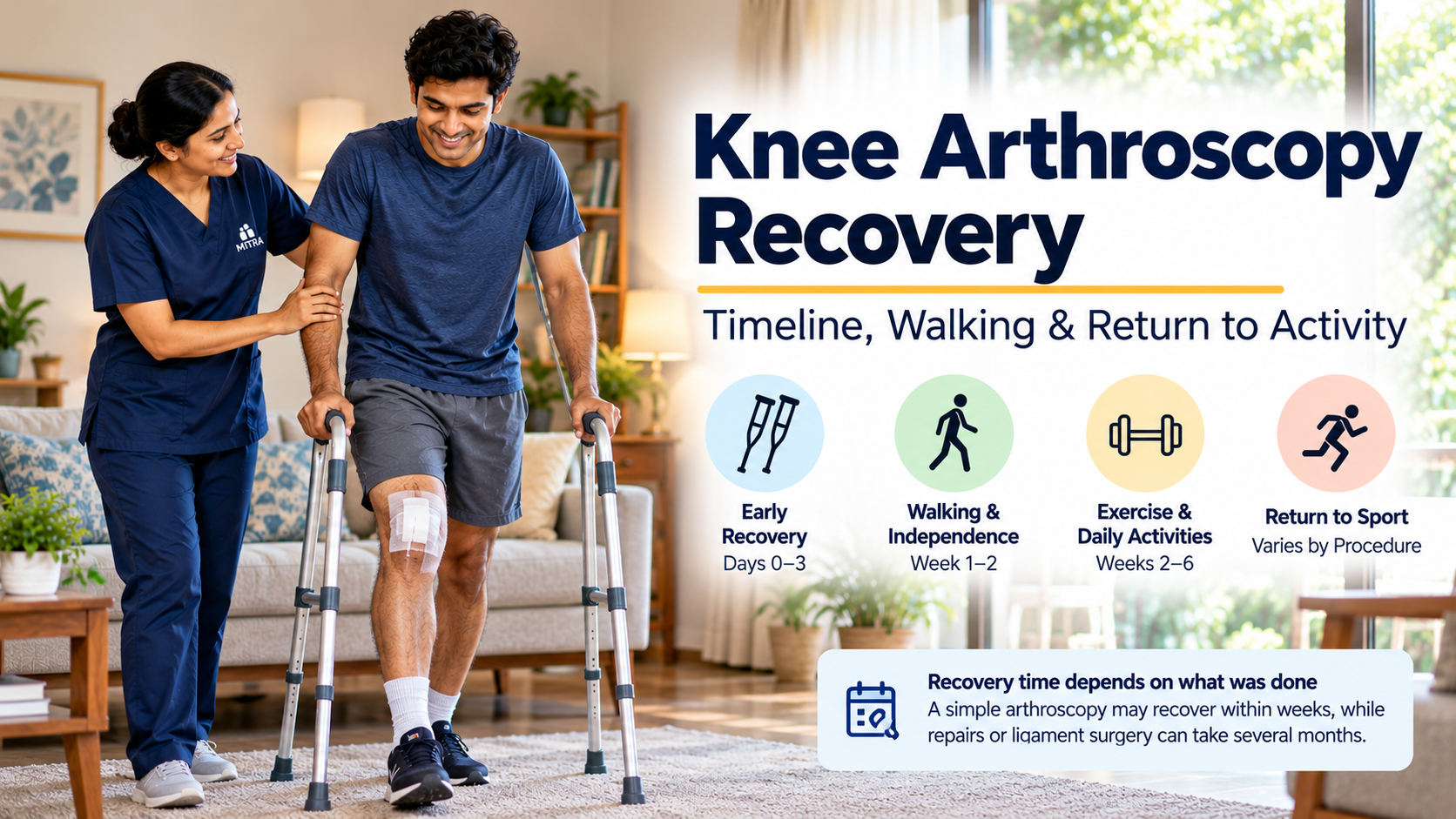
Knee Arthroscopy Recovery: Timeline, Walking & Return to Activity
How long does knee arthroscopy recovery take? Learn what to expect after keyhole knee surgery, including walking, crutches, swelling, wound care, driving, work and return to sport.
Thu, 29 Oct 2026
Post-Surgery & Recovery · 12 min read
Meniscus Surgery Recovery: Repair vs Meniscectomy
Meniscus repair and partial meniscectomy have very different recovery timelines. Learn what to expect after meniscus surgery, including walking, crutches, swelling, driving, work and return to sport.
Thu, 29 Oct 2026
Post-Surgery & Recovery · 11 min read
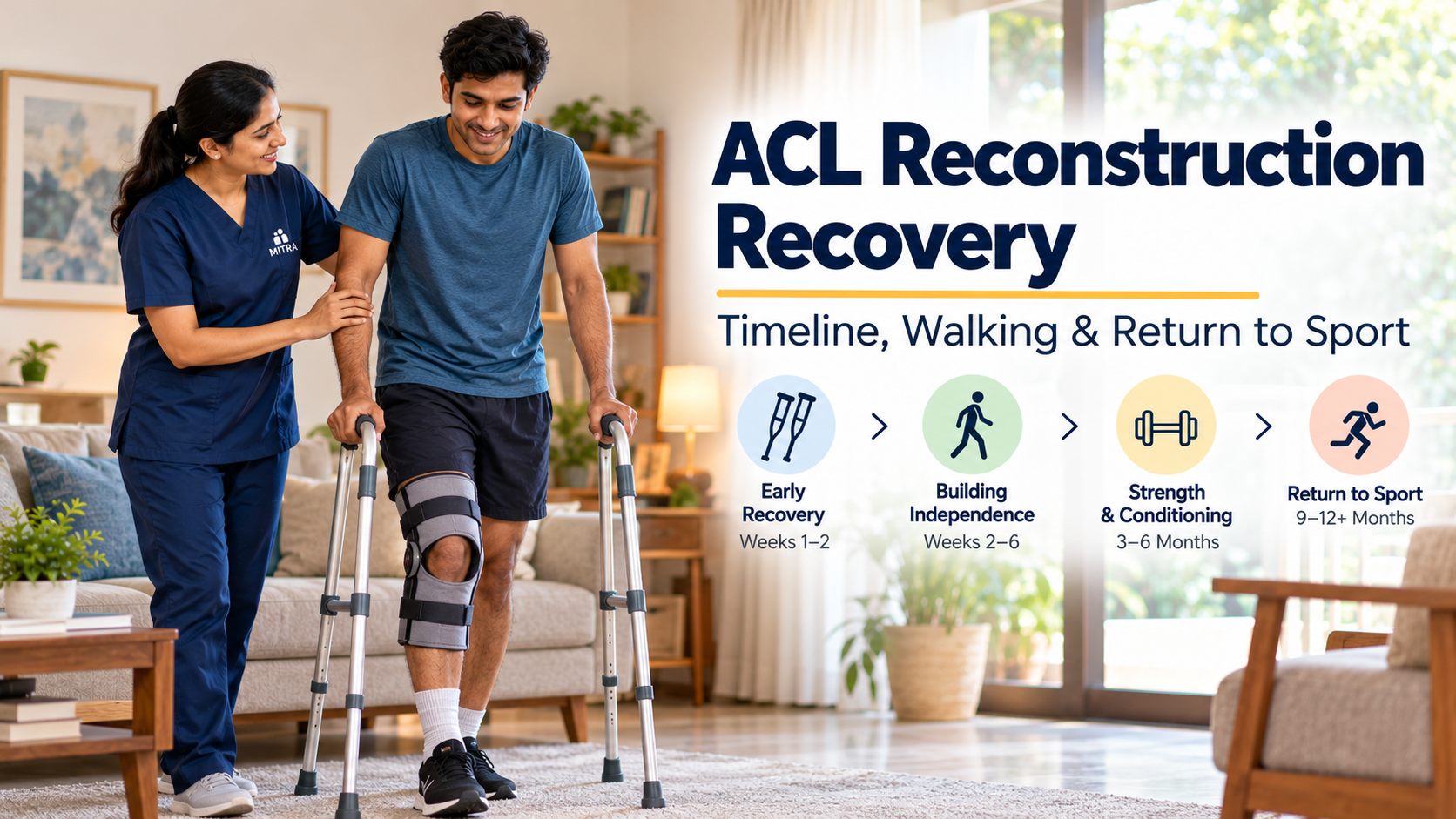
ACL Reconstruction Recovery: Timeline, Walking & Return to Sport
Recovering from ACL reconstruction takes months. Learn what to expect after ACL surgery, including walking, crutches, swelling, wound care, driving, work and the gradual return to sport.
Thu, 29 Oct 2026