Prediabetes: What It Means and What to Do Next
Prediabetes means blood glucose is higher than normal but has not reached the diabetes range. Learn what it means, whether it can improve, who is at higher risk and what changes can help prevent or delay type 2 diabetes.
Written by Dr. Sanjay Kumar K A · Medically reviewed by Dr. Sanjay Kumar K A, MD Anaesthesiology (Wed, 21 Oct 2026)
Published Wed, 21 Oct 2026 · 13 min read

Being told you have prediabetes can sound like being told you are “almost diabetic.” That description is incomplete. Prediabetes means your glucose regulation is already abnormal, but your results do not yet meet the diagnostic criteria for diabetes. It increases your risk of developing type 2 diabetes and is also associated with cardiovascular and other metabolic risk factors. The important part is that progression is not inevitable. Evidence-based lifestyle changes can substantially reduce the chance of developing type 2 diabetes.
What exactly is prediabetes?
Prediabetes describes glucose levels that are above the normal range but below the threshold used to diagnose diabetes. Depending on which test is abnormal, clinicians may use terms such as:- Impaired fasting glucose (IFG)- Impaired glucose tolerance (IGT)- Prediabetes based on HbA1cThese tests measure different aspects of glucose metabolism, so one person may have an abnormal result on one test but not another.
Is “borderline diabetes” the same thing?
People sometimes use the phrase “borderline diabetes” to describe prediabetes. It can be misleading because it may make the condition sound insignificant. Prediabetes means glucose regulation is already abnormal and the future risk of type 2 diabetes is higher than normal. It deserves attention even though it is not the same as having diabetes.
What is the prediabetes blood sugar range?
Prediabetes can be identified using fasting plasma glucose, HbA1c or a 2-hour oral glucose tolerance test. Rather than reproduce the same numerical tables across multiple articles, MITRA keeps the detailed glucose and HbA1c cut-offs in the two dedicated guides below. This article focuses on the more important question after a borderline result: What should you actually do about it?
See the exact fasting and glucose ranges used for prediabetes
See the HbA1c range for prediabetes and diabetes
Does prediabetes cause symptoms?
Usually, no obvious symptoms are present. That is one reason prediabetes is commonly discovered during routine health screening rather than because someone felt unwell. Classic symptoms such as marked thirst, frequent urination, unexplained weight loss or blurred vision are more suggestive of significant hyperglycaemia and should prompt appropriate testing rather than being assumed to represent uncomplicated prediabetes.
See the symptoms that can occur when blood glucose becomes significantly elevated
How serious is prediabetes?
Prediabetes should be taken seriously, but not catastrophised. The main concern is that it identifies people with a greater probability of developing type 2 diabetes. It is also commonly associated with other metabolic problems such as abdominal obesity, high blood pressure, high triglycerides and low HDL cholesterol. Current ADA guidance therefore recommends considering the broader cardiovascular-risk profile, not looking at glucose in isolation.
Does everyone with prediabetes develop diabetes?
No. WHO explicitly describes impaired fasting glucose and impaired glucose tolerance as intermediate states with a higher risk of progressing to type 2 diabetes — but notes that progression is not inevitable. Some people progress to diabetes, some remain in the prediabetes range for years, and some return to glucose levels outside the prediabetes range. What happens depends partly on the severity of the glucose abnormality and partly on factors such as weight, activity, genetics and other metabolic conditions.
Can prediabetes be reversed?
Prediabetes can often improve, and some people return to glucose levels below the prediabetes thresholds. The word “reversed” should be used carefully, however. A normal result after lifestyle changes does not mean the person's underlying susceptibility has permanently disappeared. If weight, activity or other risk factors change again, glucose can rise again. A better goal is: return glucose toward a healthier range and reduce the long-term risk of type 2 diabetes.
How much difference can lifestyle changes make?
The landmark Diabetes Prevention Program studied adults at high risk for type 2 diabetes. Over about three years, the intensive lifestyle group reduced the development of type 2 diabetes by 58% compared with placebo. Participants worked toward modest weight reduction and increased physical activity. The benefit also persisted over longer follow-up, although the difference between groups narrowed over time.This does not mean everyone with prediabetes will reduce their individual risk by exactly 58%. It demonstrates that structured lifestyle intervention can make a meaningful difference.
What should you do after a prediabetes result?
- Confirm what test was abnormal.
- Review the result with a clinician in the context of your medical history.
- Check whether additional glucose testing is needed.
- Review body weight and waist circumference where relevant.
- Check blood pressure and lipid risk.
- Increase regular physical activity.
- Improve the overall quality and quantity of food intake.
- Address smoking if applicable.
- Set a realistic weight goal if overweight or obesity is present.
- Plan repeat glucose testing rather than ignoring the result.
Weight loss can make a major difference
For people who have overweight or obesity, losing even a relatively modest amount of weight can substantially improve metabolic health. The Diabetes Prevention Program targeted approximately 7% weight loss, and contemporary diabetes-prevention guidance continues to recommend meaningful, sustainable weight reduction for high-risk adults with excess weight. You do not need to reach an arbitrary “ideal weight” before benefits begin.
What does 5–7% weight loss actually mean?
| Starting weight | 5% loss | 7% loss | ||
| 60 kg | 3 kg | 4.2 kg | ||
| 70 kg | 3.5 kg | 4.9 kg | ||
| 80 kg | 4 kg | 5.6 kg | ||
| 90 kg | 4.5 kg | 6.3 kg | ||
| 100 kg | 5 kg | 7 kg |
How much exercise helps with prediabetes?
WHO recommends at least 150 minutes of moderate physical activity per week as part of type 2 diabetes prevention. The Diabetes Prevention Program similarly used a target of at least 150 minutes per week of moderate-intensity activity, such as brisk walking. That could be approximately:30 minutes on five days each week.It does not have to happen all at once.
What exercise should you start with?
- Brisk walking
- Cycling
- Swimming
- Dancing
- Stair climbing
- Structured aerobic exercise
- Resistance or strength training
- Breaking up prolonged periods of sitting
What should you eat if you have prediabetes?
There is no single mandatory “prediabetes diet.” The goal is an eating pattern that helps improve overall metabolic health and is sustainable for the person. Current diabetes-prevention guidance supports several evidence-based eating patterns rather than one universally superior macronutrient formula.For an Indian household, that usually means improving portion size, carbohydrate quality, vegetable intake, protein intake and frequency of highly refined or calorie-dense foods rather than banning every familiar food.
A practical Indian plate approach
For many meals, a useful starting framework is: ½ the plate: non-starchy vegetables¼ of the plate: protein-rich foods¼ of the plate: rice, roti or another carbohydrate source The exact proportions and calorie requirements vary between people. The purpose is not to declare rice or roti “bad.” It is to avoid meals where almost the entire plate is refined carbohydrate with little protein, fibre or vegetables.
Foods worth eating more often
- Vegetables
- Whole fruits
- Dal and pulses
- Beans and chickpeas
- Eggs
- Fish
- Lean meats
- Unsweetened curd or other suitable dairy
- Nuts and seeds in sensible portions
- Higher-fibre grains
- Minimally processed foods
- Water instead of sugar-sweetened drinks
Foods worth reducing
- Sugary drinks
- Sweetened tea and coffee
- Fruit juice used as a routine beverage
- Sweets and desserts
- Large portions of refined carbohydrates
- Biscuits and bakery foods
- Highly processed snacks
- Frequent fried foods
- Excess alcohol
- Habitual overeating even when the food is labelled “healthy”
Do you need to stop eating rice?
No. Rice can remain part of a healthy diet for someone with prediabetes. What often matters more is:- Portion size- Whether the meal includes vegetables and protein- Total daily calorie intake- How often large refined-carbohydrate meals are eaten- The person's weight and activity levelReplacing one large carbohydrate-heavy plate with a more balanced meal is usually more practical than creating a list of foods that are permanently forbidden.
Does sugar have to be completely avoided?
Prediabetes does not require a lifetime ban on every food containing sugar. However, reducing added sugars and sugar-sweetened beverages is a sensible priority because these foods can contribute substantial calories with limited satiety or nutritional value. The bigger goal is the overall dietary pattern, not obsessing over a teaspoon of sugar while ignoring total calorie intake, physical inactivity and excess body weight.
Can walking after meals help?
Physical activity increases glucose uptake by working muscles and can improve insulin sensitivity. A short walk after a meal can therefore be a useful way to increase total daily movement. It should be considered part of a broader activity plan rather than a substitute for regular exercise or a strategy for “canceling out” a very large meal.
Does sleep matter in prediabetes?
Sleep is often overlooked when people focus only on diet and exercise. Poor sleep can affect appetite, weight regulation and metabolic health. Conditions such as obstructive sleep apnoea are also more common in people with obesity and metabolic disease. If you consistently sleep poorly, snore heavily, experience breathing pauses during sleep or remain excessively sleepy during the day, mention it during medical review rather than treating glucose as the only health issue.
What about smoking and alcohol?
Smoking increases cardiovascular risk, which matters because prediabetes commonly occurs alongside other cardiovascular risk factors. Current ADA prevention guidance recommends assessing tobacco use and supporting cessation in people at risk of diabetes.Alcohol should also be considered in the context of total calorie intake, liver health, triglycerides, medication use and individual risk rather than being treated as metabolically irrelevant.
Do people with prediabetes need medicine?
Not everyone with prediabetes needs medication. Lifestyle intervention is the foundation of prevention. For selected people at particularly high risk of progressing to type 2 diabetes, a clinician may consider medication such as metformin. The decision depends on factors such as age, body weight, glucose levels, previous gestational diabetes and overall risk profile. It should not be started solely because an online calculator labels someone “prediabetic.” The Diabetes Prevention Program showed that metformin also reduced diabetes development, although the effect was smaller than the intensive lifestyle intervention overall.
How often should prediabetes be tested?
Prediabetes should not be diagnosed and then forgotten. ICMR's Standard Treatment Workflow recommends that people with prediabetes be tested yearly.The actual interval may be shorter or longer depending on how abnormal the result was, whether symptoms develop, pregnancy plans, medication changes and other clinical considerations.
Which test should you repeat?
The appropriate follow-up test depends partly on how prediabetes was identified. A clinician may repeat:- Fasting plasma glucose- HbA1c- A glucose tolerance test in selected circumstancesBecause these tests measure different aspects of glucose metabolism, they are not perfectly interchangeable.
See how to prepare correctly for a fasting blood sugar test
Who is more likely to develop prediabetes or diabetes?
Increasing ageFamily history of diabetesOverweight or obesityAbdominal obesityPhysical inactivityHigh blood pressureAbnormal triglycerides or HDL cholesterolPrevious gestational diabetesPolycystic ovary syndromeCardiovascular diseasePrevious abnormal glucose testingClinical signs of insulin resistance
Why does Indian ancestry matter?
People of South Asian ancestry can develop metabolic risk at lower body mass index values than many other populations. Current ADA screening guidance therefore uses a lower overweight threshold for people of Asian ancestry when assessing whether additional diabetes risk factors should prompt testing. This is one reason someone does not need to appear visibly obese to be at meaningful metabolic risk.
Prediabetes and PCOS
Polycystic ovary syndrome is associated with insulin resistance and an increased risk of impaired glucose regulation and type 2 diabetes. Women with PCOS may therefore be advised to undergo glucose testing even when they have no classic diabetes symptoms. The appropriate test and frequency depend on individual risk and clinical history.
Prediabetes after gestational diabetes
A previous history of gestational diabetes is an important long-term risk factor for type 2 diabetes. Someone who had elevated glucose during pregnancy should continue appropriate glucose surveillance after pregnancy even if the glucose subsequently returned to normal. Previous gestational diabetes is included among recognised risk factors in both Indian and international screening guidance.
When should you see a doctor sooner?
- Marked thirst
- Frequent urination
- Unexplained weight loss
- Blurred vision
- Recurrent infections
- Significant fatigue with other diabetes symptoms
- A clearly worsening glucose result
- Pregnancy or plans for pregnancy
- Treatment with medicines known to substantially affect glucose
Frequently asked questions
Can prediabetes go back to normal?
Yes. Some people with prediabetes return to glucose levels below the prediabetes thresholds, particularly after sustained improvements in weight, diet and physical activity. This does not mean future diabetes risk becomes zero, so ongoing healthy habits and periodic testing remain important.
Can a thin person have prediabetes?
Yes. Excess weight increases risk, but it is not required. Genetics, age, body-fat distribution, physical inactivity, previous gestational diabetes and other metabolic factors can contribute. South Asian populations can also develop metabolic risk at comparatively lower BMI levels.
Does prediabetes always need medication?
No. Lifestyle intervention is central to prediabetes management. Medication may be considered for selected people at higher risk, but the decision should be individualised with a clinician rather than based on one laboratory value alone.
Can I eat fruit if I have prediabetes?
Yes. Whole fruit can be part of a healthy eating pattern. Portion size and the overall diet matter. Whole fruit is generally different from drinking large quantities of fruit juice, which delivers sugar rapidly and with much less intact fibre.
Is prediabetes permanent?
No. Glucose levels can move in either direction. Prediabetes can progress to diabetes, remain stable or improve. That is exactly why early action and follow-up testing are worthwhile.
What is the best test for prediabetes?
There is no universally best test for every person. Fasting plasma glucose, HbA1c and the 2-hour oral glucose tolerance test assess different aspects of glucose metabolism and can identify somewhat different groups of people. A clinician can determine which test is most appropriate for your situation.
Can prediabetes be diagnosed with a home glucometer?
A home glucometer is useful for glucose monitoring but should not be used on its own to establish a diagnosis of prediabetes. Diagnostic classification should use appropriate laboratory testing and clinical interpretation.
References
- Standards of Care in Diabetes 2026: Diagnosis and Classification of Diabetes — American Diabetes Association (2026)
- Standards of Care in Diabetes 2026: Prevention or Delay of Diabetes and Associated Comorbidities — American Diabetes Association (2026)
- Standard Treatment Workflow: Type 2 Diabetes Mellitus — Indian Council of Medical Research (2021) · source
This article is for general health education and does not replace advice from your doctor. Please consult a qualified professional about your specific situation.
Need care at home in Bengaluru? See MITRA services.
Related articles
Diabetes · 13 min read
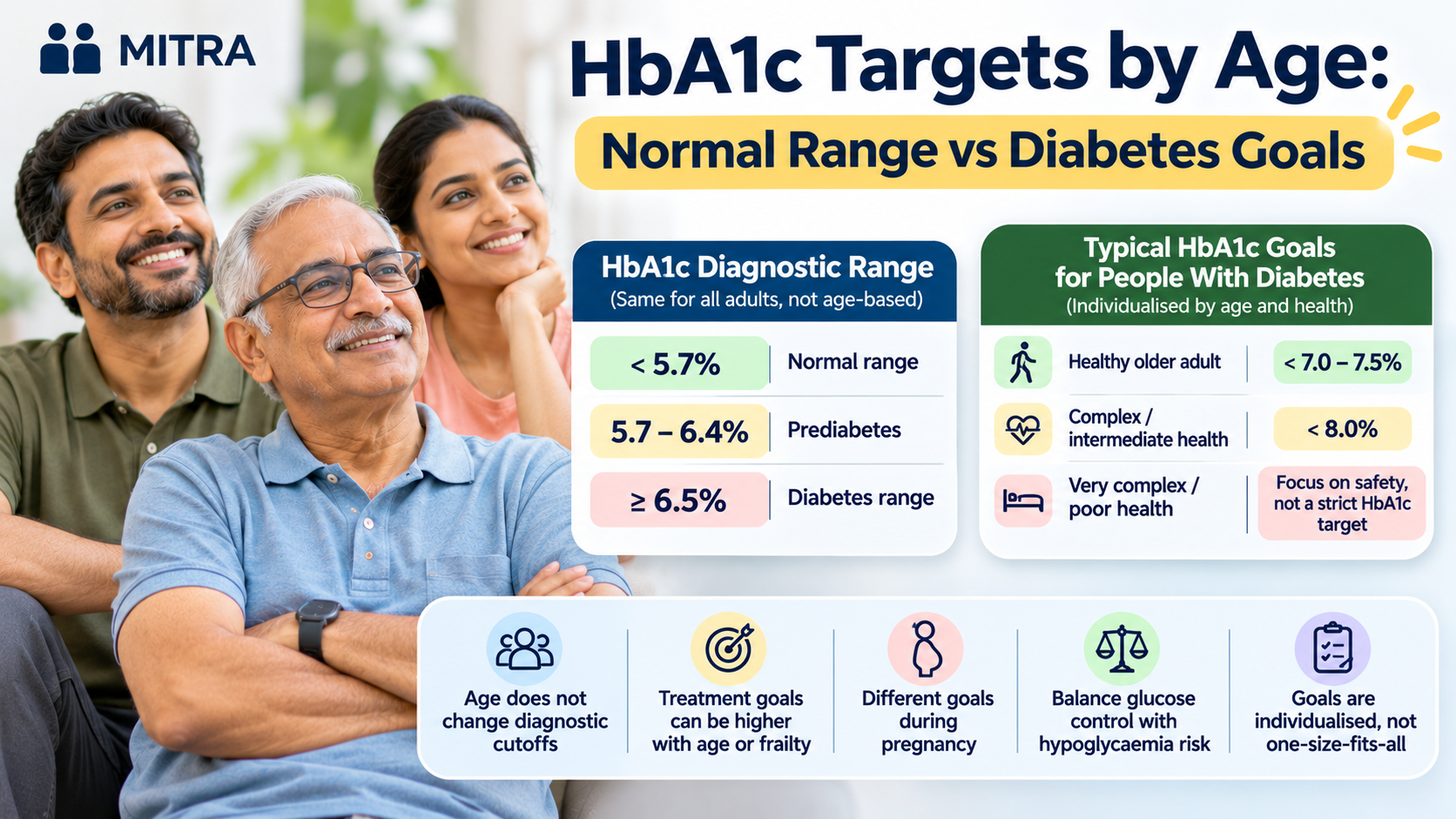
HbA1c Targets by Age: Normal Range vs Diabetes Goals
Does the normal HbA1c range change with age? Learn the difference between HbA1c diagnostic cutoffs and personal diabetes treatment targets, including goals for healthy adults, older adults, frailty and pregnancy.
Wed, 4 Nov 2026
Diabetes · 12 min read
When HbA1c Can Be Wrong: Anaemia, Kidney Disease & Other Causes
HbA1c is useful for estimating long-term glucose levels, but certain conditions can make the result falsely high, falsely low or difficult to interpret. Learn how anaemia, blood loss, transfusion, kidney disease, haemoglobin variants, pregnancy and altered red-cell turnover can affect HbA1c.
Wed, 4 Nov 2026
Diabetes · 11 min read
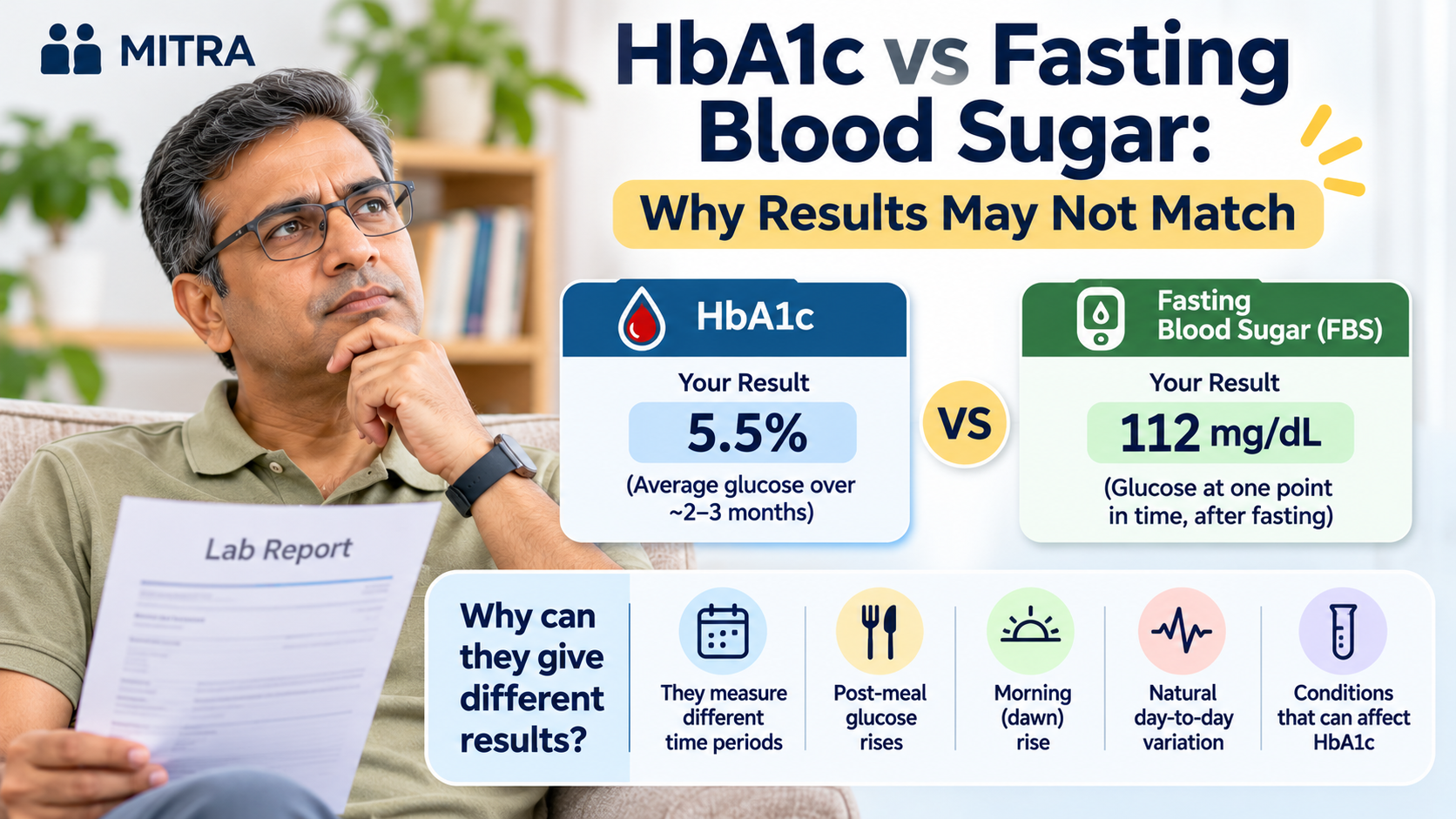
HbA1c vs Fasting Blood Sugar: Why Results May Not Match
Is your fasting blood sugar high but HbA1c normal — or HbA1c high despite a normal fasting glucose? Learn why these diabetes tests can disagree, which result matters, when testing should be repeated and when HbA1c may be unreliable.
Wed, 4 Nov 2026