Knee Replacement Recovery at Home: Complete Guide
Recovering at home after knee replacement involves safe walking, pain and swelling control, wound care, physiotherapy and gradual return to independence. Learn how families can prepare the home, support daily activities and recognise warning signs after total or partial knee replacement.
Written by Dr. Sanjay Kumar K A · Medically reviewed by Dr. Sanjay Kumar K A, MD Anaesthesiology (Tue, 27 Oct 2026)
Published Tue, 27 Oct 2026 · 13 min read
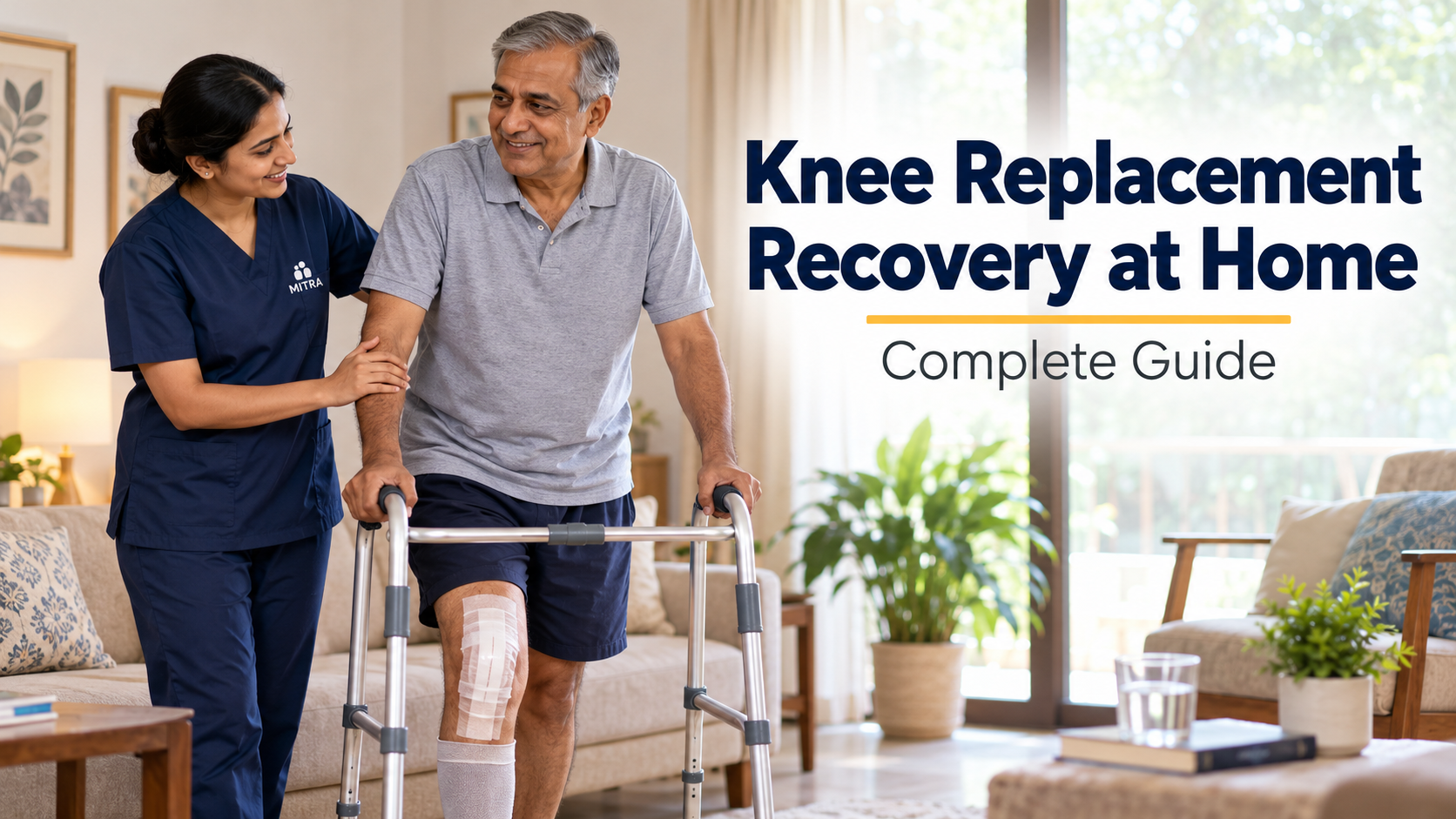
Coming home after a knee replacement is a major step in recovery, but the patient is rarely fully independent on the day of discharge. During the early period at home, they may still need a walker or crutches, pain medicines, help with bathing and toileting, regular rehabilitation and support managing swelling. The aim is not prolonged bed rest. It is safe, progressive recovery toward independent movement.
What should you expect after knee replacement surgery?
Recovery varies according to age, health, pre-surgery mobility and whether the patient had a total knee replacement or partial knee replacement. Most patients begin walking with assistance soon after surgery. Initially, a walker, crutches or another mobility aid may be required. Full recovery can take several months or longer, while partial knee replacement often has a shorter recovery than total replacement. The detailed week-by-week timeline will be covered separately in the next article.
Prepare the home before the patient returns
- Clearing walking paths
- Removing loose rugs and electrical cords
- Keeping commonly used items within easy reach
- Making space for a walker
- Preparing meals in advance
- Ensuring good lighting
- Arranging a stable chair
- Checking bathroom safety
- Considering handrails where needed
- Keeping medicines and water accessible
- Reducing unnecessary stair use during the early period
Make the bathroom safer
The bathroom is often one of the most difficult areas after knee replacement because sitting, standing and balancing can all be uncomfortable. Depending on the patient's height and mobility, useful equipment may include:- Raised toilet seat- Stable grab rail- Shower chair- Non-slip surfaceThe patient should not rely on towel rails, unstable furniture or the caregiver's neck for support.
The first days at home after knee replacement
- Follow the prescribed pain-control plan.
- Use the prescribed walking aid.
- Continue the rehabilitation programme.
- Take blood-clot prevention medicine if prescribed.
- Manage swelling according to instructions.
- Keep the wound and dressing managed as advised.
- Eat and drink adequately.
- Avoid unnecessary long periods standing.
- Ask for help with transfers and toileting if unsafe alone.
- Watch for infection, DVT and other warning signs.
Do you need a caregiver after knee replacement?
Not every patient needs a professional caregiver, but many need temporary assistance after coming home. Caregiver support is particularly useful when the patient cannot yet safely:- Bathe- Use the toilet- Prepare meals- Get in and out of bed- Walk independently- Manage stairs- Remain aloneAAOS recommends arranging help from family, friends or another person for the early period when needed.
How long is a caregiver needed after knee replacement?
There is no fixed caregiver duration. Some patients become substantially more independent within a relatively short period, while older adults or people with pre-existing mobility problems may need help for longer. Care should be reduced according to walking, transfers, toileting and safety, not simply because a certain number of days has passed. See how to decide when post-surgery caregiver support can be reduced
Walking after knee replacement
Walking generally starts very early after knee replacement. Patients are commonly helped to stand and walk in hospital using a frame or crutches, and rehabilitation continues after discharge. At home, the goal is safe walking with good technique, not covering the greatest possible distance immediately.
How much should you walk after knee replacement?
There is no universal step target. The amount should increase according to:- Pain- Swelling- Strength- Balance- Physiotherapist guidance- General healthSeveral short, controlled walks may initially be more practical than one exhausting walk. Detailed progression belongs in the dedicated recovery-timeline and future knee-physiotherapy guides.
How long will you need a walker?
It varies. Some people progress from a walker or crutches to a cane relatively quickly, while others need an aid for longer. Do not stop using a walker because another patient stopped theirs earlier. The physiotherapist should assess balance, gait, strength and safety before progressing the walking aid.
Using stairs after knee replacement
Many patients can manage stairs before leaving hospital if stairs are necessary at home. The physiotherapist should teach the correct technique and how to use a railing, crutch or stick. Do not improvise the technique after discharge if the patient feels uncertain.
Getting in and out of bed safely
Bed transfers can be surprisingly difficult during the first days at home. The patient may struggle with:- Moving the operated leg- Standing from a low bed- Maintaining balance- Reaching the walkerUse the technique taught by the physiotherapy or occupational-therapy team rather than pulling the patient up by the arms.
Chair transfers after knee replacement
- Stable
- Not excessively low
- Firm enough to stand from
- Equipped with armrests where helpful
- Positioned so the walker can approach safely
Swelling after knee replacement
Swelling is common after knee replacement and may involve the knee and lower leg. It can fluctuate with activity and may persist for a prolonged period during recovery. AAOS notes that some swelling can continue for many months, while NHS guidance recommends elevation and avoiding prolonged standing when swelling is troublesome. What matters is whether swelling is expected and gradually improving or suddenly worsening.
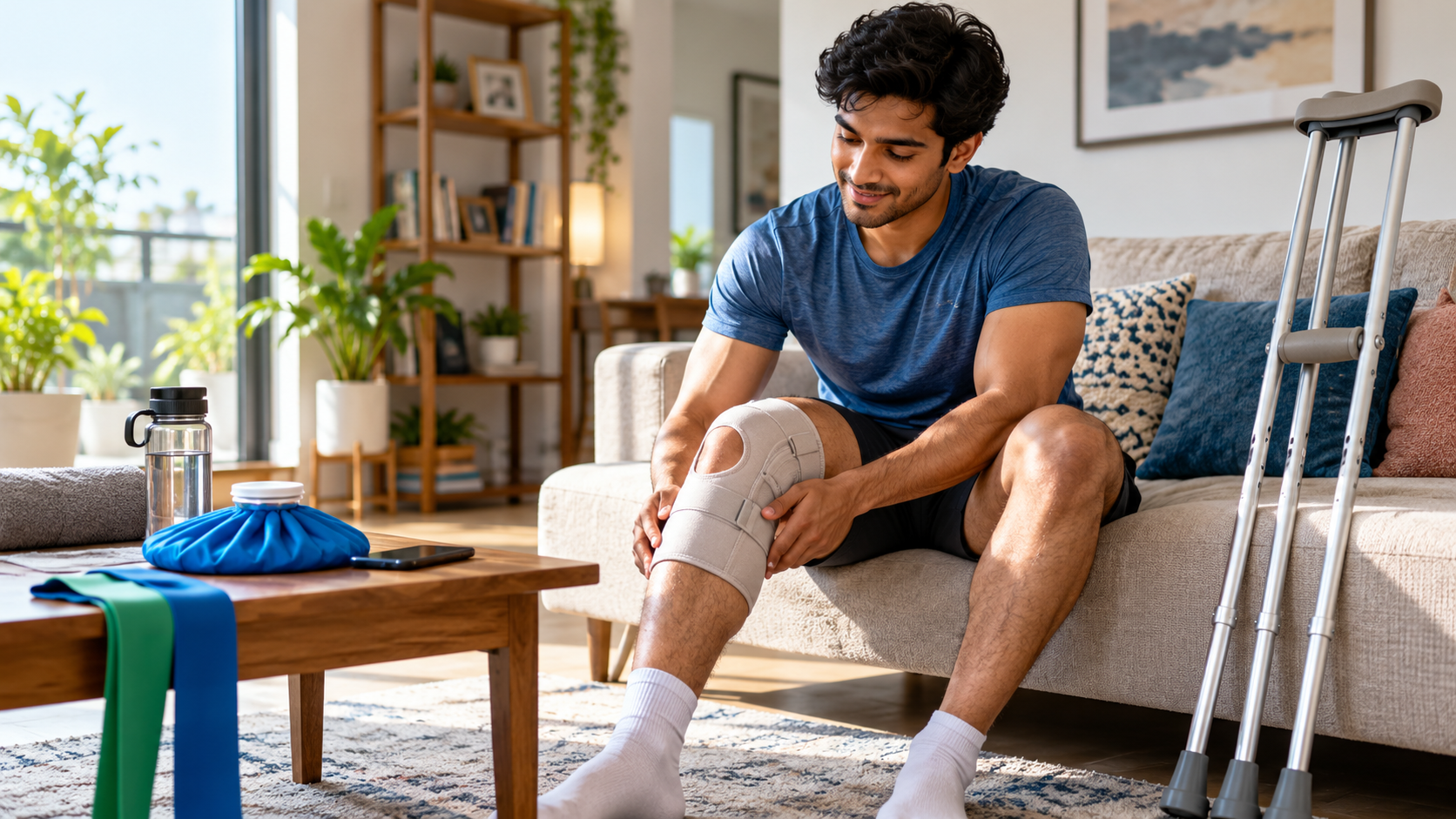
How to reduce swelling after knee replacement
Rest between periods of activityElevate the leg appropriatelyUse prescribed compressionUse cold therapy if advisedAvoid prolonged standingContinue appropriate movementTake prescribed medicines
How should you use ice?
If cold therapy has been recommended, protect the skin rather than placing an ice pack directly against it. AAHKS advises limiting individual cold applications and allowing breaks between applications to reduce the risk of skin injury. Patients with reduced sensation should be particularly cautious and follow their clinical team's instructions.
Pain after knee replacement
Pain is expected after knee replacement, particularly during movement and rehabilitation. Adequate pain control matters because uncontrolled pain can make it difficult to walk, sleep and participate in recovery. Take medicines according to the discharge prescription rather than independently increasing or reducing doses.
When is knee replacement pain concerning?
- Is suddenly much worse
- Continues increasing rather than improving
- Remains severe despite prescribed medication
- Is associated with fever
- Occurs with increasing wound redness or drainage
- Is accompanied by rapidly worsening swelling
- Is associated with new calf pain
- Causes a sudden loss of previously achieved mobility
Wound care after knee replacement
Keep the incision and dressing managed according to the surgeon's instructions. Different hospitals use different dressings and closure methods, so there is no universal rule for when the wound should be uncovered. Avoid repeatedly opening the dressing simply to check the incision. AAOS advises following the surgeon's wound-care instructions and protecting the wound until it is adequately sealed and dry.
When can you shower after knee replacement?
This depends on the dressing and surgeon. AAHKS notes that some waterproof dressings allow showering very early, while standard dressings may require waiting several days. Therefore, use the specific discharge instructions rather than a generic number from the internet. Avoid soaking the wound in a bath or pool until cleared.
Signs of infection after knee replacement
- Increasing wound redness
- Increasing warmth
- Pus or drainage
- Wound opening
- Increasing rather than improving pain
- Unexplained rapid swelling
- Fever
- Chills or sweats
Warmth around the replaced knee
Some warmth around a healing knee can occur during recovery and does not automatically mean infection. What is more concerning is persistent or worsening warmth accompanied by increasing pain, redness, swelling, wound drainage or systemic illness. AAHKS notes that warmth can sometimes persist during healing, while worsening or unexplained symptoms warrant review.
Blood-clot risk after knee replacement
Knee replacement increases the risk of deep vein thrombosis (DVT) during the postoperative period. The hospital may prescribe:- Anticoagulant medication- Compression stockings- Mechanical compression- Early mobilisationFollow the prescribed clot-prevention plan for the full recommended duration.
Possible DVT symptoms after knee replacement
- New one-sided calf or leg pain
- Throbbing or cramping pain
- Increasing leg swelling
- Unusual warmth
- Redness or skin colour change
- Tenderness
See how to recognise possible DVT after knee replacement
Breathlessness or chest pain after knee replacement
Sudden breathlessness, significant chest pain, collapse or coughing blood after recent knee replacement can indicate a pulmonary embolism or another serious problem. This requires emergency medical assessment. NHS guidance specifically treats breathing difficulty or chest pain accompanying leg pain and swelling as an emergency.
Medicines after knee replacement
The discharge prescription may include:- Pain medicines- Blood thinners- Gastric protection- Medicines for constipation- Existing chronic medicinesMake a clear medication schedule and confirm which pre-surgery medicines should continue. Do not restart medicines that were deliberately stopped without checking the discharge plan.
Do not stop blood thinners on your own
If an anticoagulant has been prescribed to prevent blood clots, take it for the instructed duration. Do not stop it because bruising appears or because the patient is walking better unless the prescribing clinician advises you to. Major bleeding requires urgent clinical assessment.
Sleeping after knee replacement
Sleep can be difficult during early recovery because of pain, swelling and difficulty finding a comfortable position. There is usually no requirement to sleep in one special position after knee replacement, although comfort and individual surgical instructions matter. NHS guidance specifically advises not placing a pillow directly under the knee while sleeping, because keeping the knee persistently bent can interfere with regaining extension.
Can you sleep on your side after knee replacement?
Many patients eventually find side sleeping comfortable, but the appropriate timing depends on comfort and individual advice. Use pillows for comfort where instructed, but avoid supporting the knee in a persistently bent position unless the rehabilitation team specifically recommends it.
Bathing, dressing and toileting after knee replacement
| Activity | Common early difficulty | ||
| Bathing | Standing safely, entering shower | ||
| Dressing | Reaching foot and lower leg | ||
| Toileting | Sitting and rising | ||
| Footwear | Bending to reach shoes | ||
| Lower-body clothing | Limited knee movement | ||
| Getting out of bed | Controlling operated leg | ||
| Carrying items | Hands occupied by walker |
Eating and nutrition during recovery
Most knee-replacement patients can return to a normal balanced diet unless another medical condition requires restrictions. Adequate:- Protein- Energy- Fluids- Fruits and vegetablessupport general recovery. Constipation is common when activity falls or opioid pain medicines are used, so follow the discharge instructions regarding fluids, diet and prescribed laxatives.
Physiotherapy after knee replacement
Rehabilitation is a central part of knee replacement recovery. It typically addresses:- Walking- Knee movement- Quadriceps strength- Balance- Transfers- Functional independenceNICE recommends rehabilitation beginning on the day of surgery where possible and within 24 hours after elective knee replacement.Understand the role of physiotherapy during knee replacement recovery
What should the caregiver do after knee replacement?
- Bathing
- Toileting
- Dressing
- Meals
- Medication reminders
- Safe transfers
- Walking supervision after instruction
- Keeping the walker accessible
- Reducing fall hazards
- Helping the patient follow prescribed exercises
- Observing wound or swelling changes
- Accompanying the patient to follow-up visits
When would a nurse be needed?
A qualified nurse may be appropriate when the patient requires:- Skilled wound dressing- Prescribed injections- Clinical assessment- Another nursing procedureA patient does not automatically need a full-time nurse simply because they had knee replacement surgery. If daily-living assistance is the main need, a trained caregiver may be more appropriate.
See which type of professional is appropriate after knee replacement
When can caregiver support start reducing?
- Get out of bed independently
- Stand safely
- Walk with the prescribed aid
- Reach the toilet independently
- Manage toileting
- Dress with minimal assistance
- Obtain food and water
- Manage medicines
- Handle nighttime mobility
- Remain safely alone
Can someone be left alone after knee replacement?
Eventually, yes for most patients — but timing differs. Before leaving the patient alone, consider whether they can:- Get up safely- Walk to the bathroom- Use the toilet- Access food and water- Take medicines- Use the phone- Respond to a fall or emergencyPatients who live alone may benefit from temporary support during the early home-recovery period.
Knee replacement warning signs
| Warning sign | Possible concern | ||
| Increasing wound redness or pus | Infection | ||
| Fever or chills | Infection | ||
| Increasing rather than improving knee pain | Complication | ||
| Rapid unexplained swelling | Infection / bleeding / other complication | ||
| New calf pain or one-sided swelling | Possible DVT | ||
| Sudden breathlessness | Possible pulmonary embolism | ||
| Chest pain | Emergency assessment needed | ||
| Significant wound opening | Wound complication | ||
| Major bleeding | Urgent assessment | ||
| Sudden inability to walk after previously improving | Needs medical review |
See the full guide to post-surgery warning signs
Frequently asked questions
How long does knee replacement recovery take?
Many daily activities return over the first several weeks and months, while maximum strength and endurance can continue improving for many months. AAHKS notes that full recovery toward maximal strength and endurance may take 6–12 months for some patients. The next article in this mini-cluster covers the week-by-week knee replacement recovery timeline in detail.
How soon can you walk after knee replacement?
Walking commonly begins very soon after surgery with assistance from the hospital team. Most patients initially use a walker or crutches and progress according to strength, balance and rehabilitation.
Is swelling normal after knee replacement?
Yes, swelling is common during knee replacement recovery and can persist for a prolonged period. Contact the clinical team if swelling is suddenly much worse, associated with severe pain, increasing redness, wound drainage or new calf symptoms.
Can you climb stairs after knee replacement?
Many patients are taught to manage stairs before leaving hospital if stairs are necessary at home. The exact technique and amount of assistance should be taught by the physiotherapist.
Can you shower after knee replacement?
The answer depends on the wound dressing. Some waterproof dressings allow early showering, while other dressings require waiting several days. Follow the surgeon's discharge instructions rather than using one universal rule.
Do you need a caregiver after total knee replacement?
Not everyone does, but temporary help is often useful when the patient still needs assistance with bathing, toileting, meals, walking or transfers. Patients living alone or with significant pre-existing limitations may need more support.
When can you drive after knee replacement?
Driving should resume only when the surgeon considers it safe, the patient is no longer impaired by sedating pain medicines and they can safely perform an emergency stop. Published guidance often places return to driving around several weeks after total knee replacement, but the exact timing varies. The dedicated timeline article will cover this in more detail.
When can you return to work after knee replacement?
It depends heavily on the job. Desk work may be possible earlier than jobs involving prolonged standing, lifting, walking or manual labour. Recovery should be based on function and the surgeon's advice rather than a fixed calendar date.
References
This article is for general health education and does not replace advice from your doctor. Please consult a qualified professional about your specific situation.
Need care at home in Bengaluru? See MITRA services.
Related articles
Post-Surgery & Recovery · 11 min read
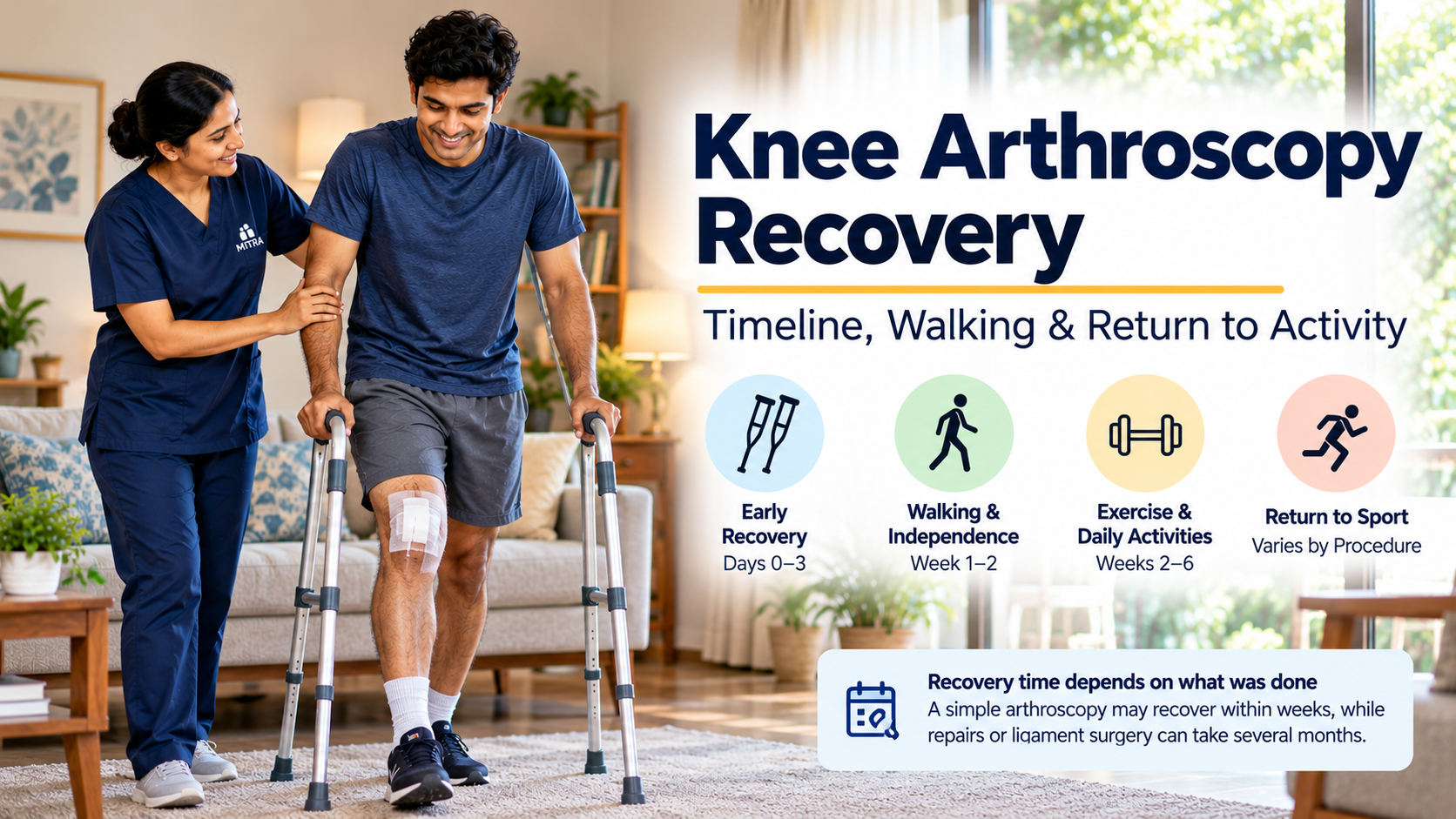
Knee Arthroscopy Recovery: Timeline, Walking & Return to Activity
How long does knee arthroscopy recovery take? Learn what to expect after keyhole knee surgery, including walking, crutches, swelling, wound care, driving, work and return to sport.
Thu, 29 Oct 2026
Post-Surgery & Recovery · 12 min read
Meniscus Surgery Recovery: Repair vs Meniscectomy
Meniscus repair and partial meniscectomy have very different recovery timelines. Learn what to expect after meniscus surgery, including walking, crutches, swelling, driving, work and return to sport.
Thu, 29 Oct 2026
Post-Surgery & Recovery · 11 min read
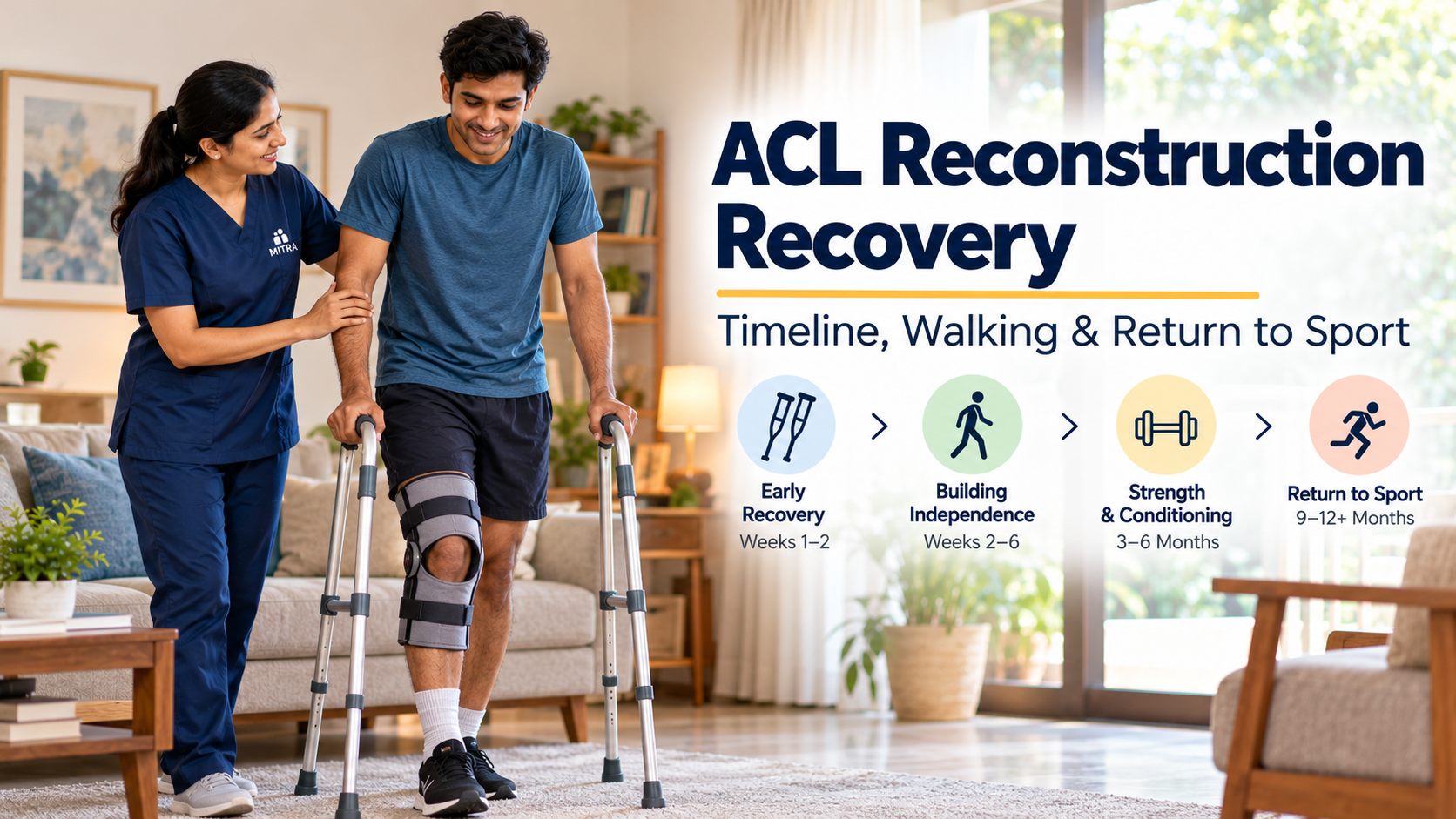
ACL Reconstruction Recovery: Timeline, Walking & Return to Sport
Recovering from ACL reconstruction takes months. Learn what to expect after ACL surgery, including walking, crutches, swelling, wound care, driving, work and the gradual return to sport.
Thu, 29 Oct 2026